Print an etching zine workshop !
I recently got to combine my love for printmaking and comics by creating a unique workshop : printing an etching zine !
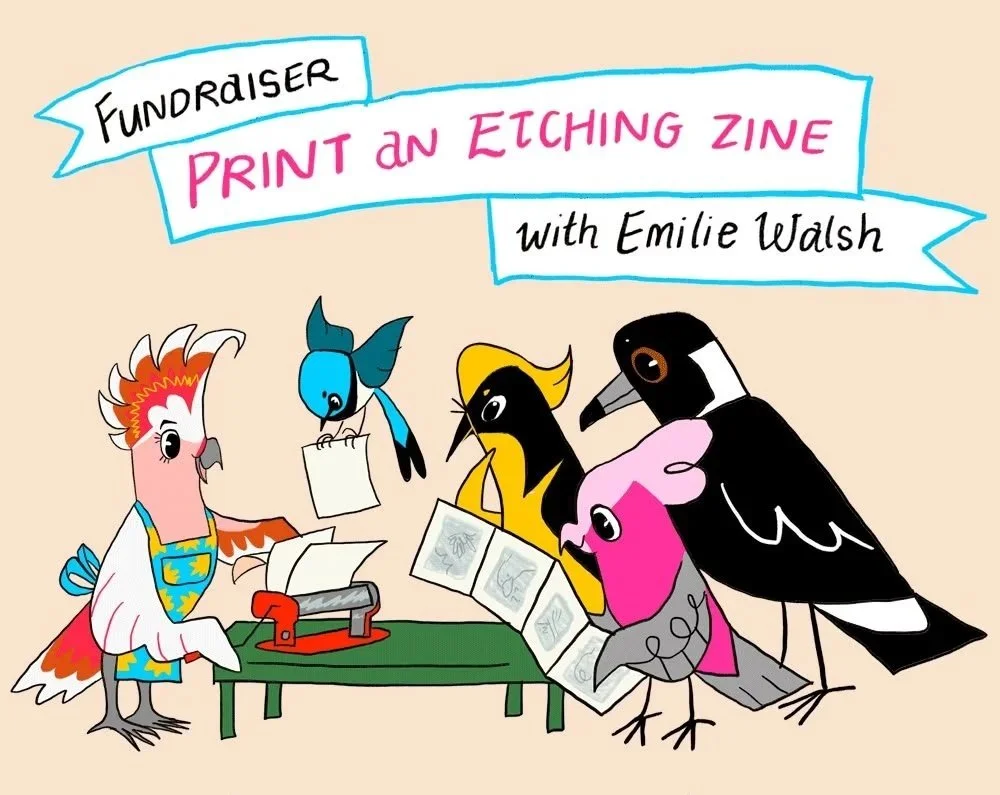
Illustration by MAKE organiser Reimena Yee. Emilie as a pink cockatoo/printmaking teacher ! credit Reimena Yee
Outside of running my printmaking studio, I am involved in comics organisations in Australia and I am part of the founding team of MAKE : Melbourne Alternative Comics Expo, with our first festival running this year, from October 9th to 11th. This is our first year running this comics event and we are all passionate volunteers! To raise some money to cover the cost of the festival, we ran some amazing fundraising events, including my workshop : print an etching zine.
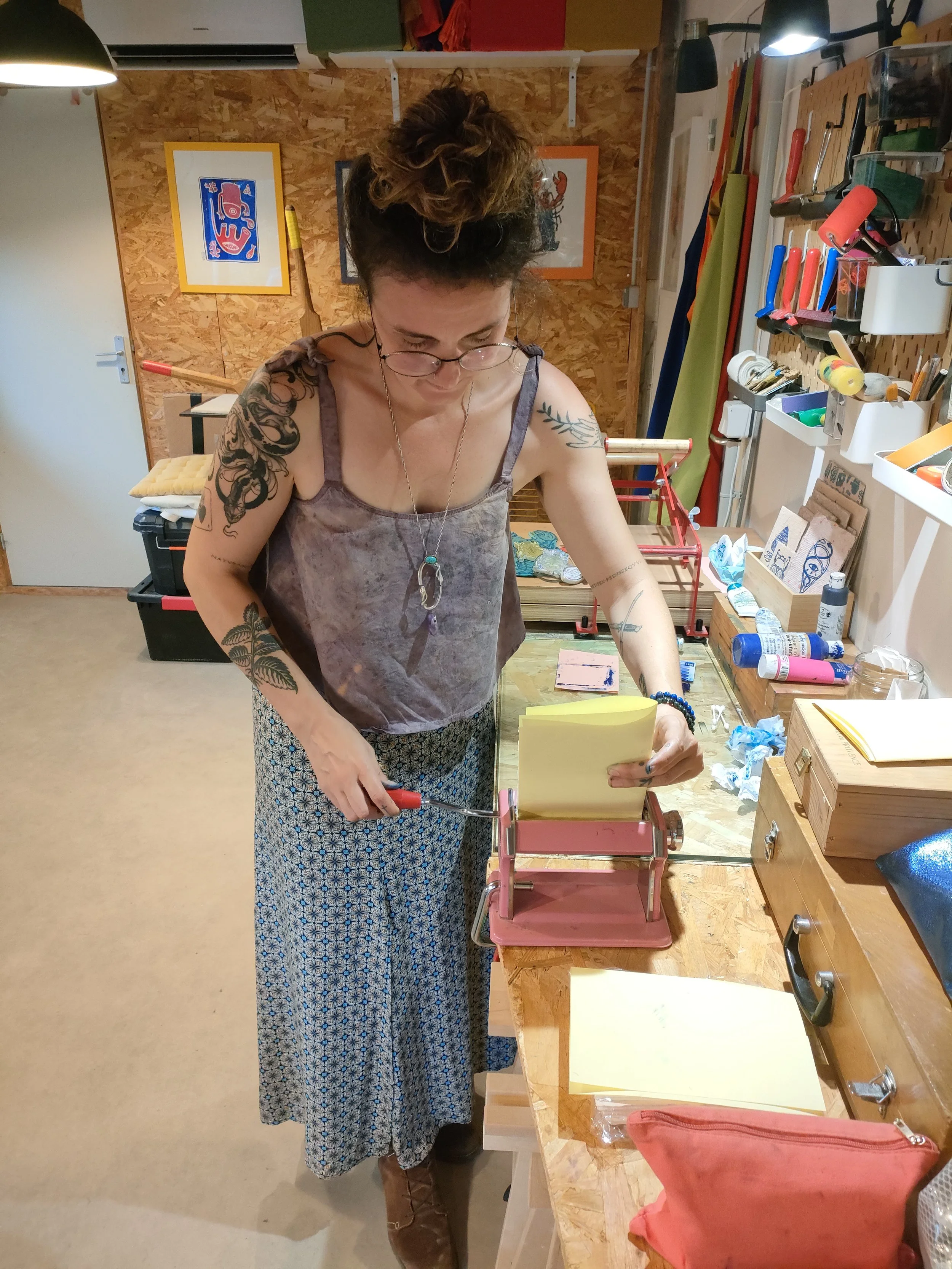
This unique workshop combines the DIY technique of tetra-pak etching (or milk carton etching), which uses a pasta-maker as a press! A real kitchen DIY printmaking technique, that’s affordable, easy to pick-up and gives amazing results, even for complete beginners!
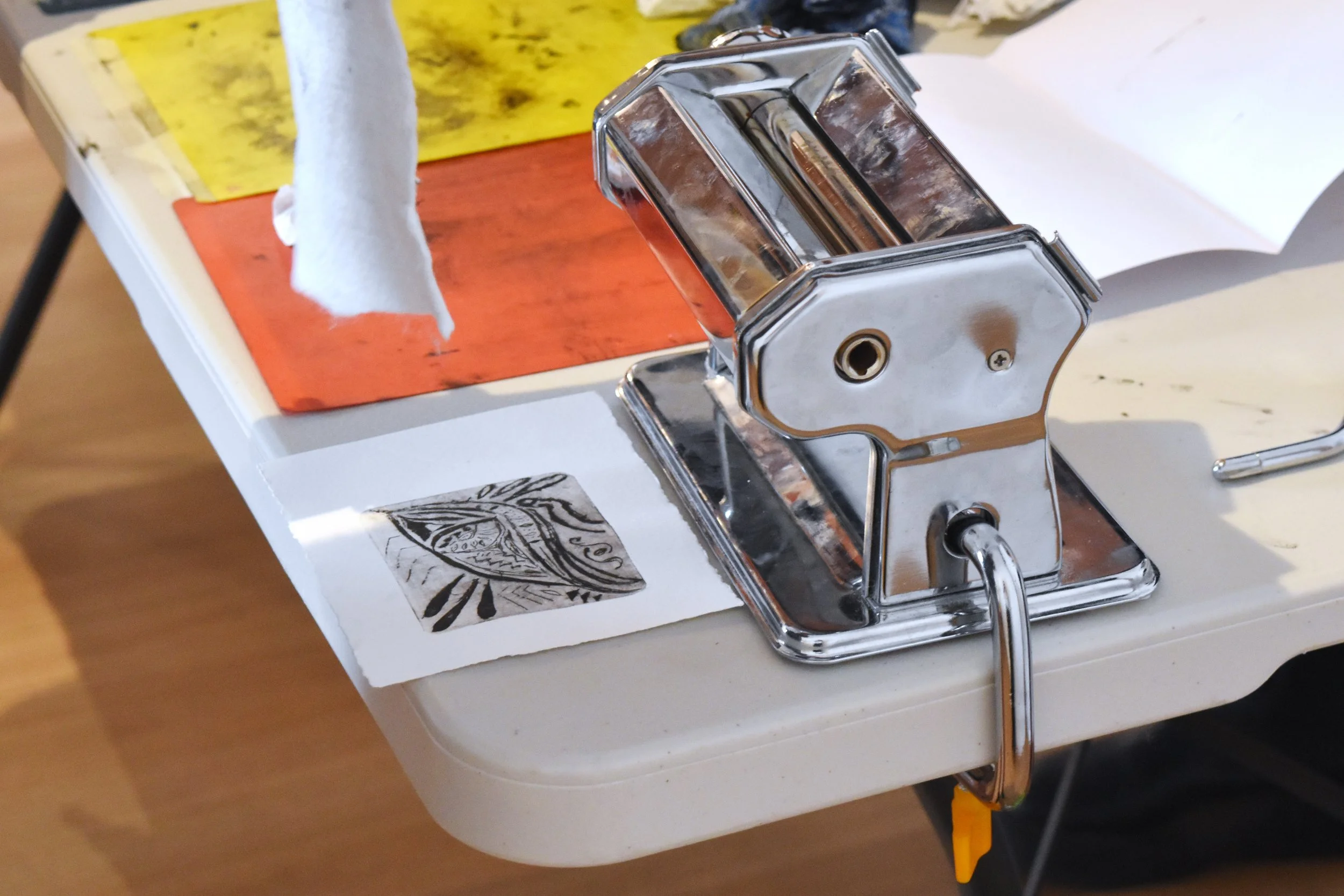
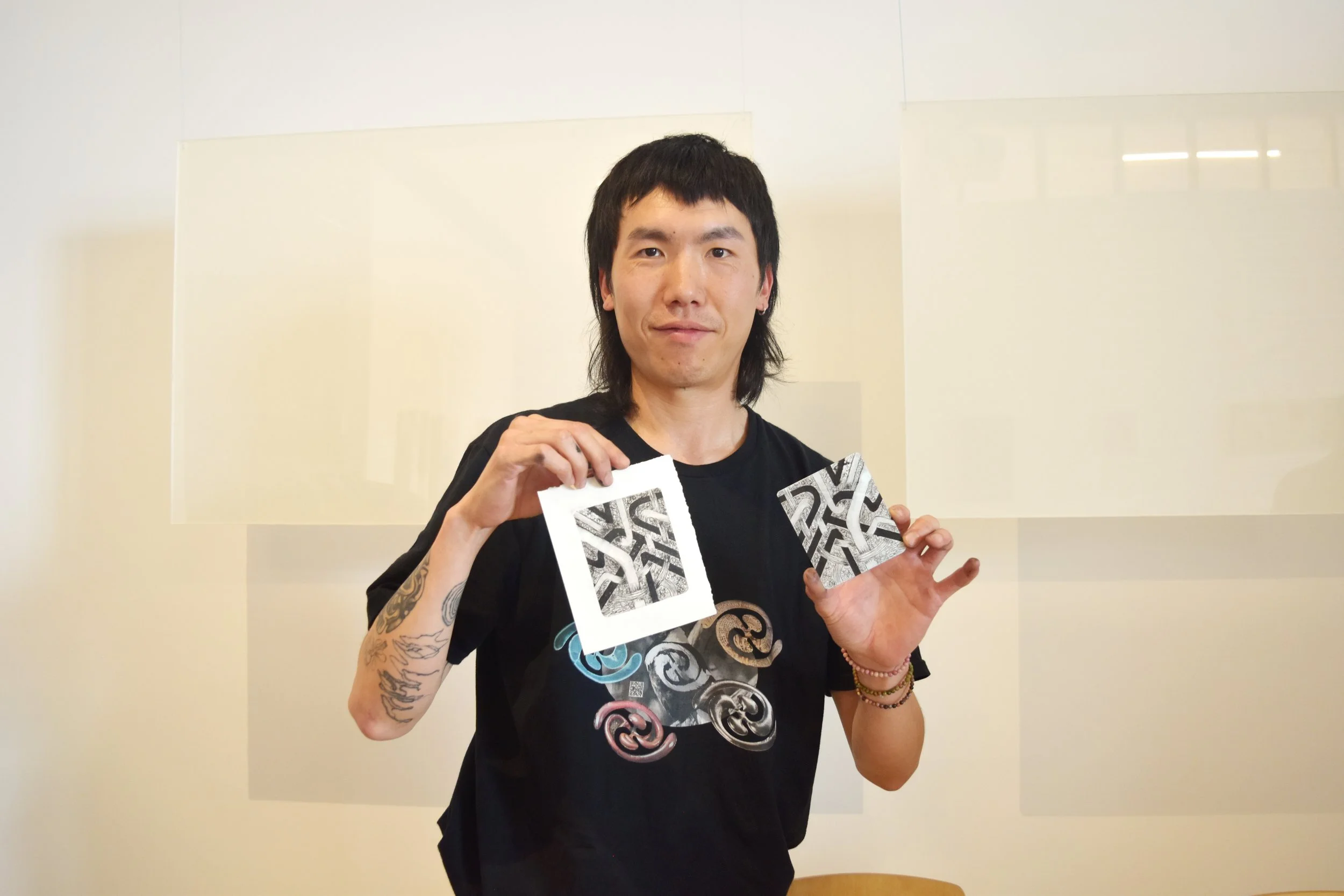
This is a technique I have been experimenting with for years and I run over 40 short intro classes on this fun creative technique. This is aligned with my studio mission to be a gateway into printmaking and make it accessible to a broader audience, including to people who can’t draw ! Check out some examples of my students works.
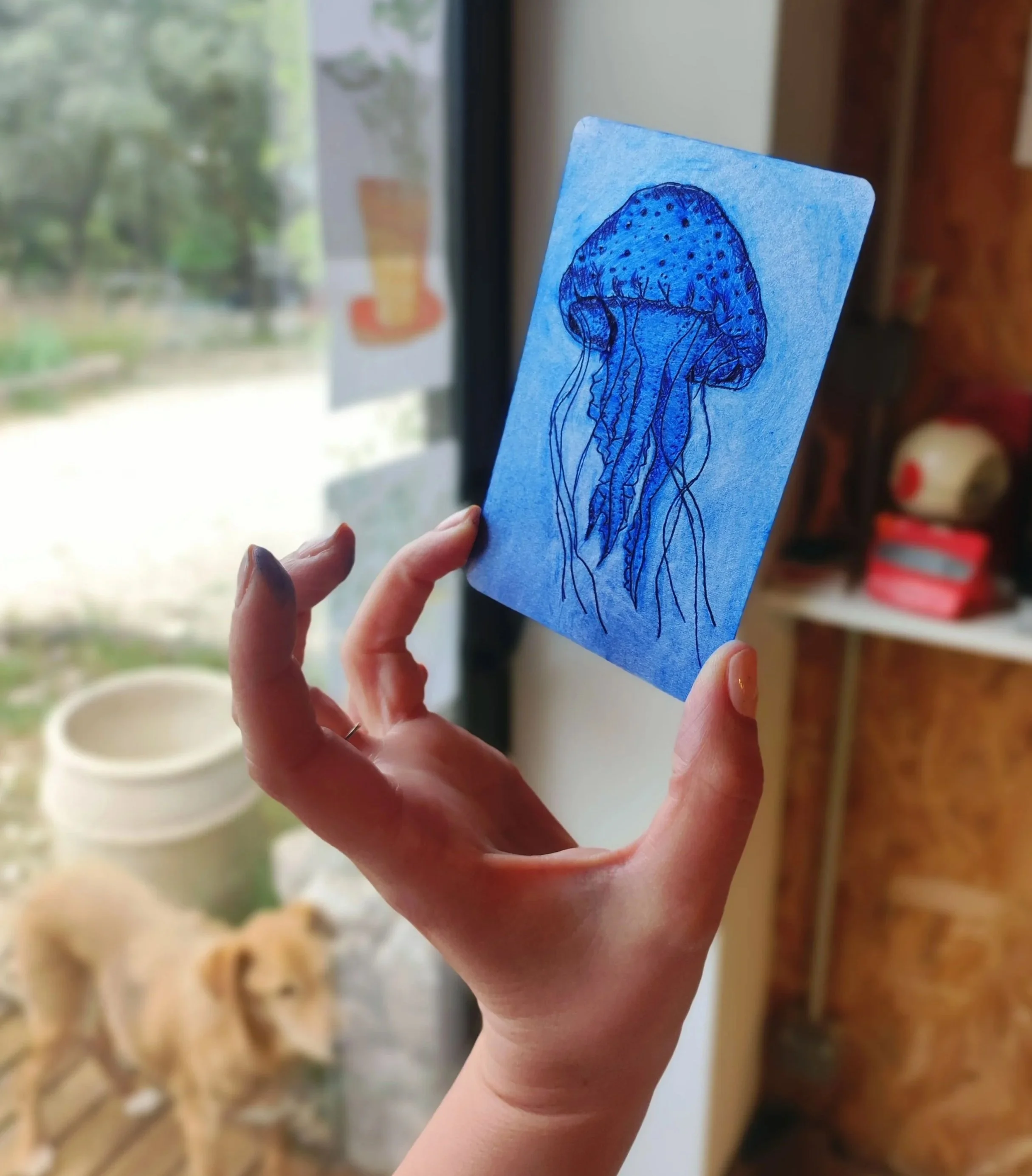
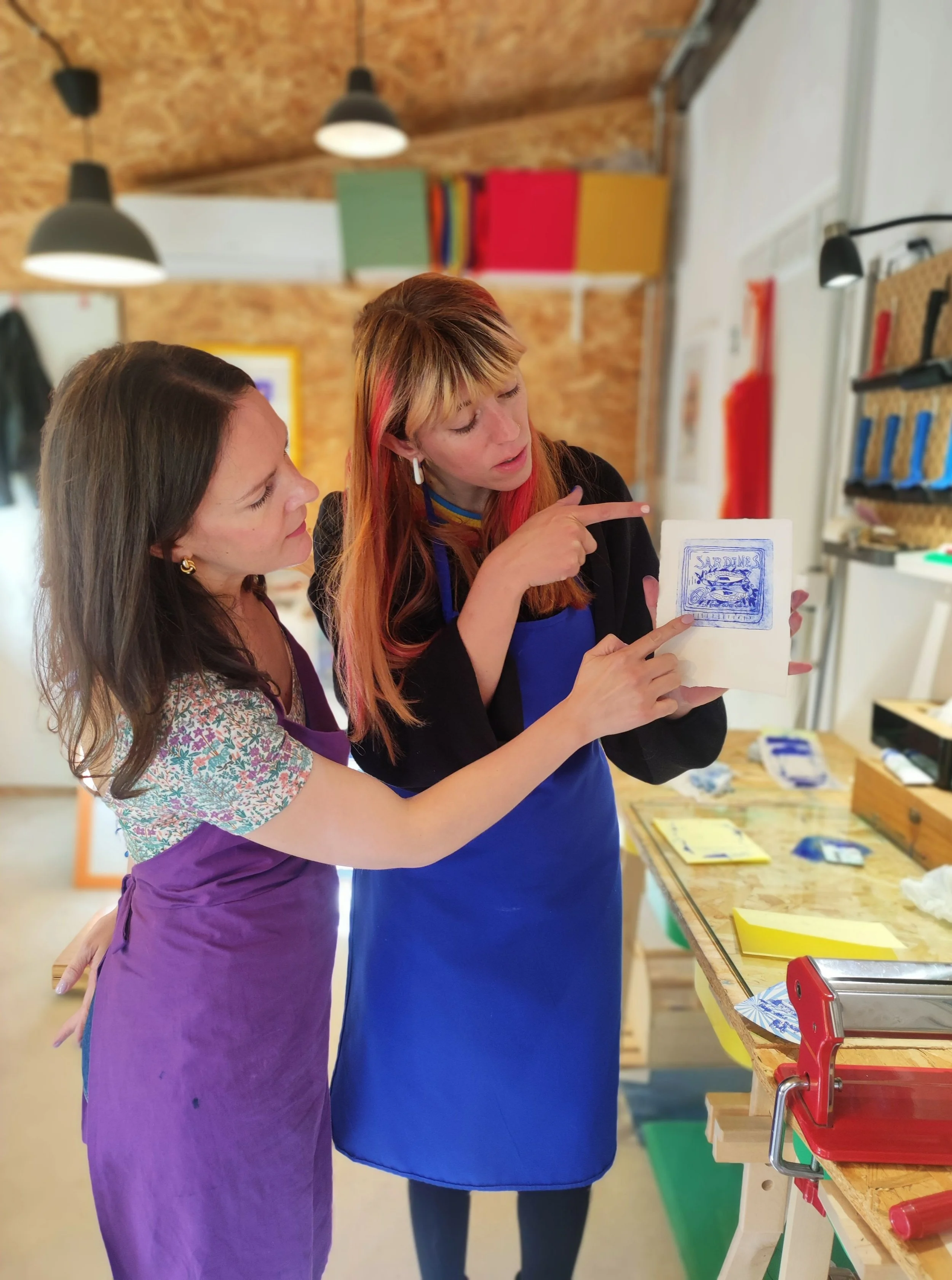
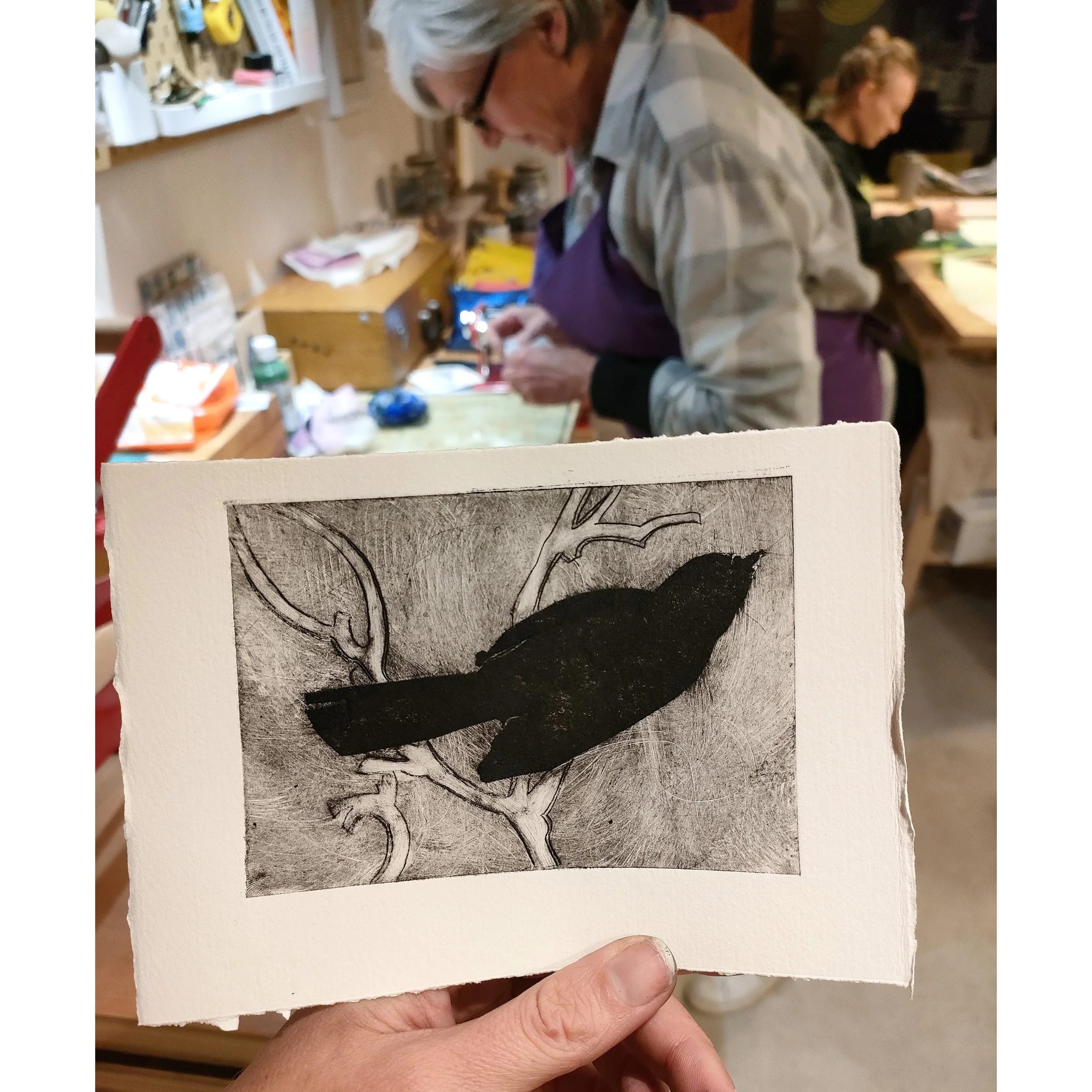
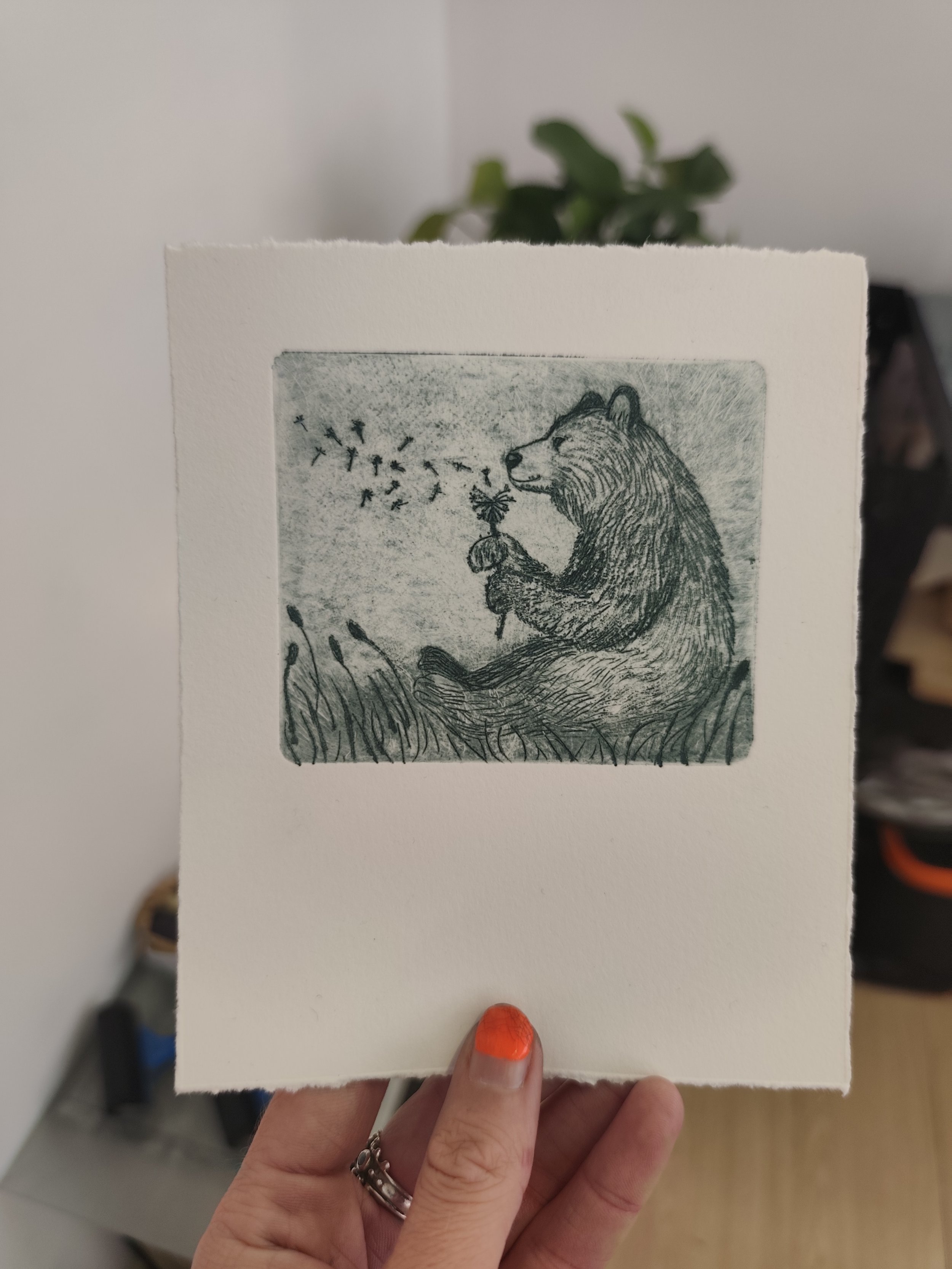
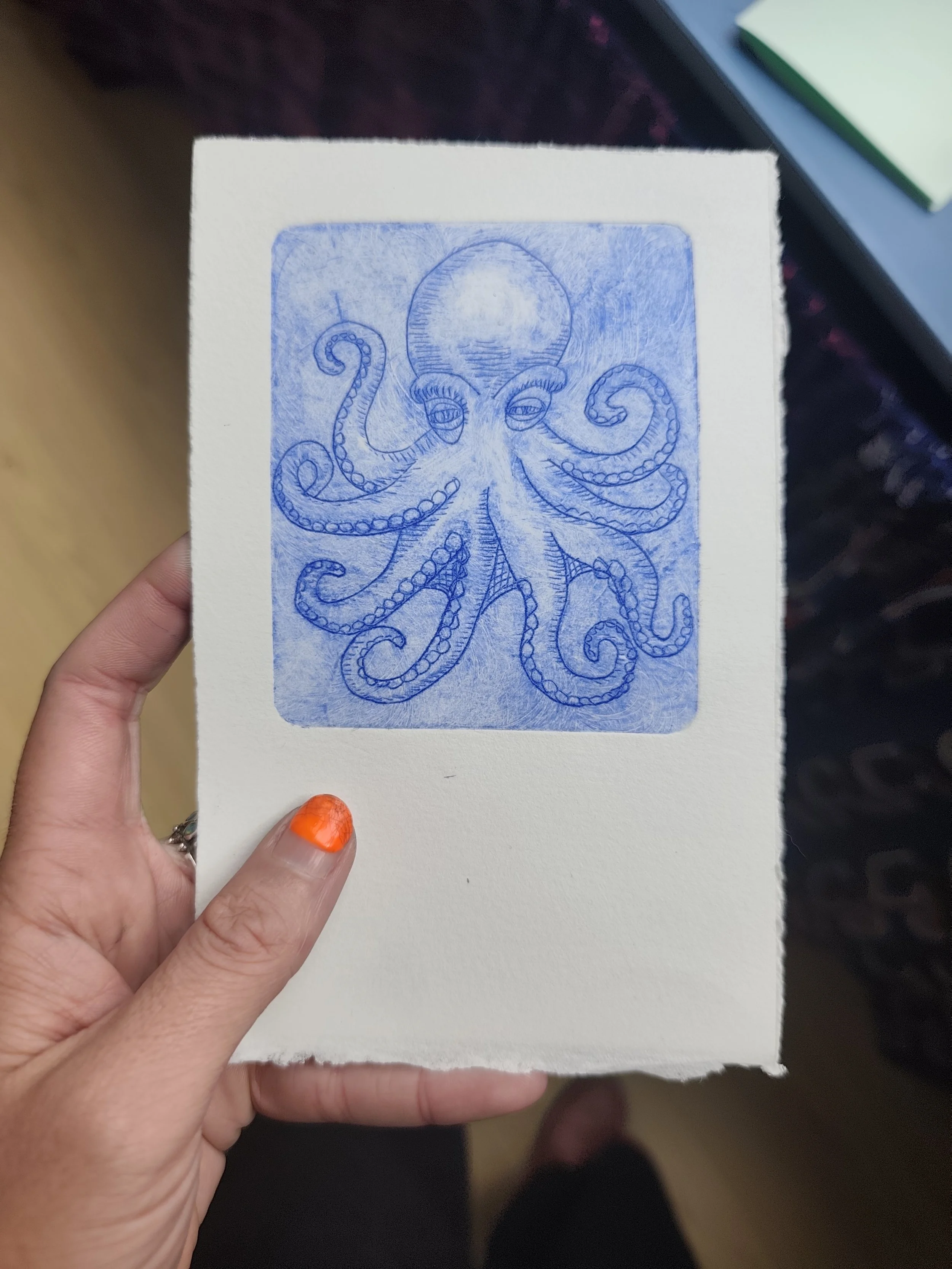

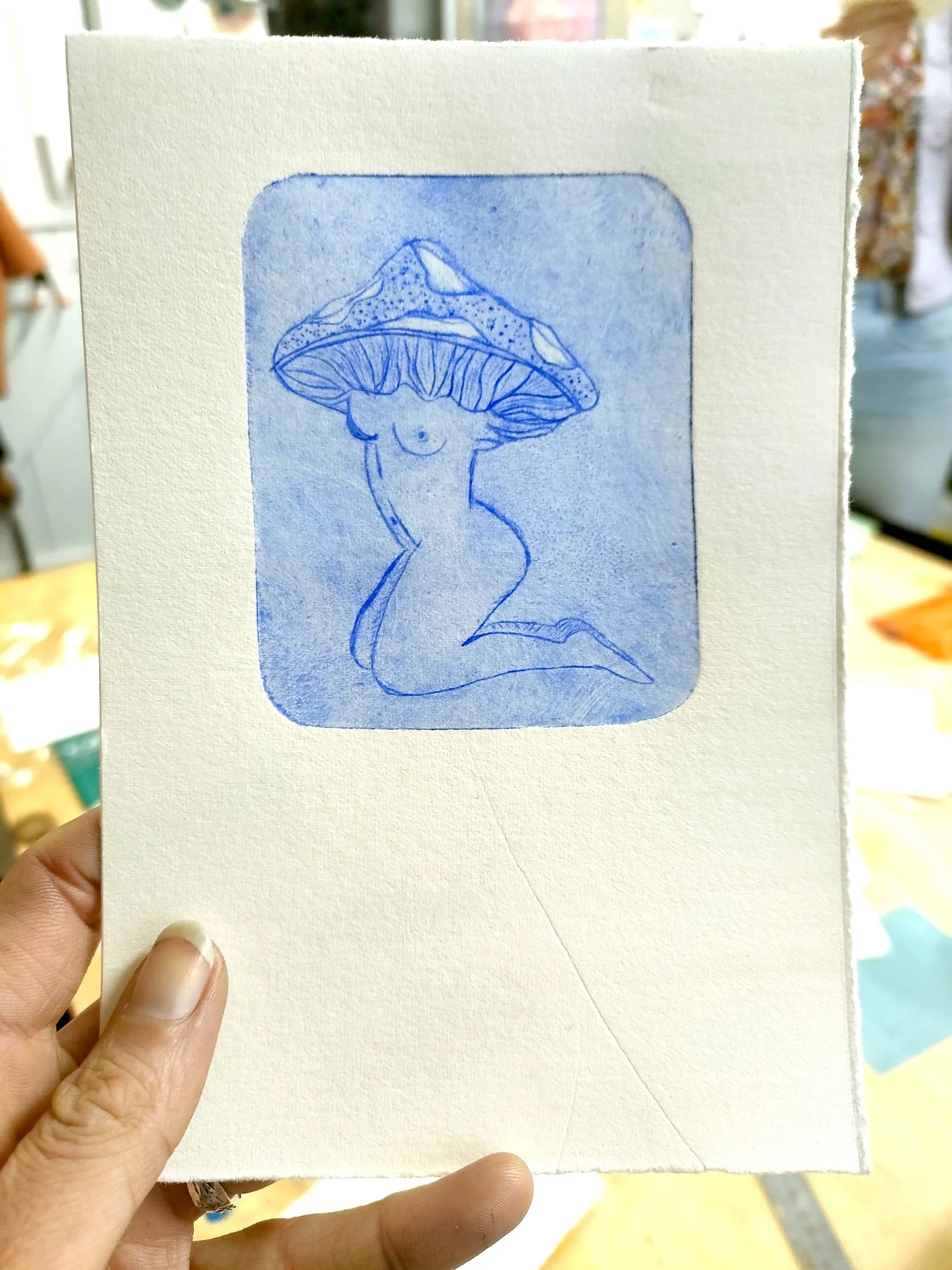

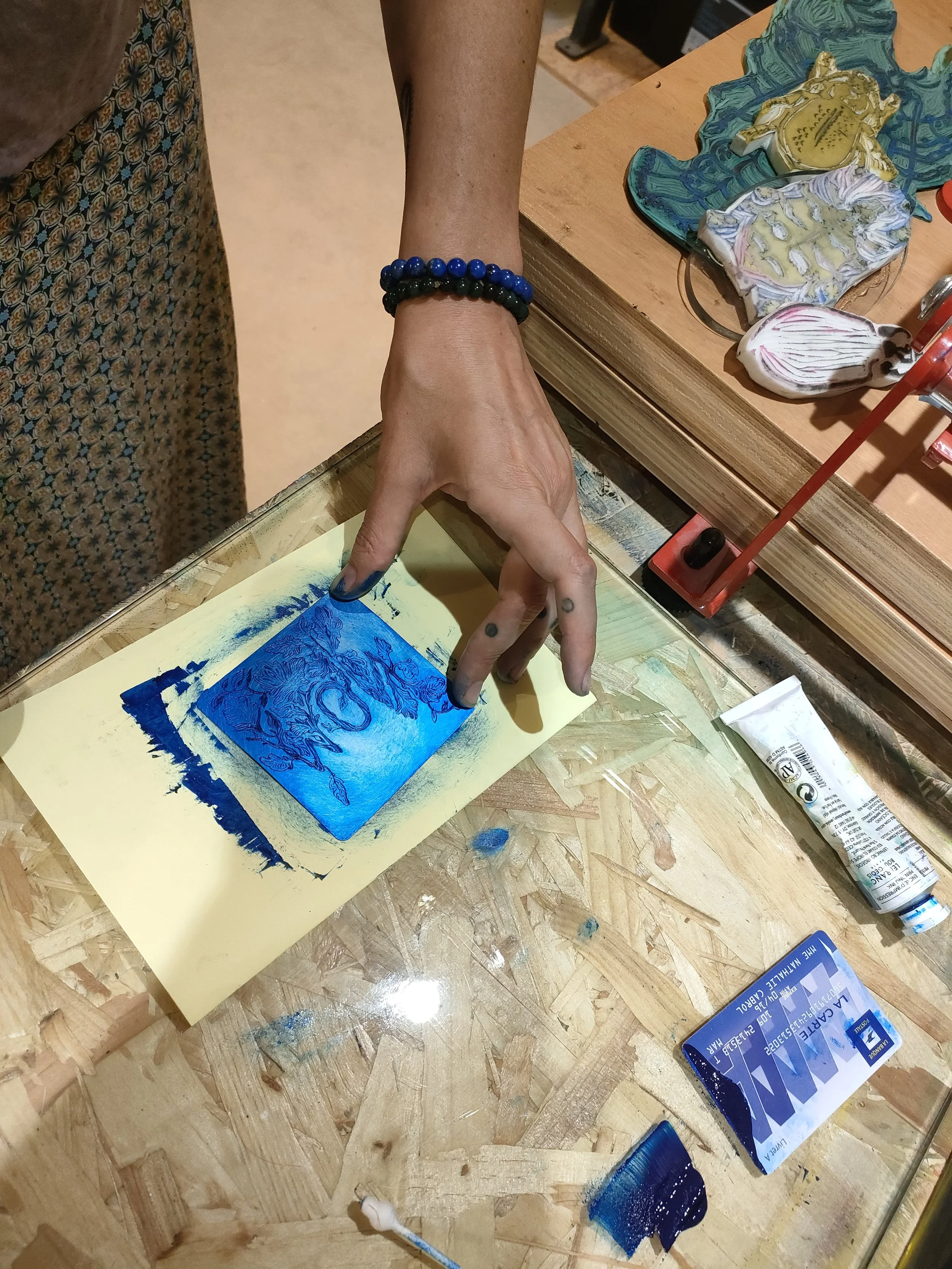
As a comics maker, I started exploring tetra-pak etching for my own comics and created a 6-page mini comic with each panel as a printed etching. Following my own experimentation, and operating within my radical sharing ethos of ‘Everything I make, I teach how to make immediately’, I designed a 3-hour workshop to teach tetra-pak etching for zines making.
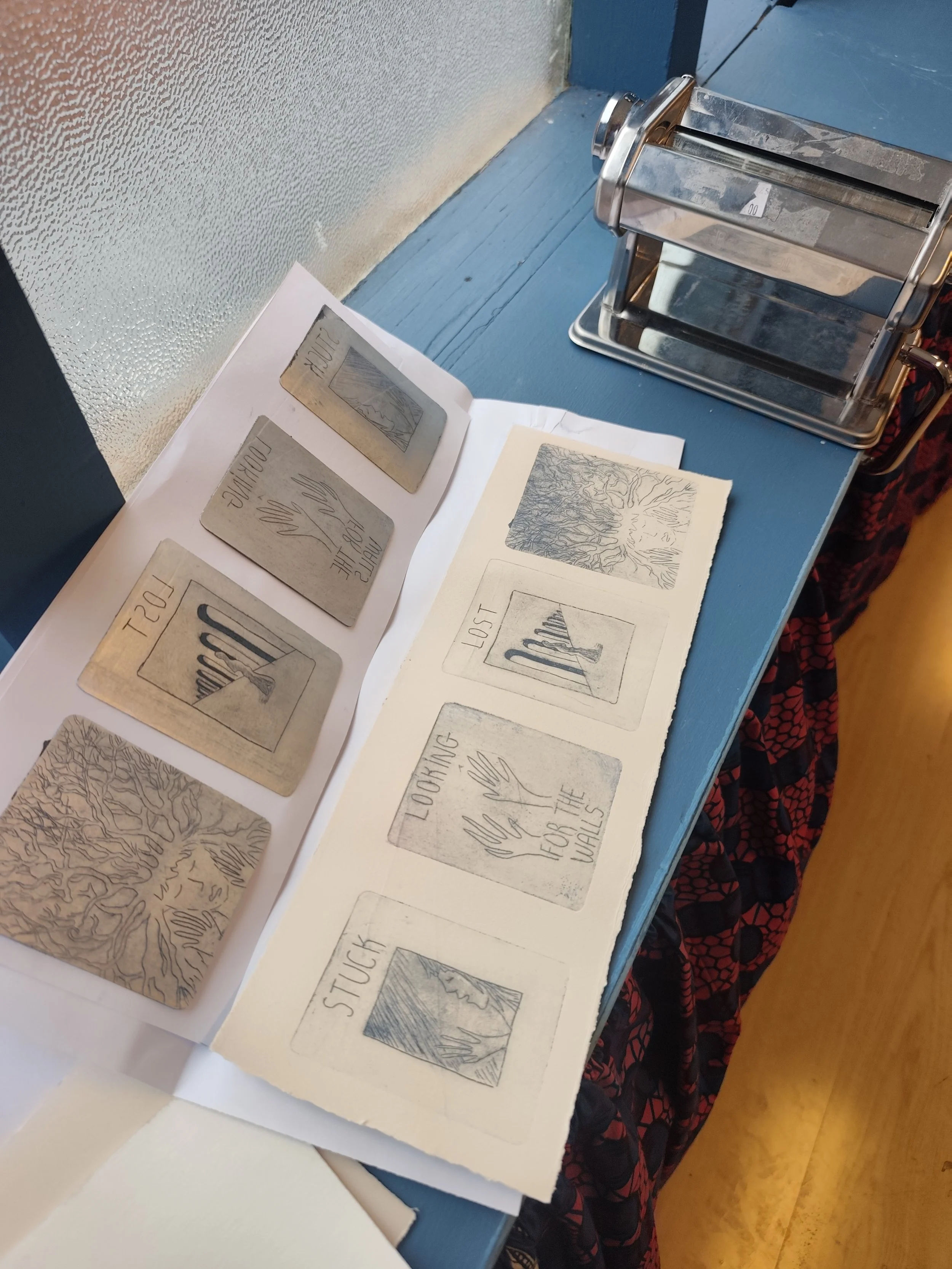
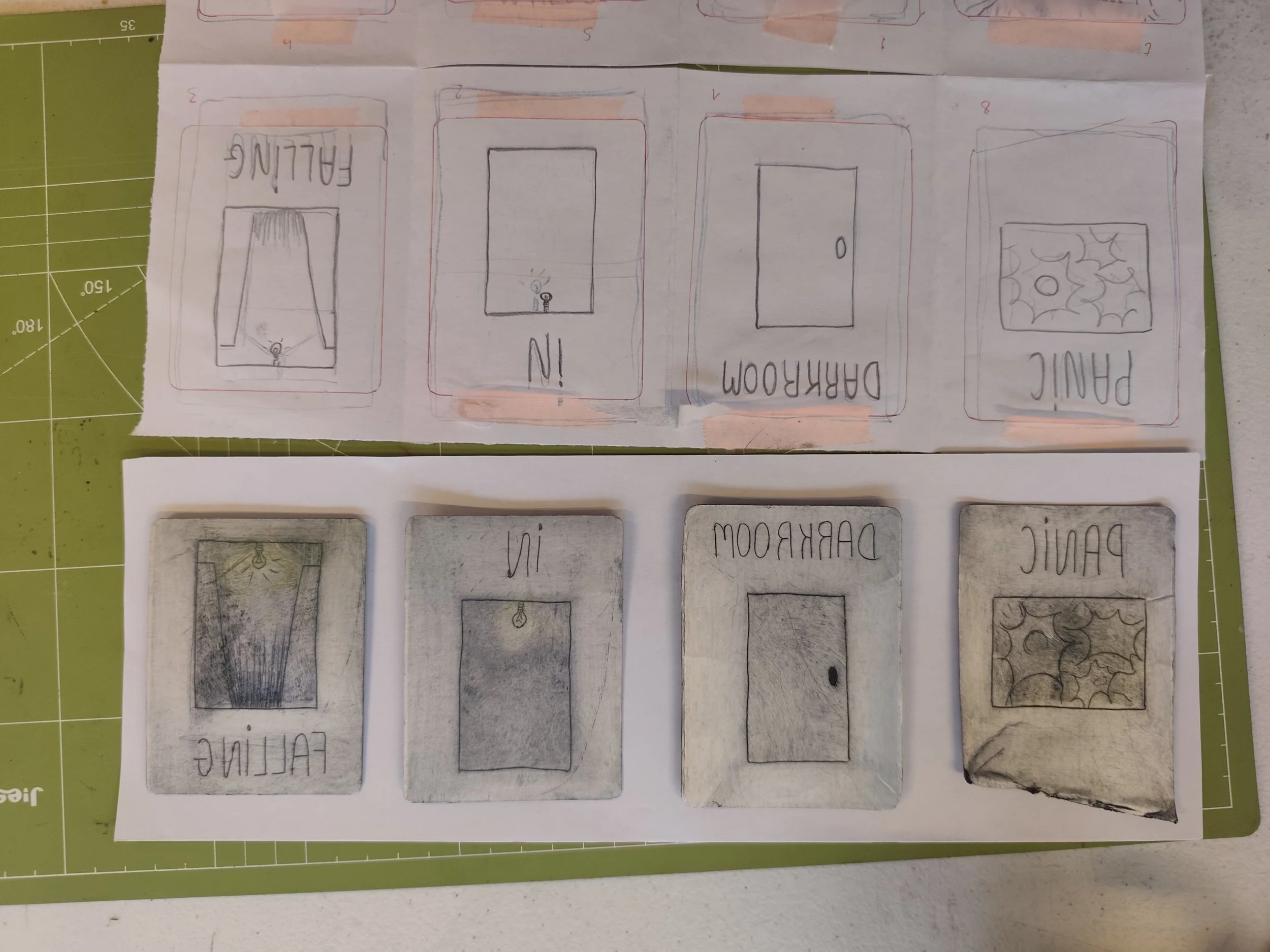
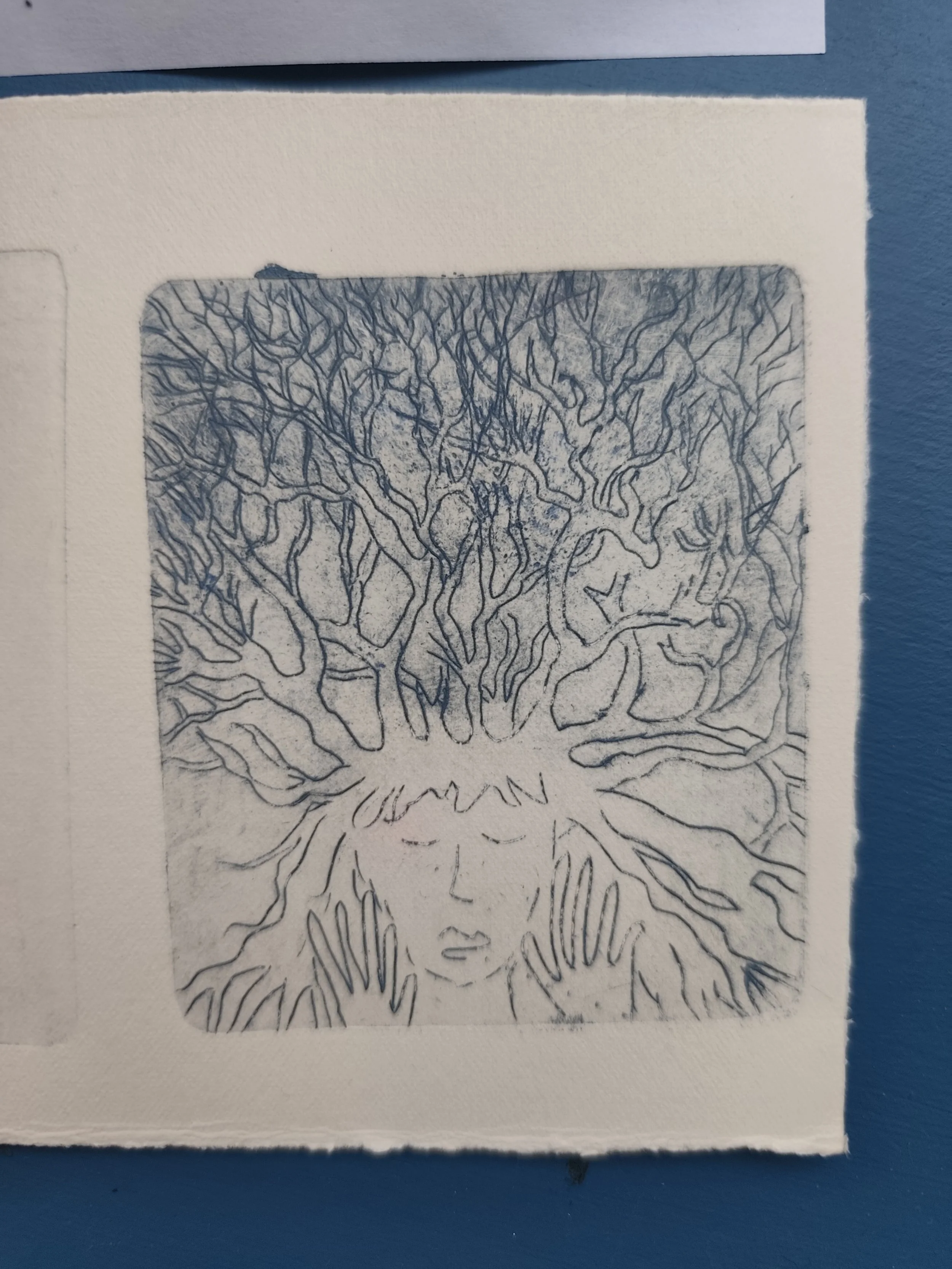
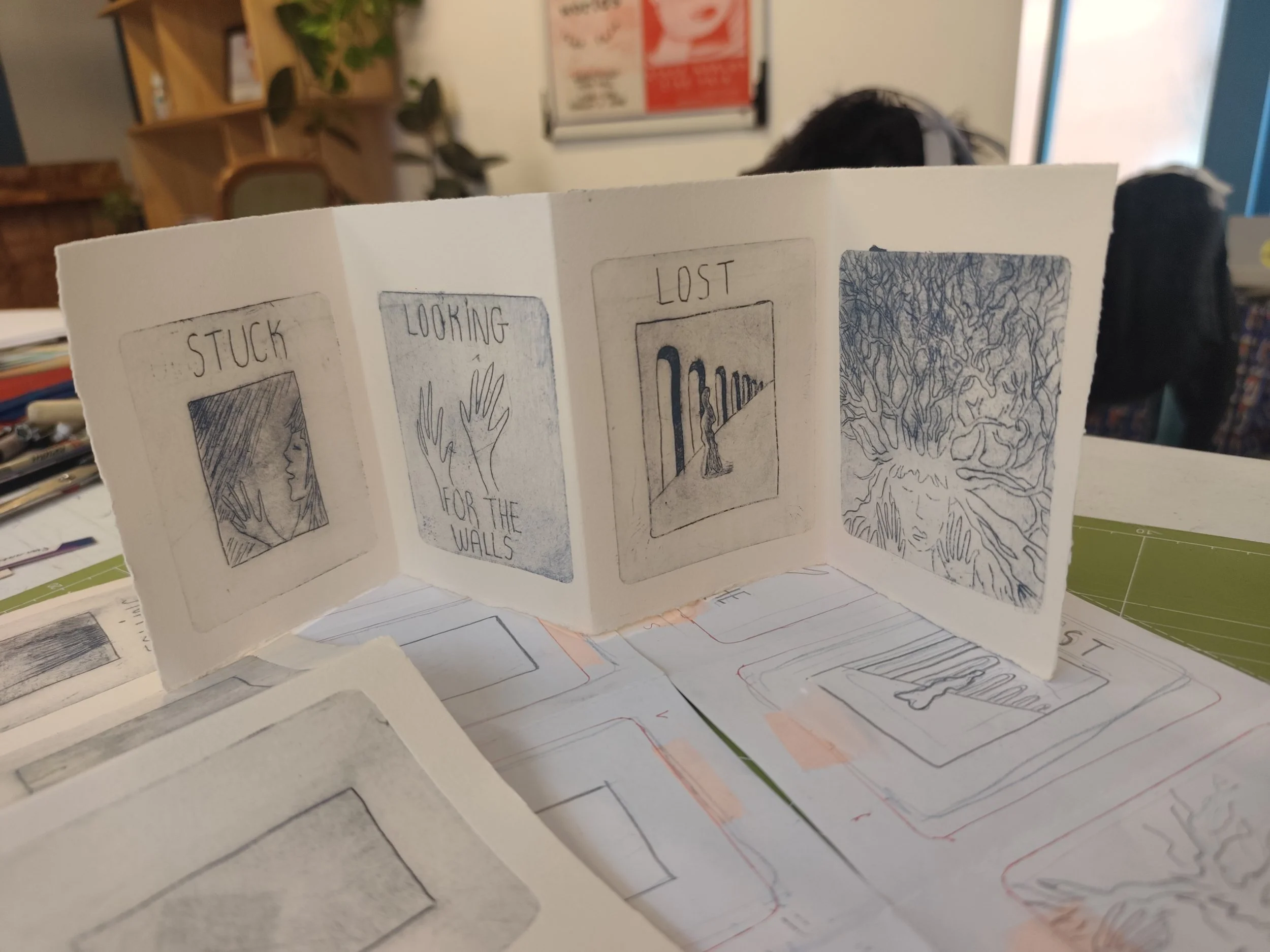
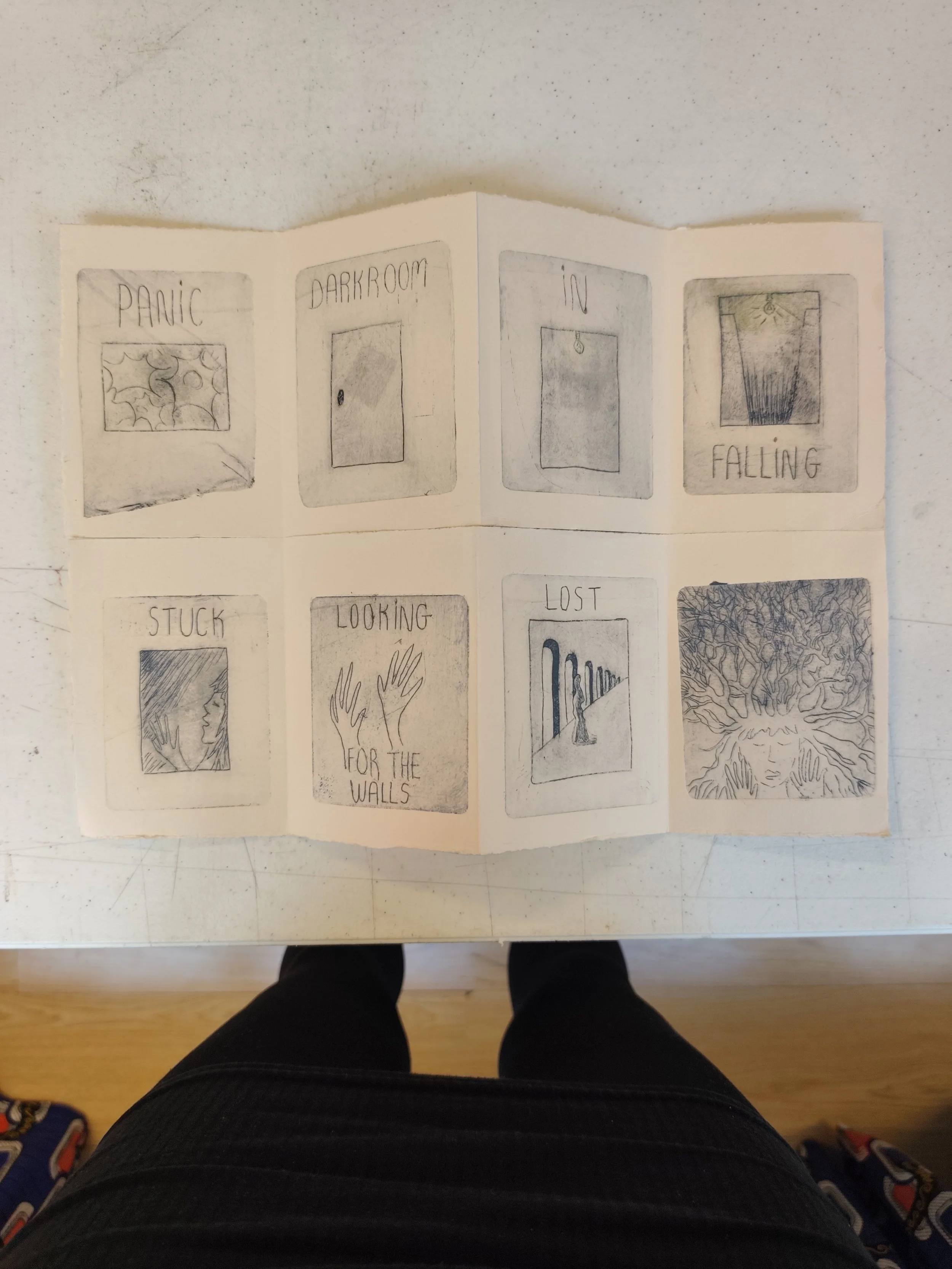
Zines are self-published books, often short and affordable and are very common in the comics world, allowing artists to work quickly and in full autonomy of the creative process (you’re the artist AND the publisher). While zines are often low-brow, DIY, sometimes simply printed with a photocopy machine, it is not uncommon for comics makers to turn them into experimental hand-made books using all kinds of creative techniques, like collages, stitching, painting, etc… For this workshop, I invited participants to use the easy tetra-pak etching technique to design a 6-panel mini zine, printed in the pasta-maker on beautiful printmaking paper.
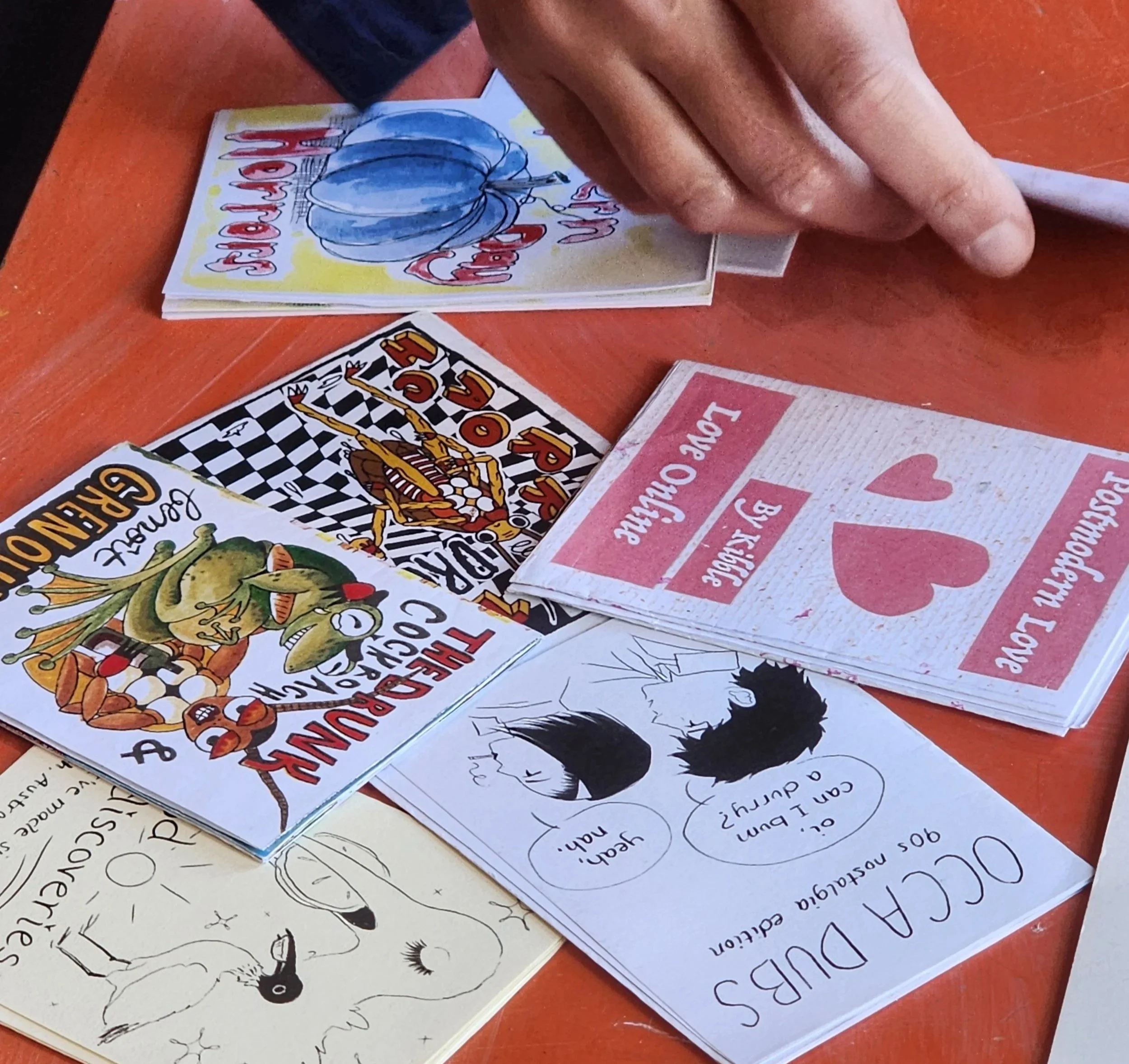
Example of small photocopied zines from Emilie’s collection. These small fold-out zines are the most common zine format and the template we used for our ‘Print an etching zine’ workshop. Credit photo James Baker
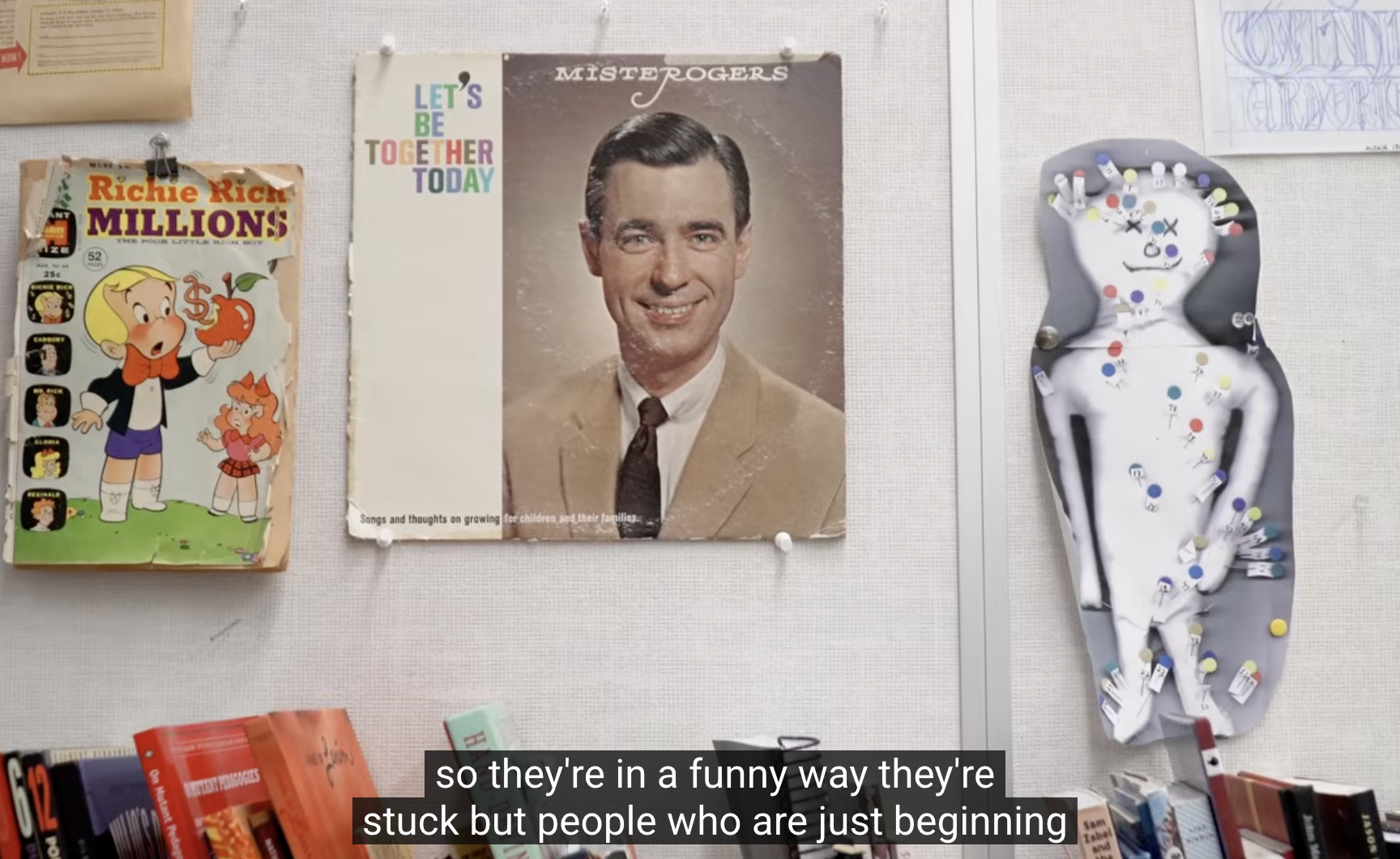
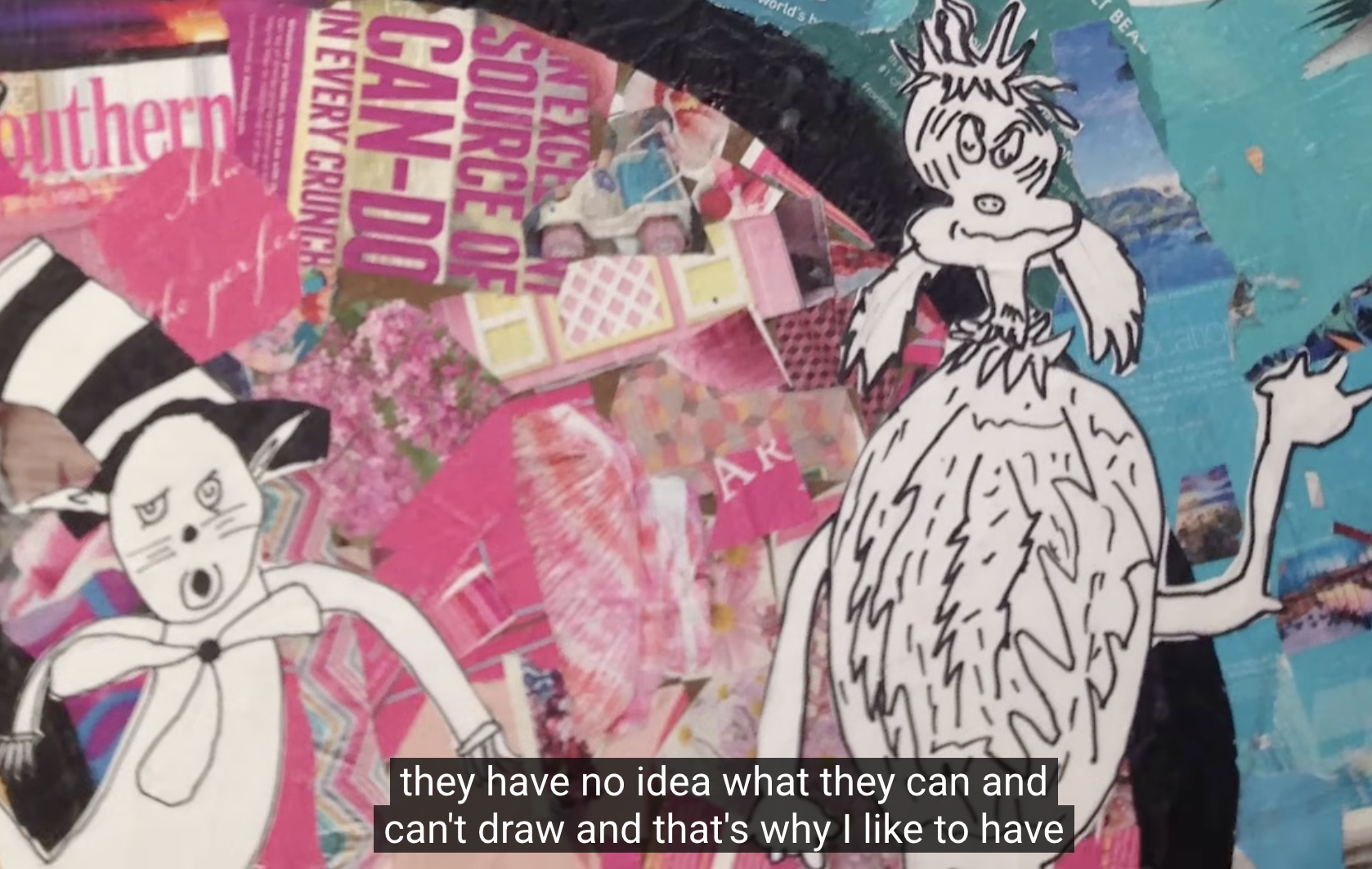
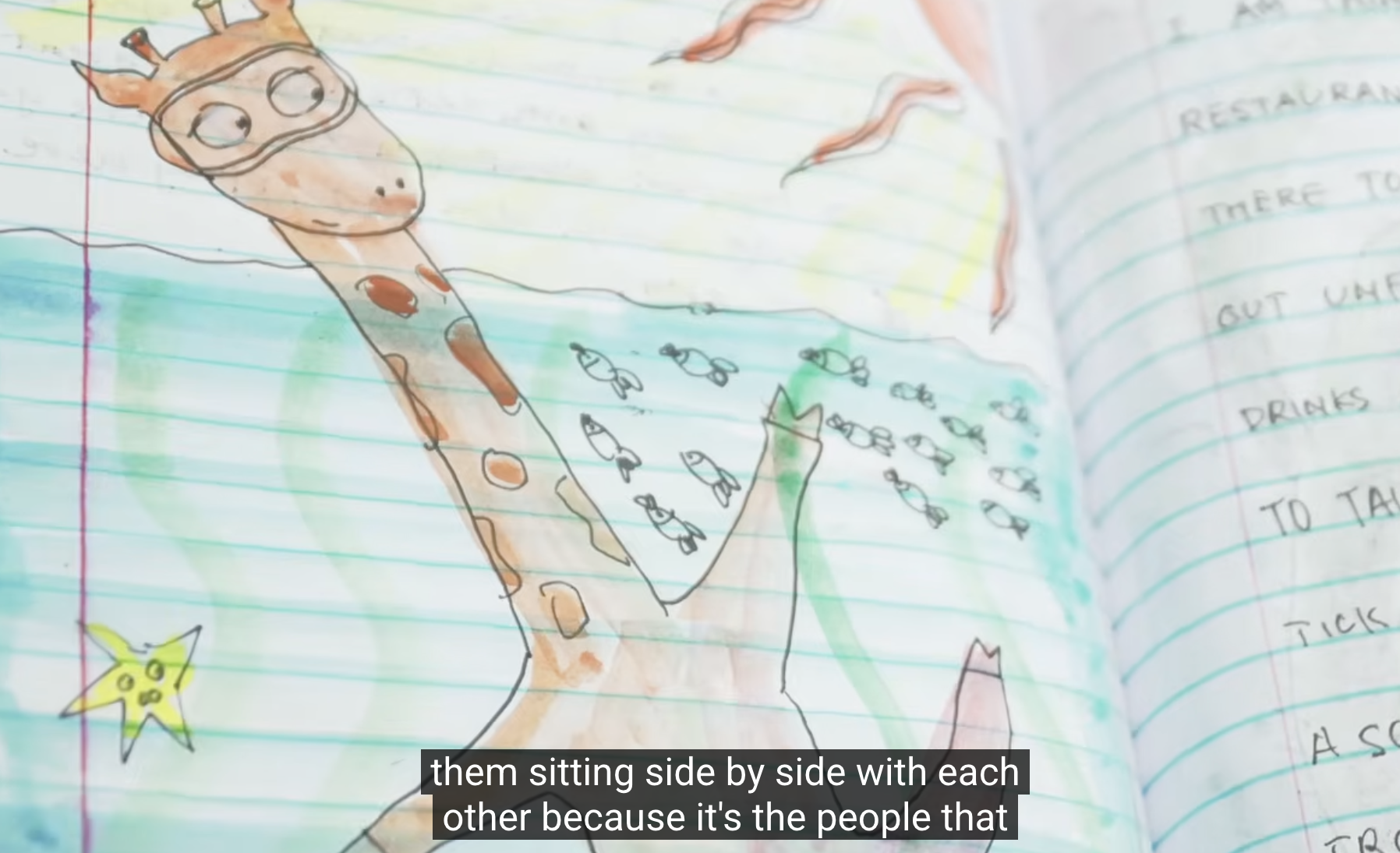
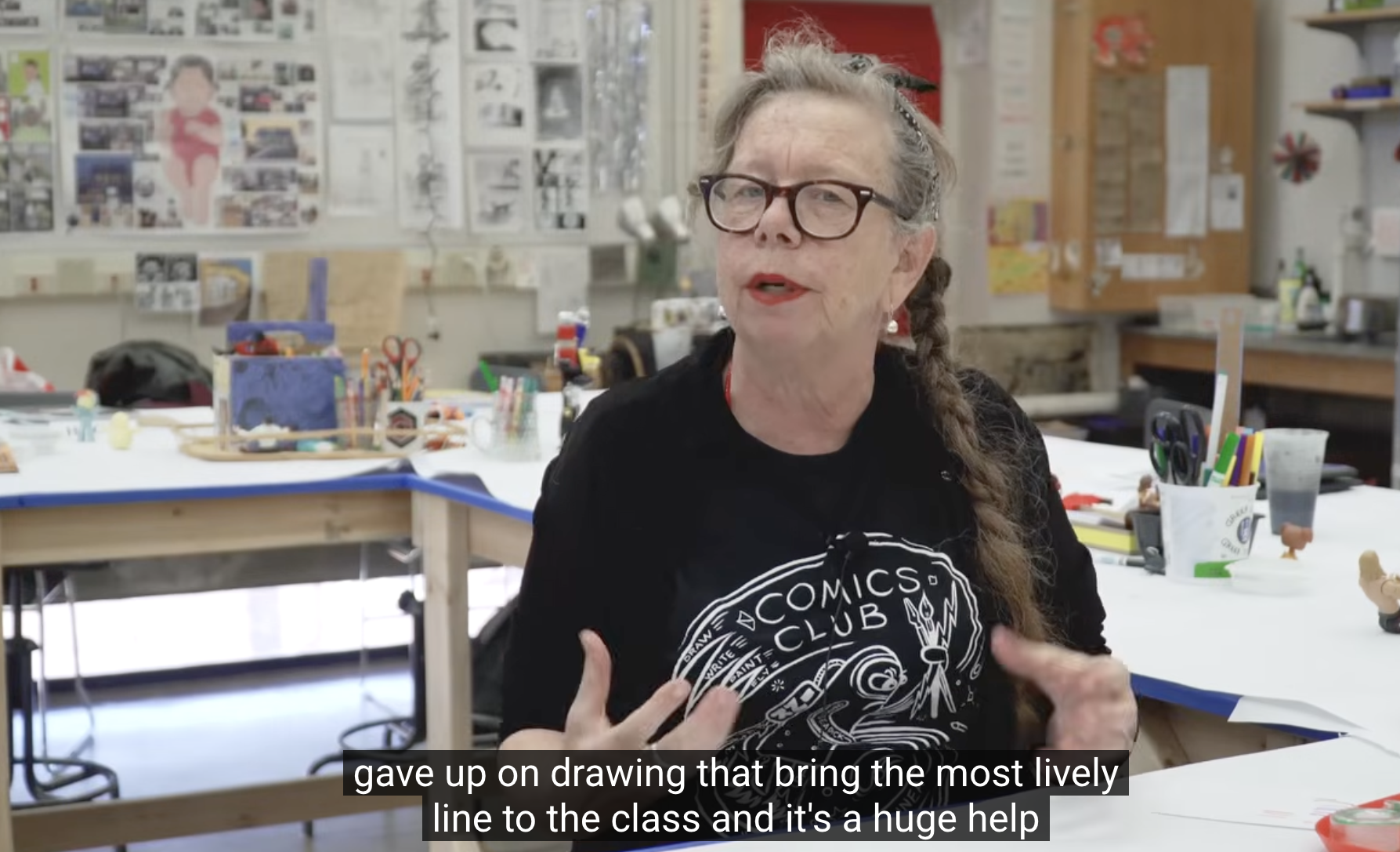
Since the workshop was a fundraiser for MAKE, we had some participants with some experience in comics joining, but also some artists with a background in printmaking and complete beginners just curious about the technique ! As an art educator, I really value teaching for students of different levels and backgrounds in the same room : people who think they can draw always have something to learn from sitting next to those who think they can’t draw ! One of my favourite cartoonists and educator Linda Barry taught me that !
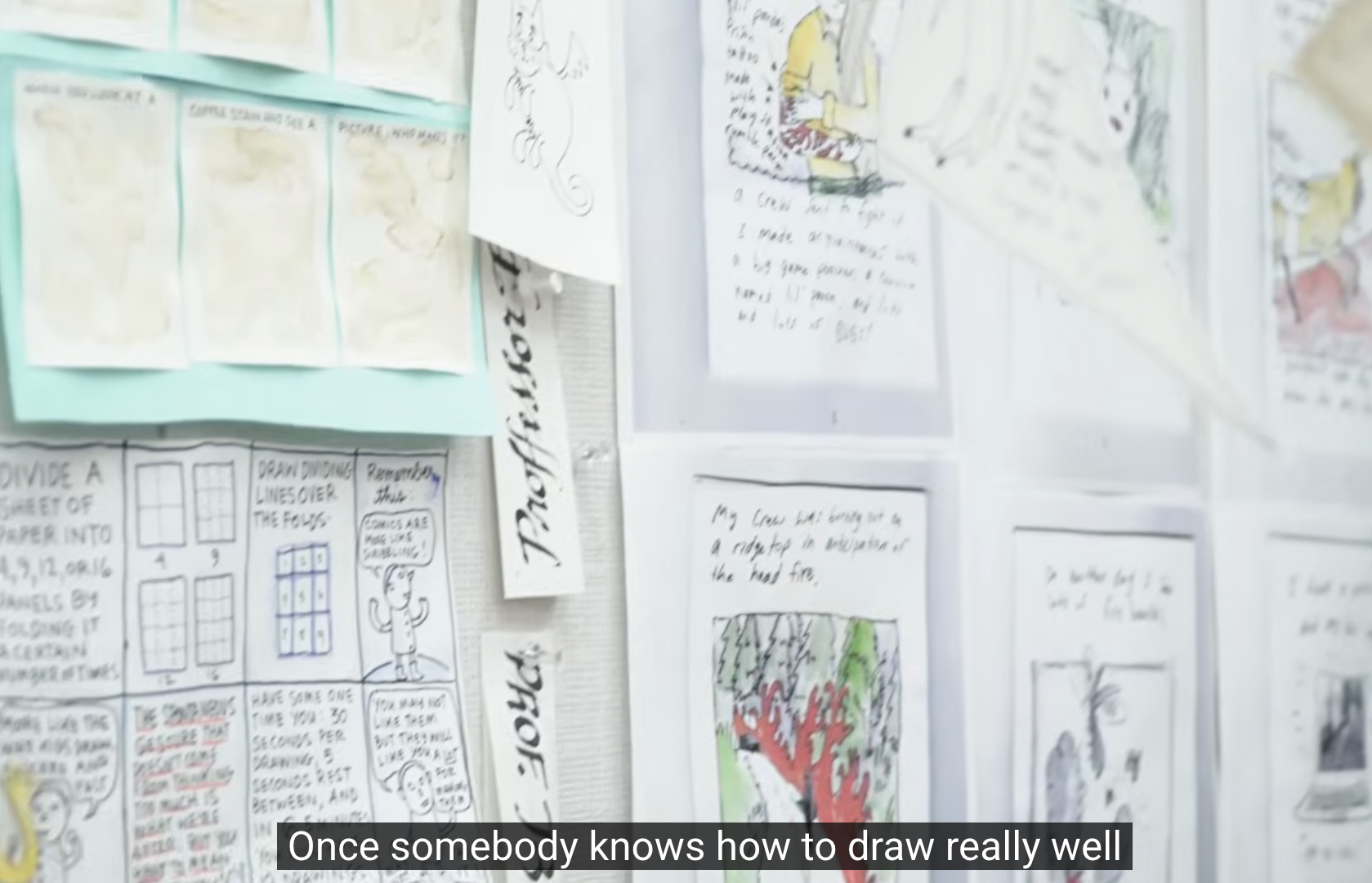
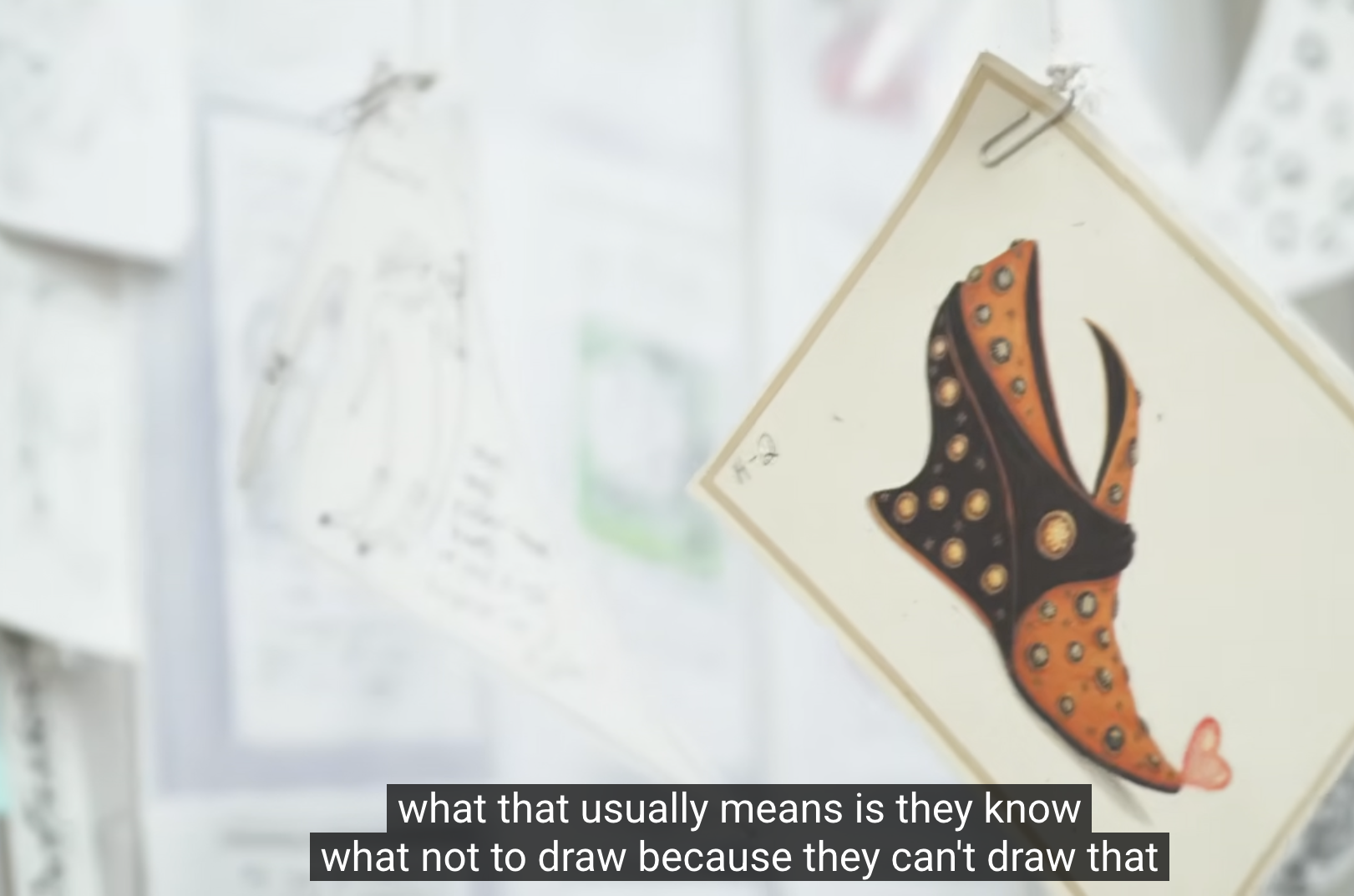
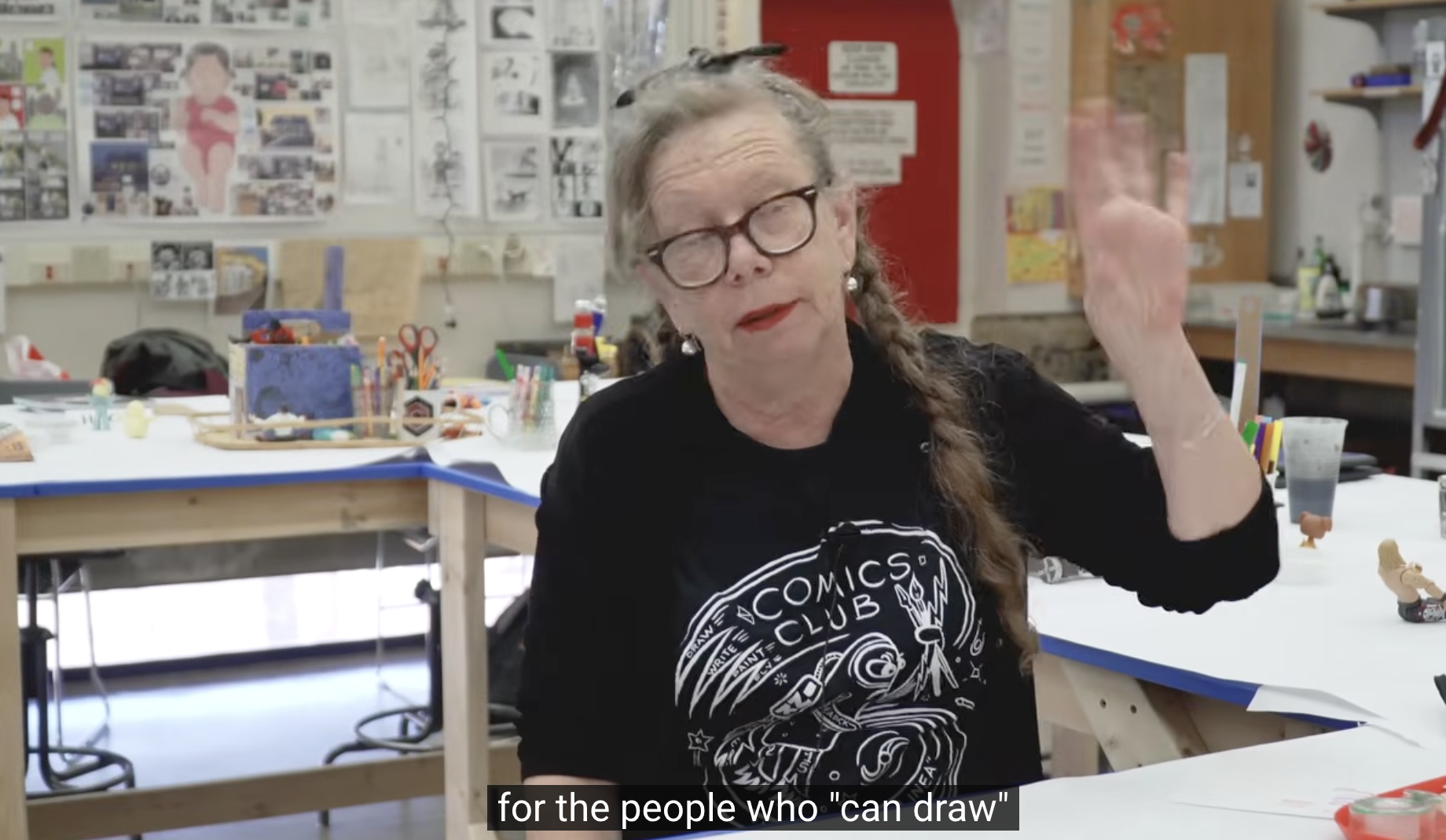
My MAKE festival colleague James kindly offered his help during the workshop, sharing his wealth of knowledge and passion for comics, assisting me with the workshop technical aspects and taking some photos to document our experience. Thank you James !
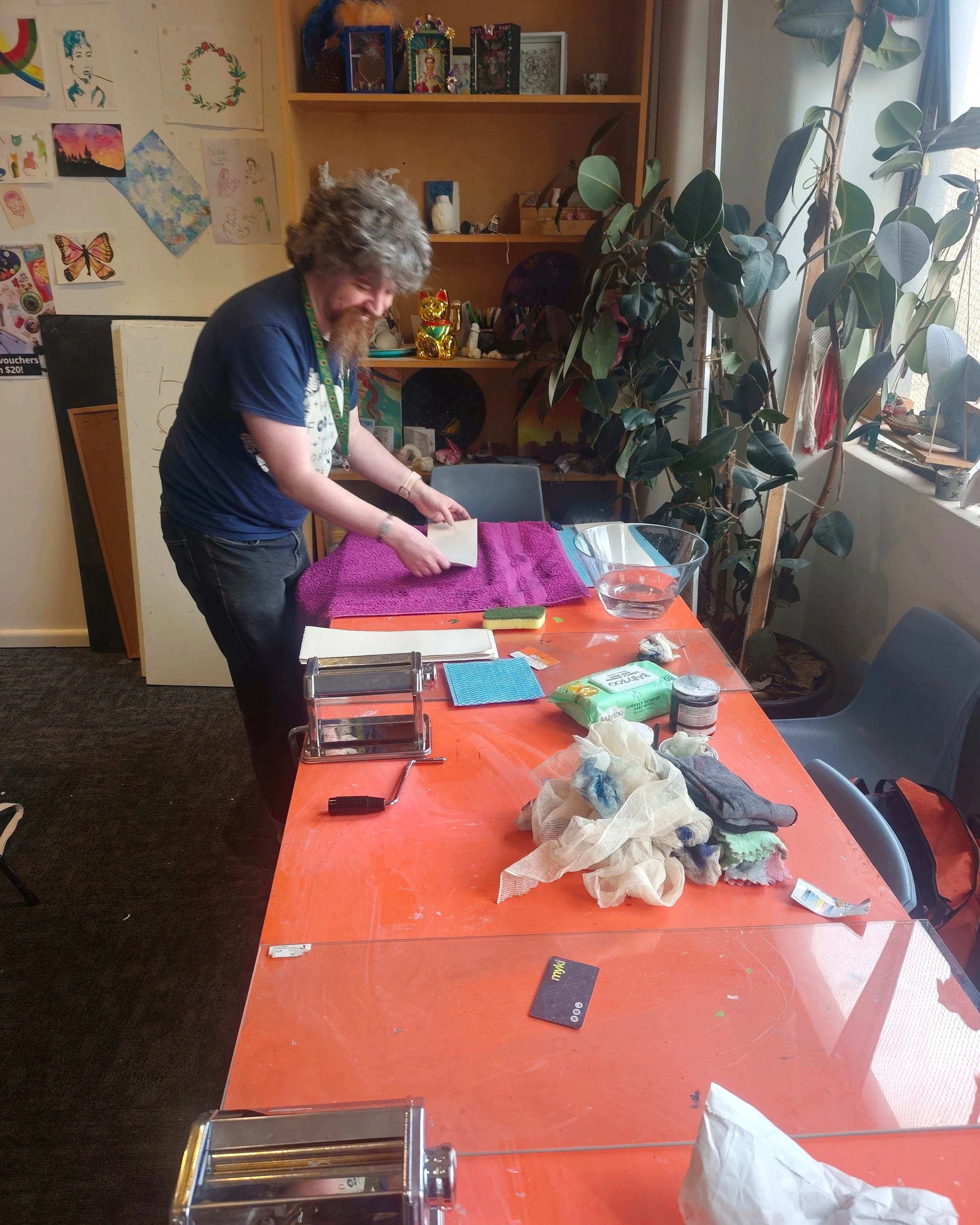
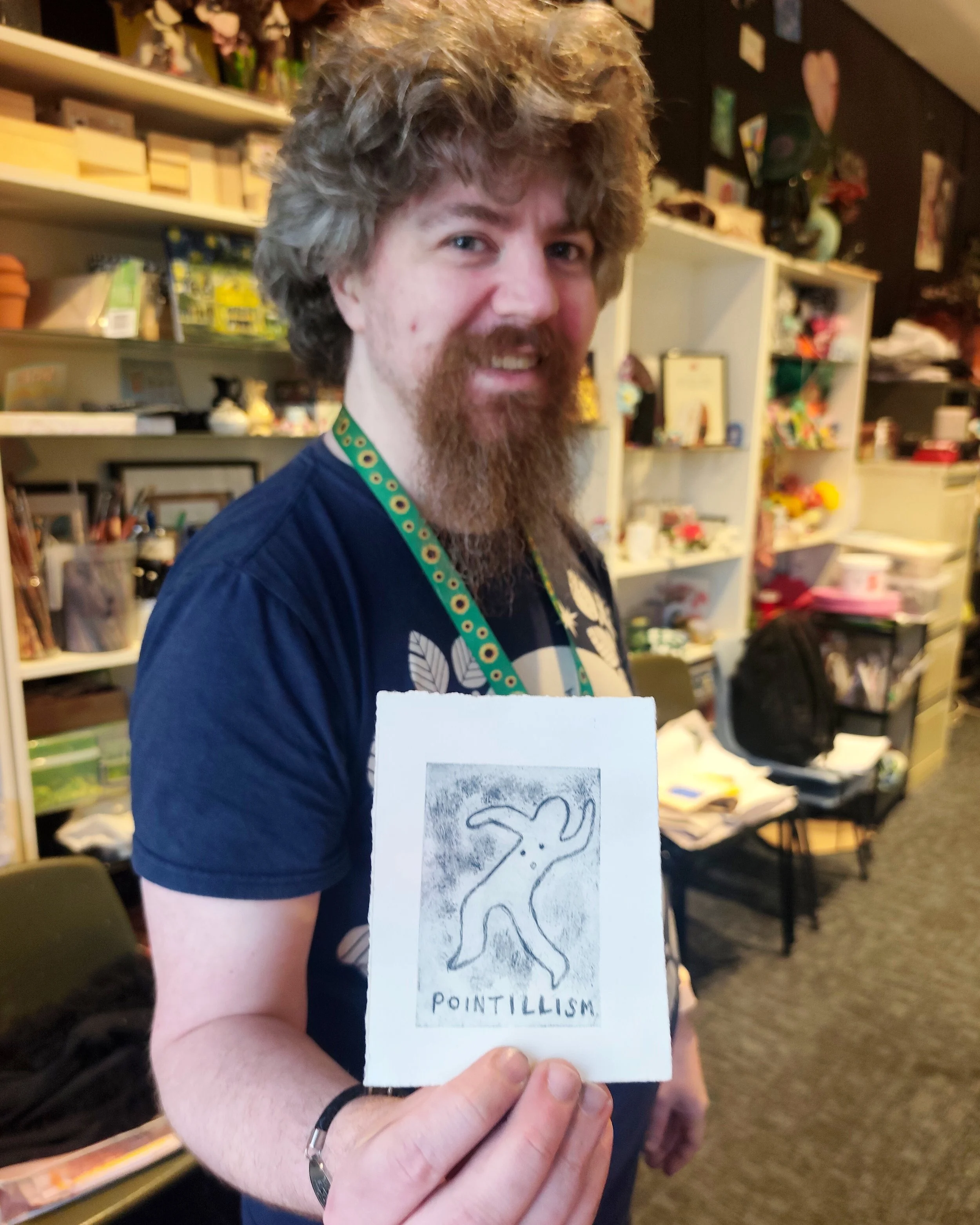
We held the workshop at Laneway Learning studios, In the Nicholas Building in Melbourne CBD. Laneway Learning is a wonderful community organisation focusing on life-long education and they are a generous partner of our comics festival, offering their venue for free to run our fundraising workshop. I have been teaching with Laneway Learning since 2018 and run weekly short art classes on week-day evenings. Check out my classes program HERE.
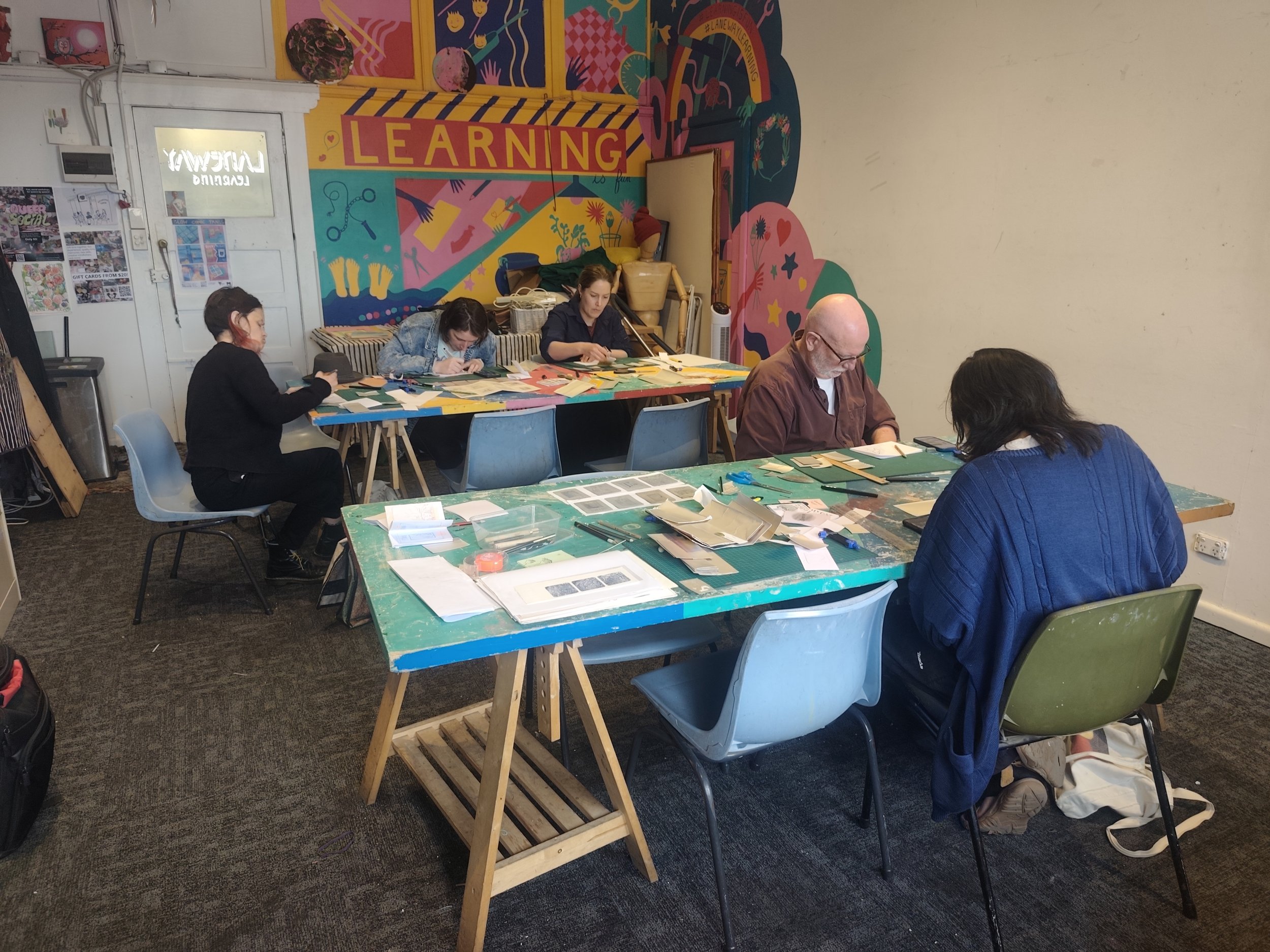
Laneway Learning studio in the historical Nicholas Building in Melbourne CBD. Credit photo Emilie Walsh
We ran the workshop in three steps :
designing for an etching zine
etching each comic panel on a tetra-pak plate
and finally printing the zine on Fabriano printmaking paper in the pasta maker !
Designing for a tetra-pak etching zine
When working with tetra-pak etching to create a short comics zine, we are working with the constraints of the technique. First we are working on small plates that are cut off in milk cartons (tetra-pak) and we are also limited by the size of the pasta-maker to print. We are also working mostly with line-work, etching each element with a dry-point needle, so keeping the design simple was crucial for a 3-hour workshop.
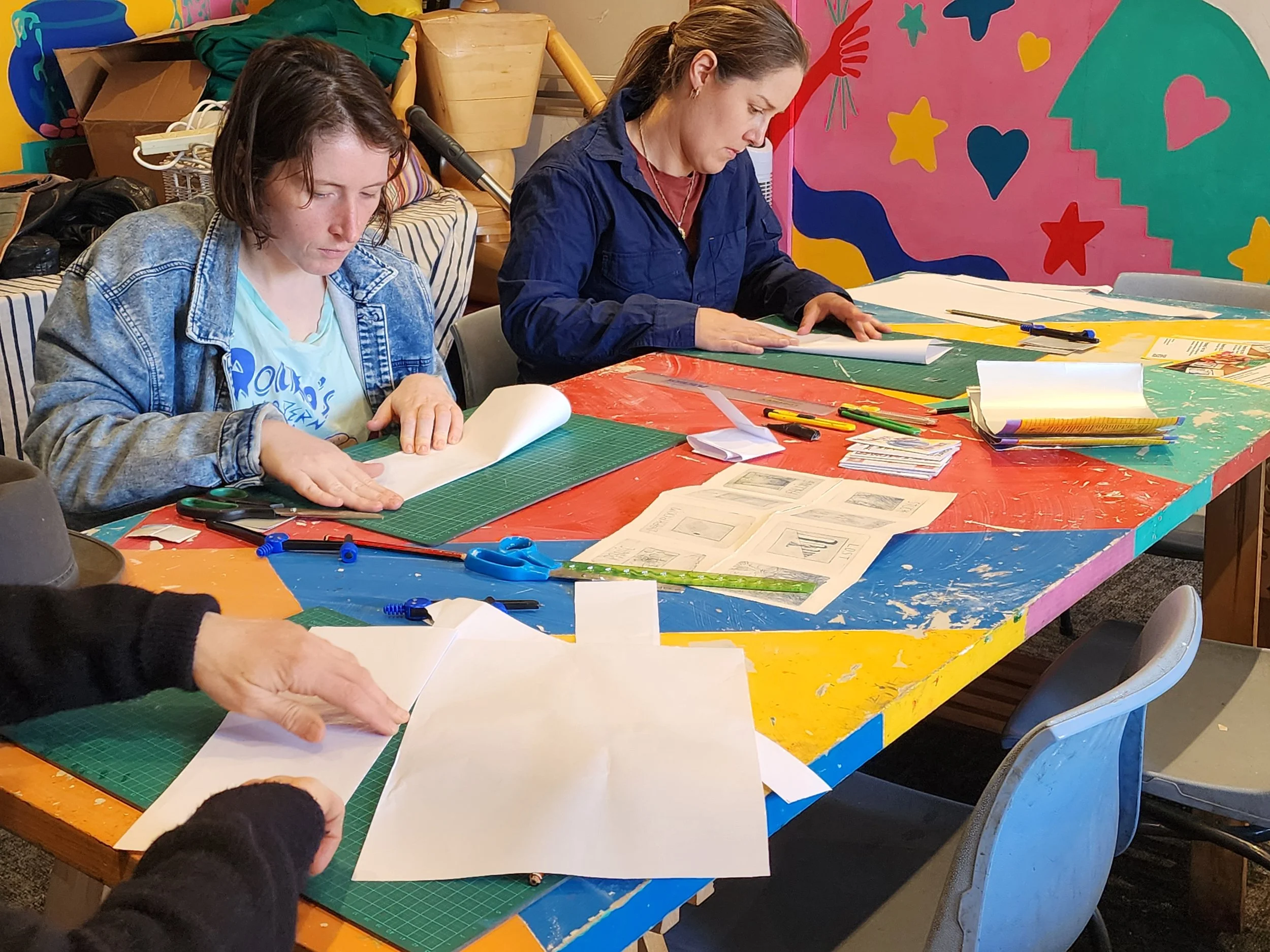
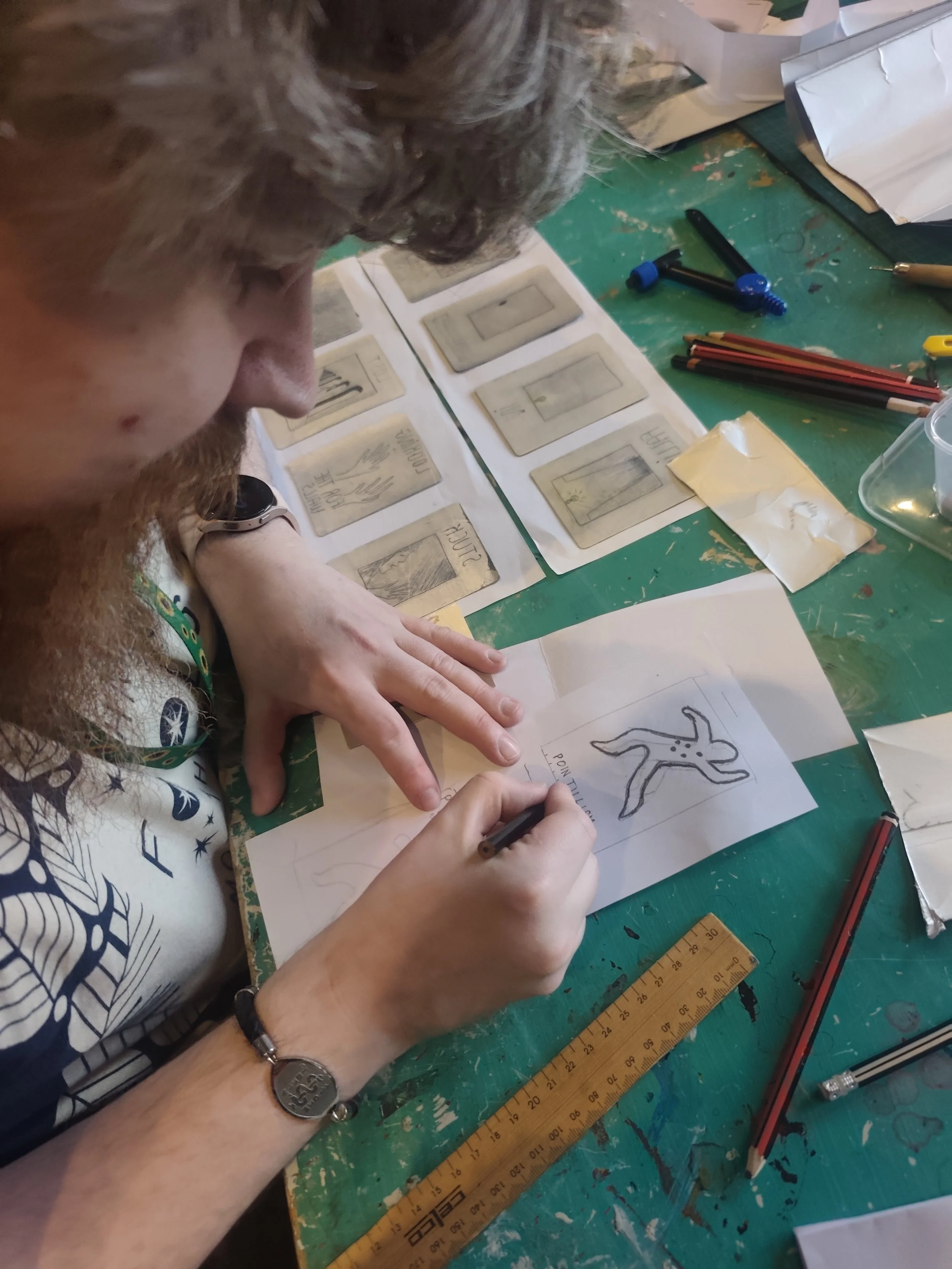
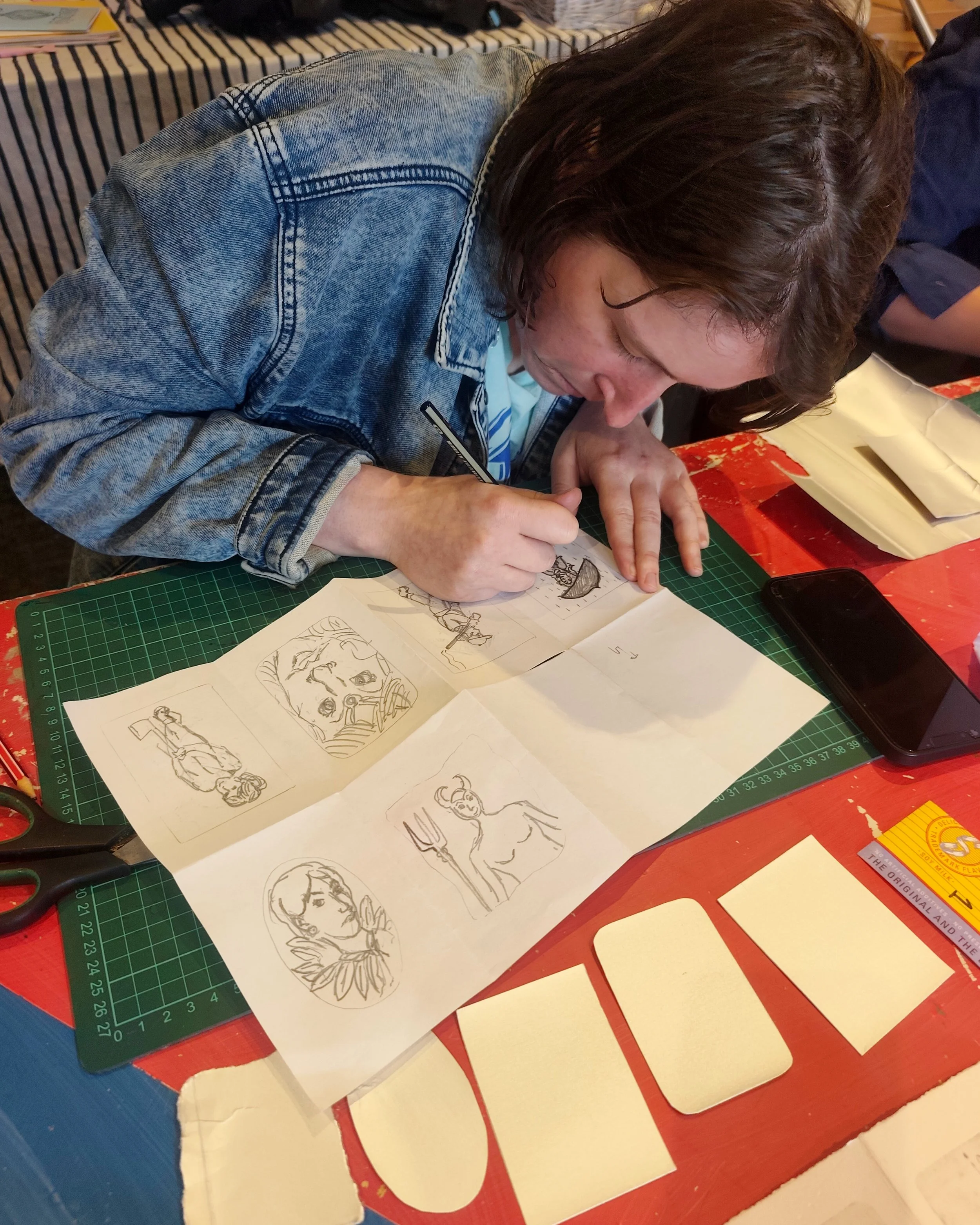
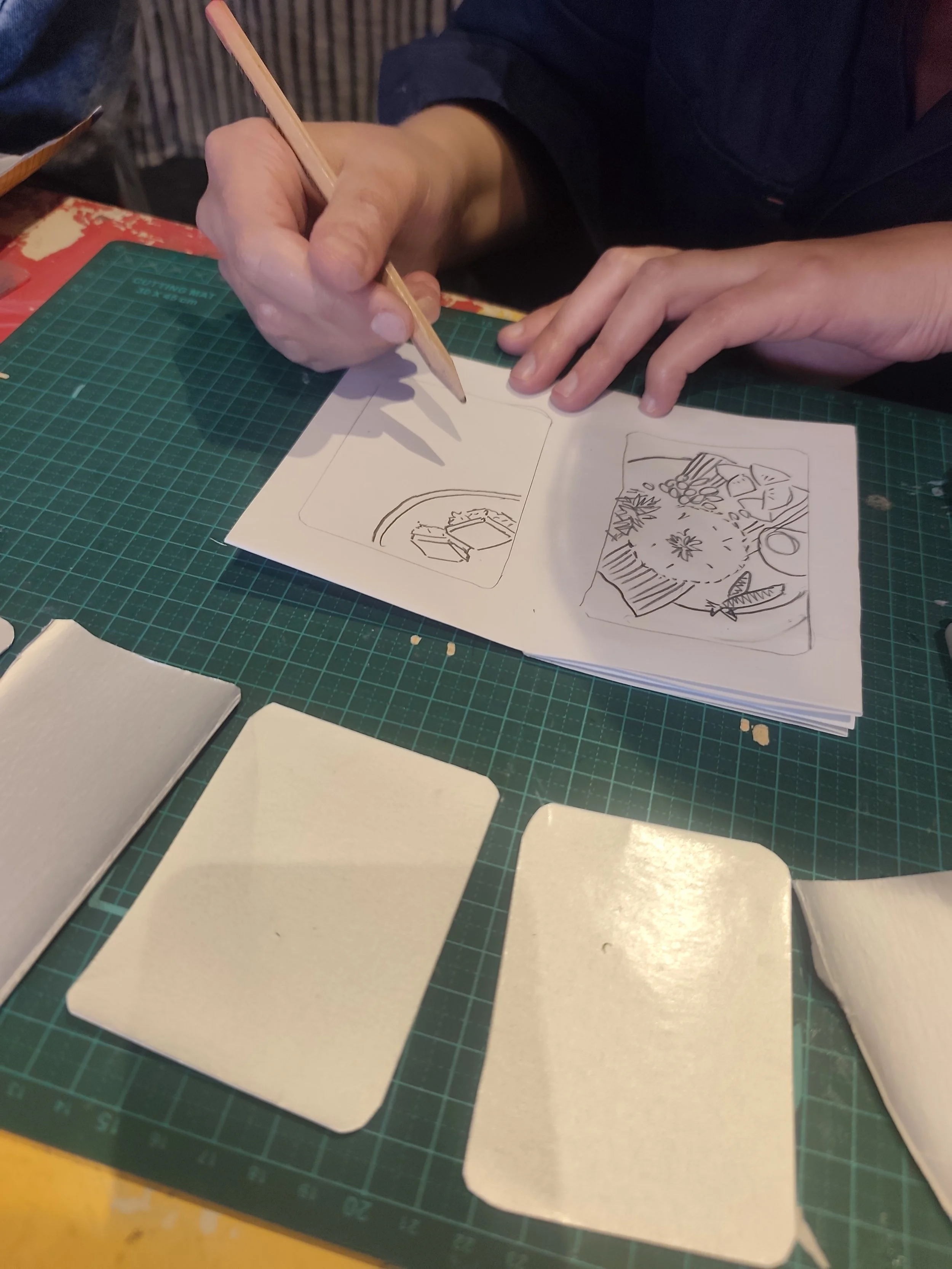
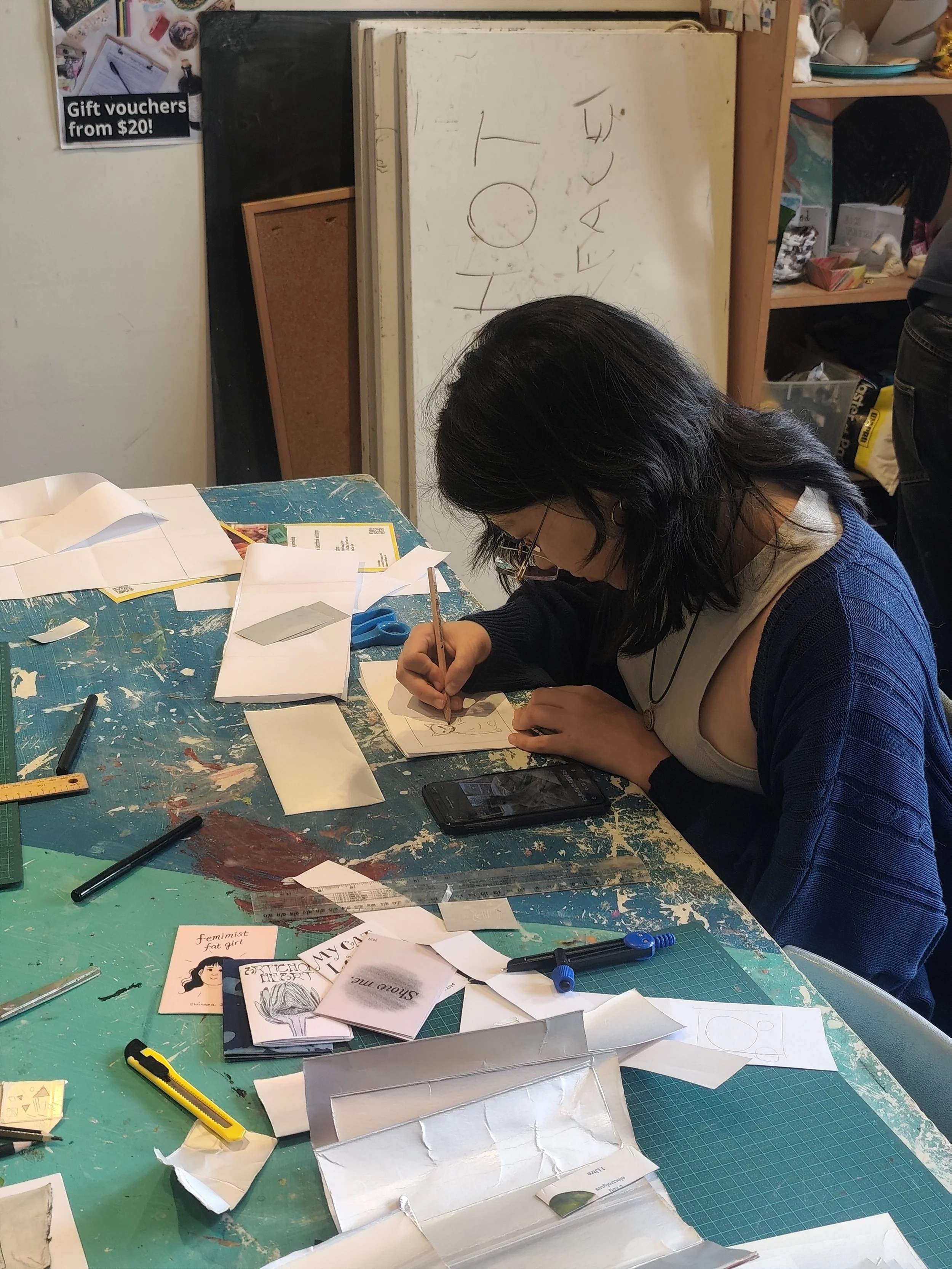
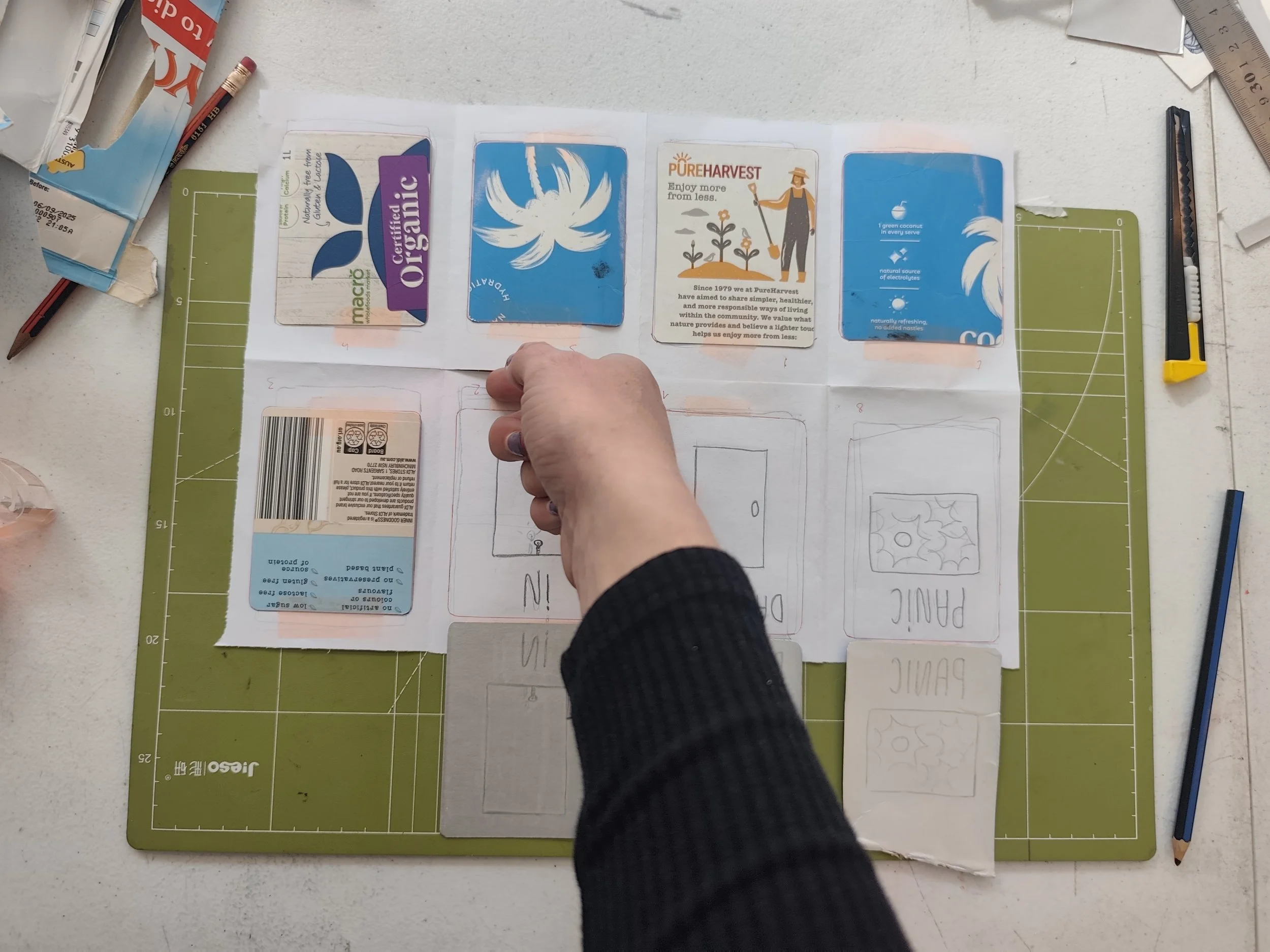
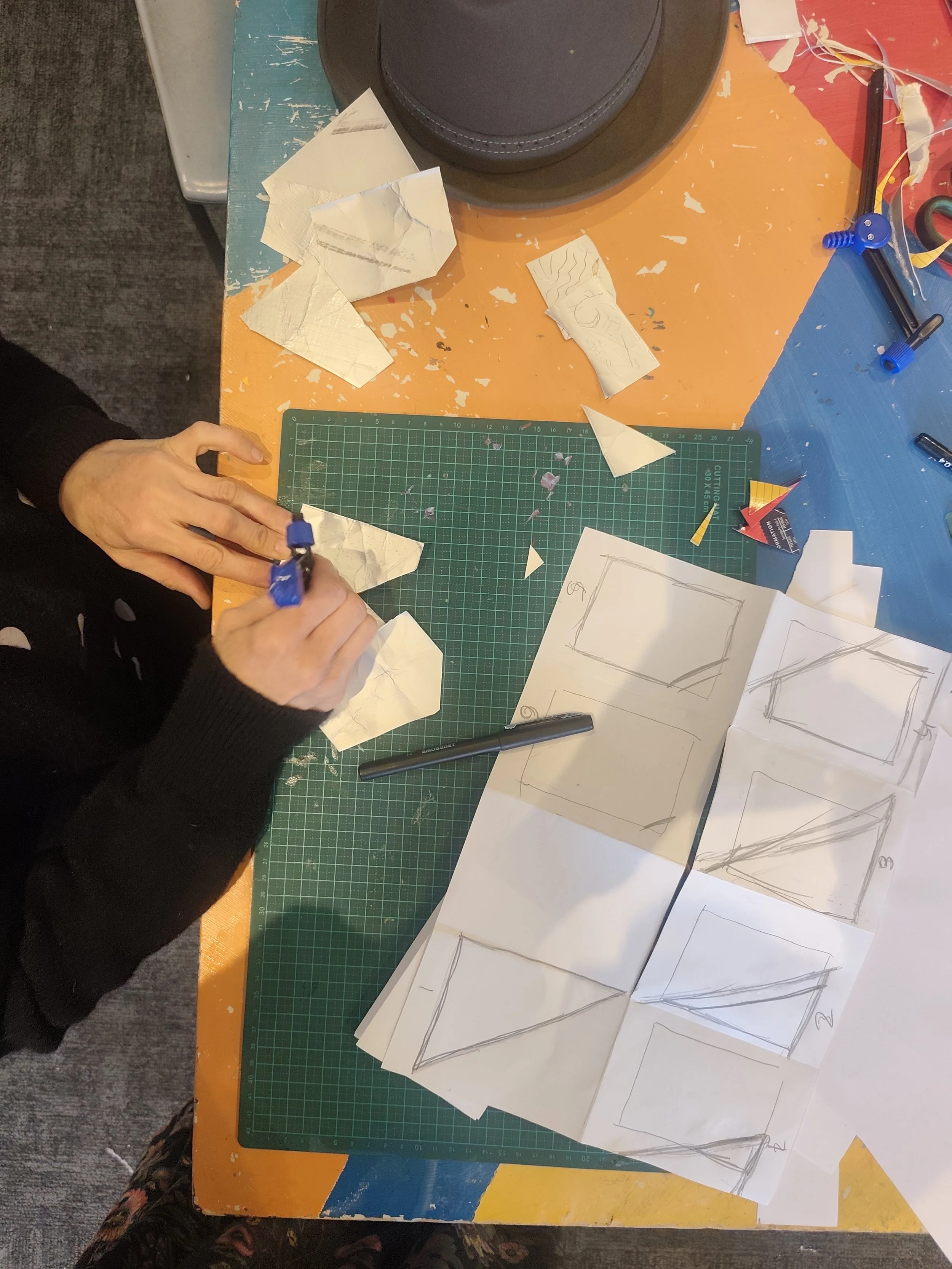
We started by creating a mock-up version of our zine, on simple A3 paper, to plan each panel and the overall layout of the project.
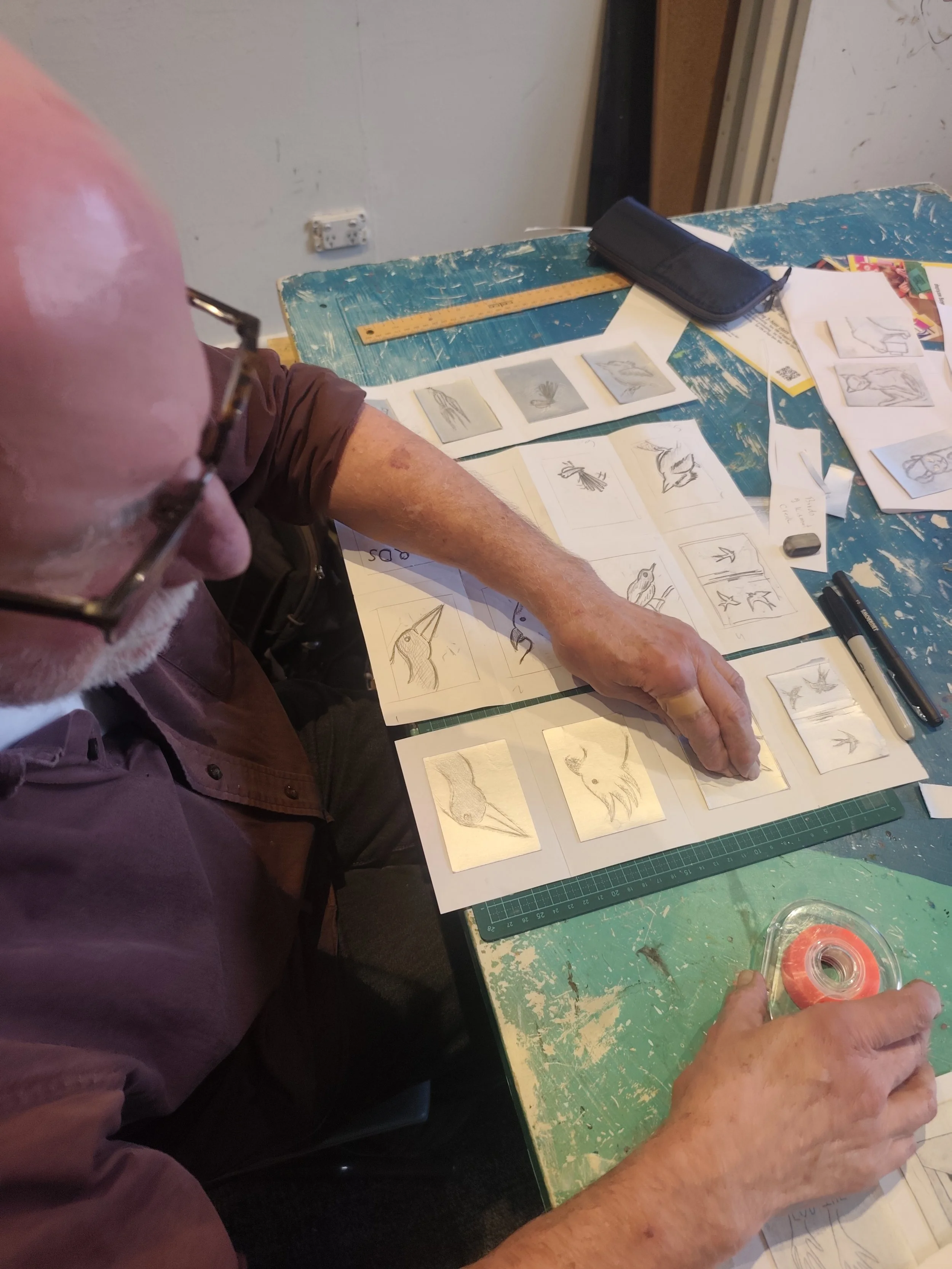
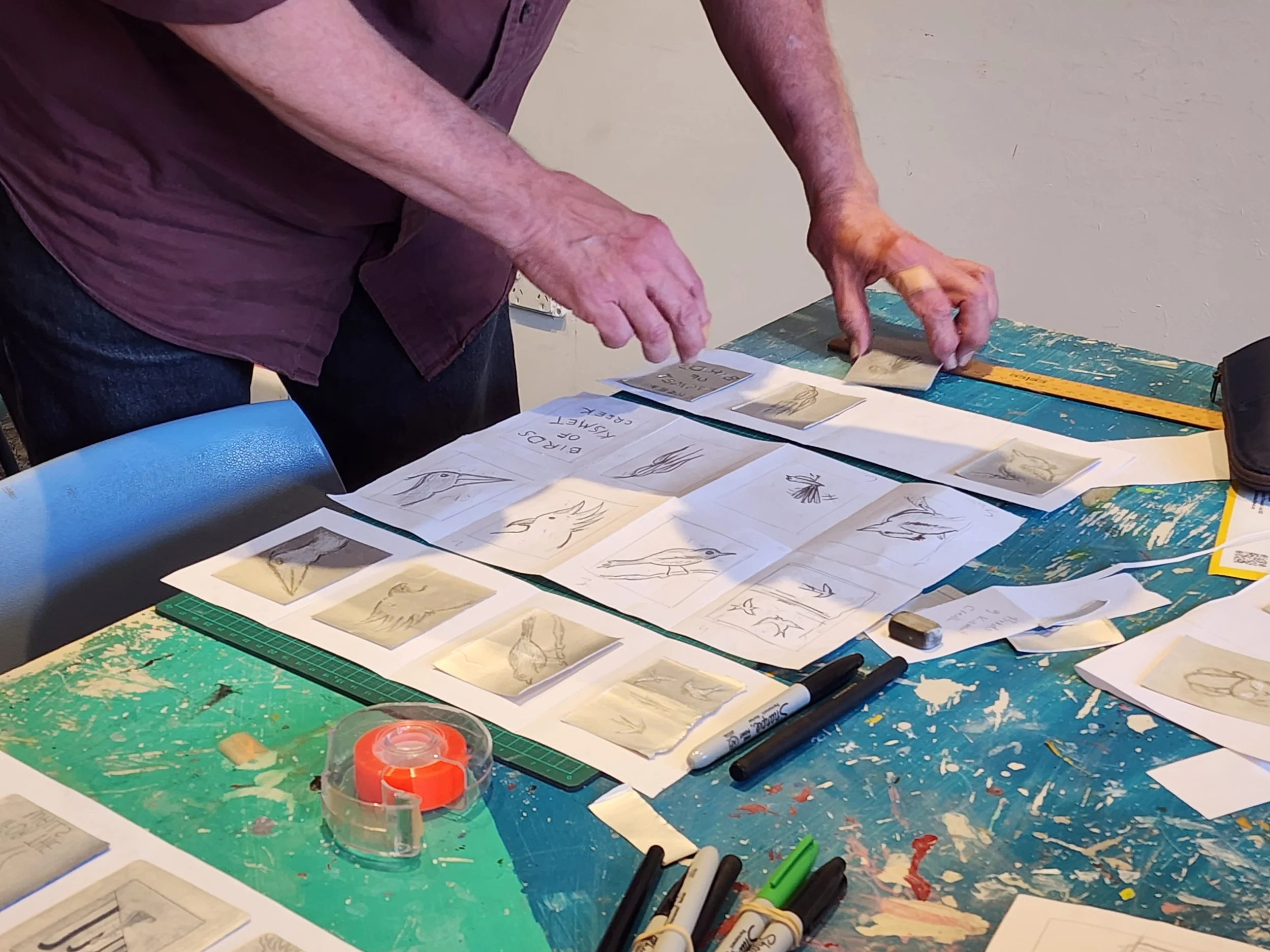
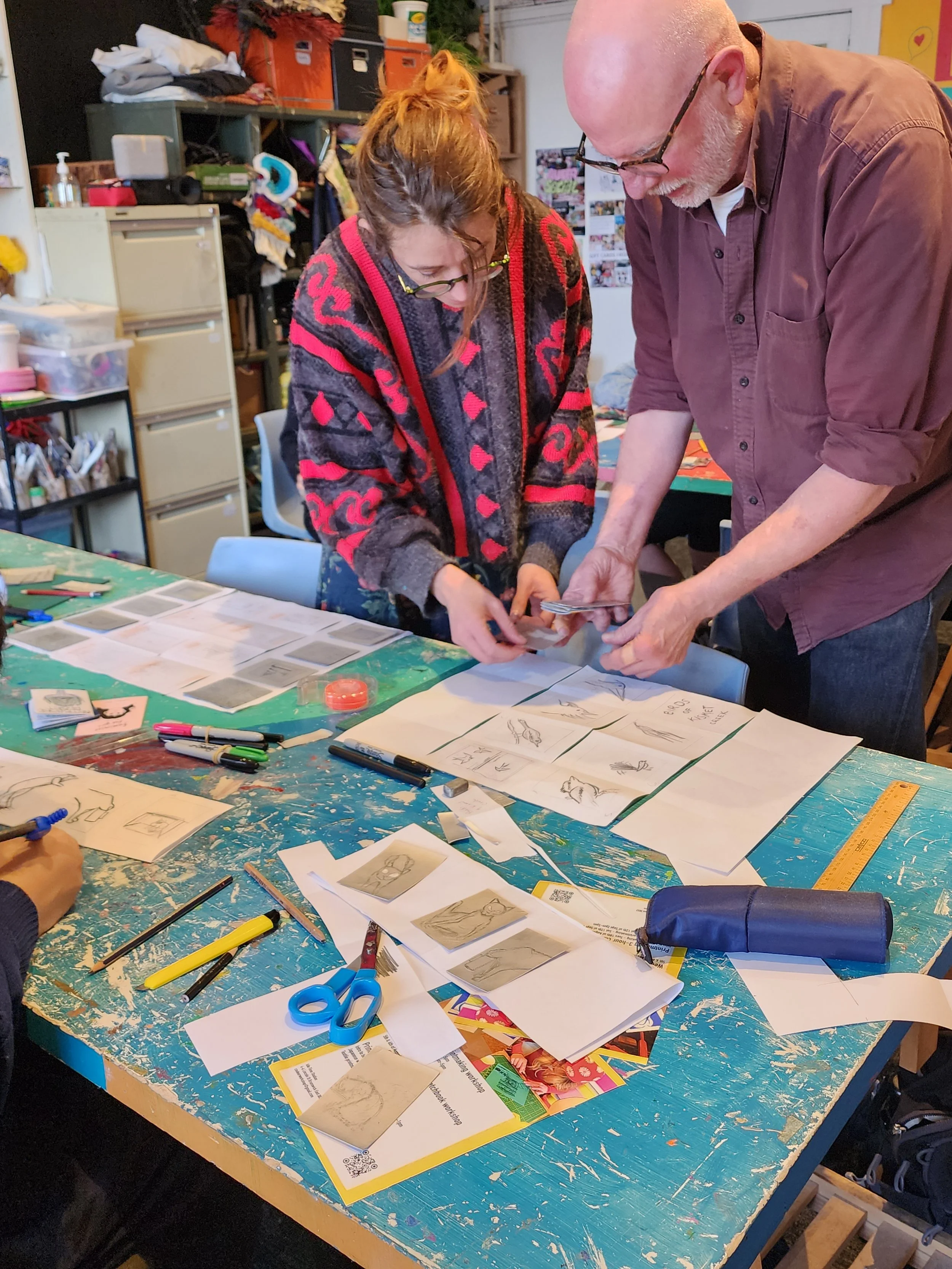
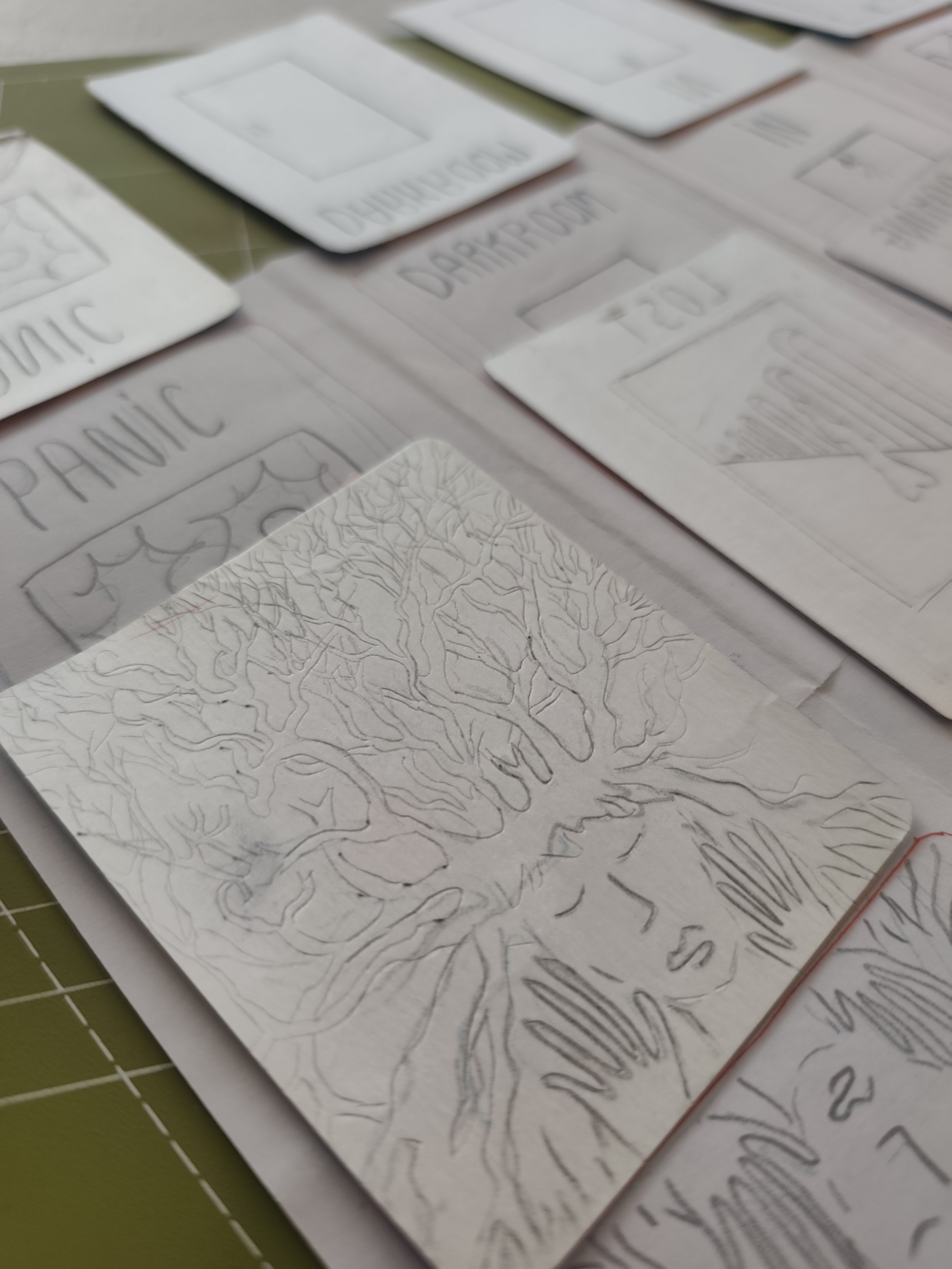
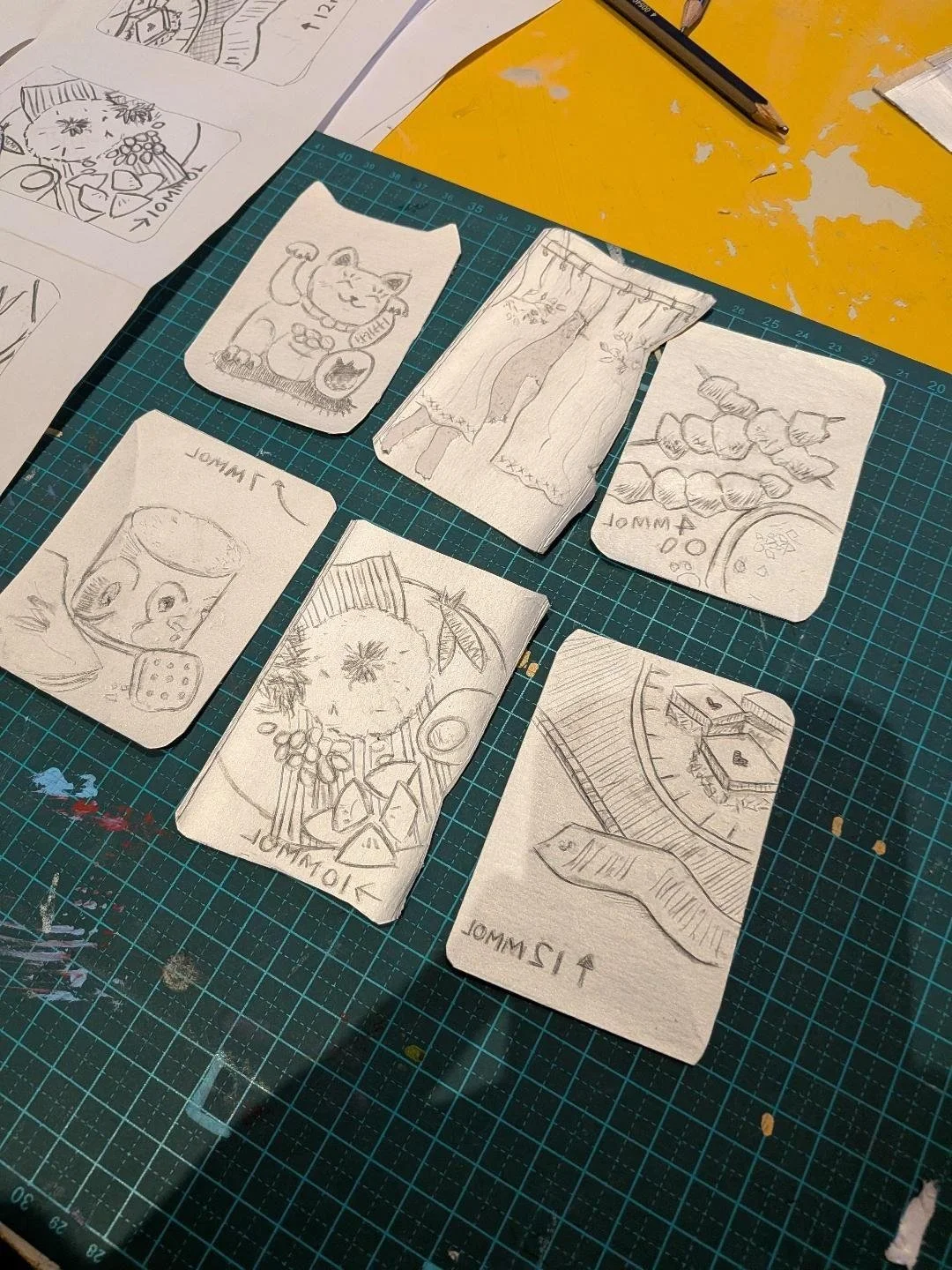
Once the mock-up was finalised, I taught the participants how to transfer their design from their draft to the milk-carton plates, using a simple transfer technique I use for all my printmaking projects. We go over the design with a greasy 4B pencil and then rub it onto the tetra-pak plate. Transferring the images from the draft to the tetra-pak plates also has the benefit of flipping the design in a mirrored-fashion. And then when we print it, it flips back to how it was designed! This becomes particularly crucial when incorporating text in a design, which is the very nature of comics ! Text and images coming together !
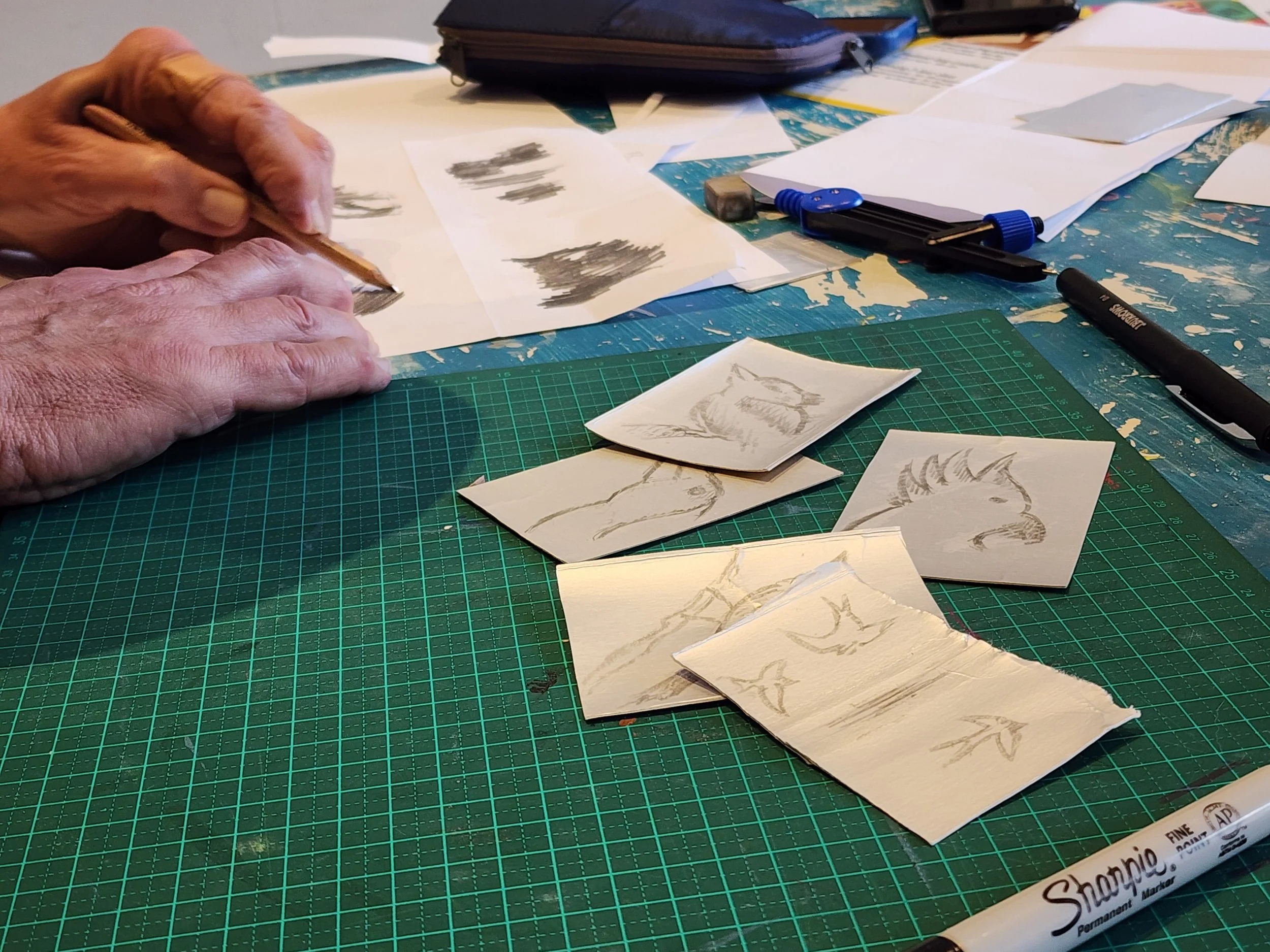
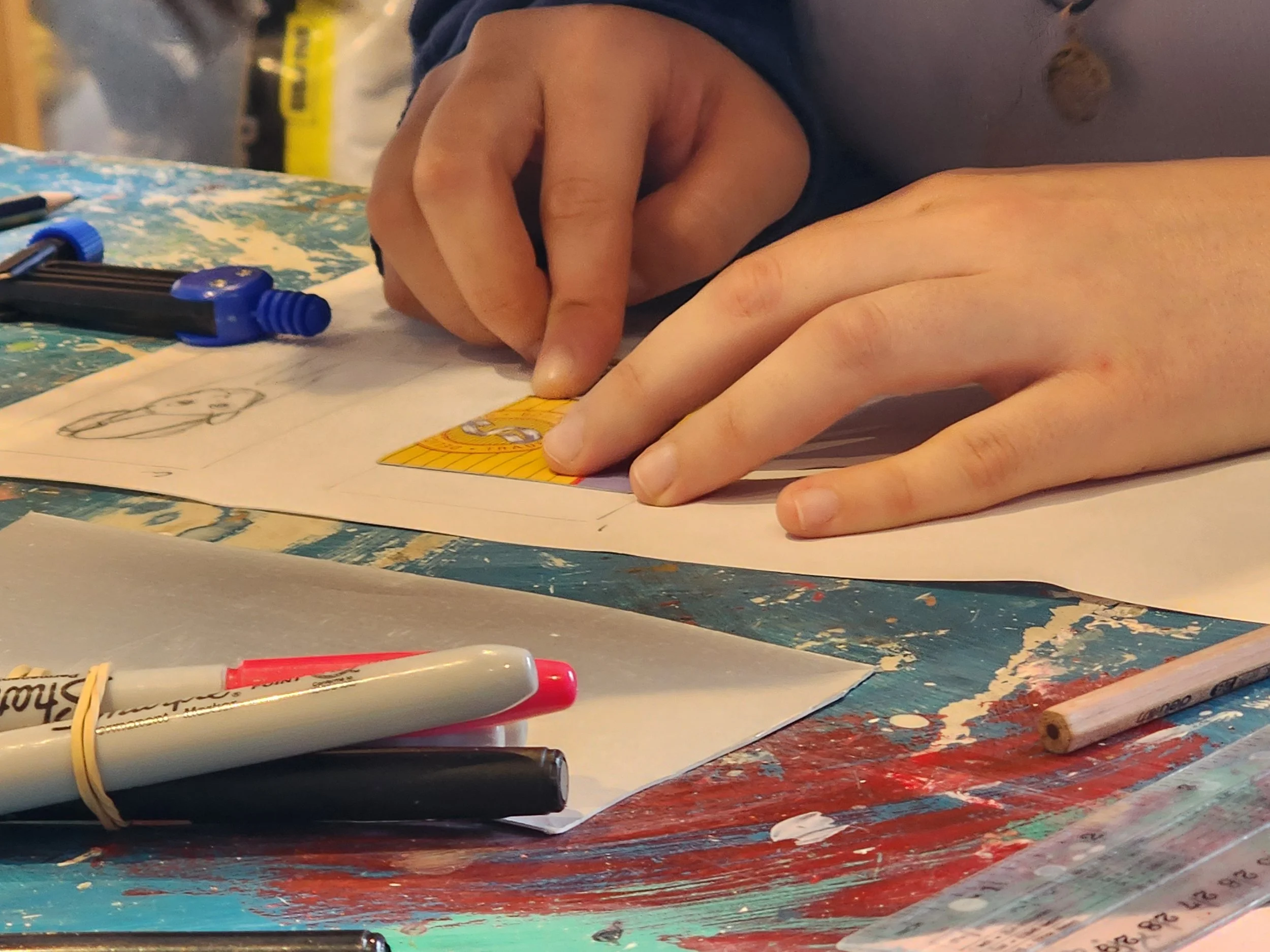
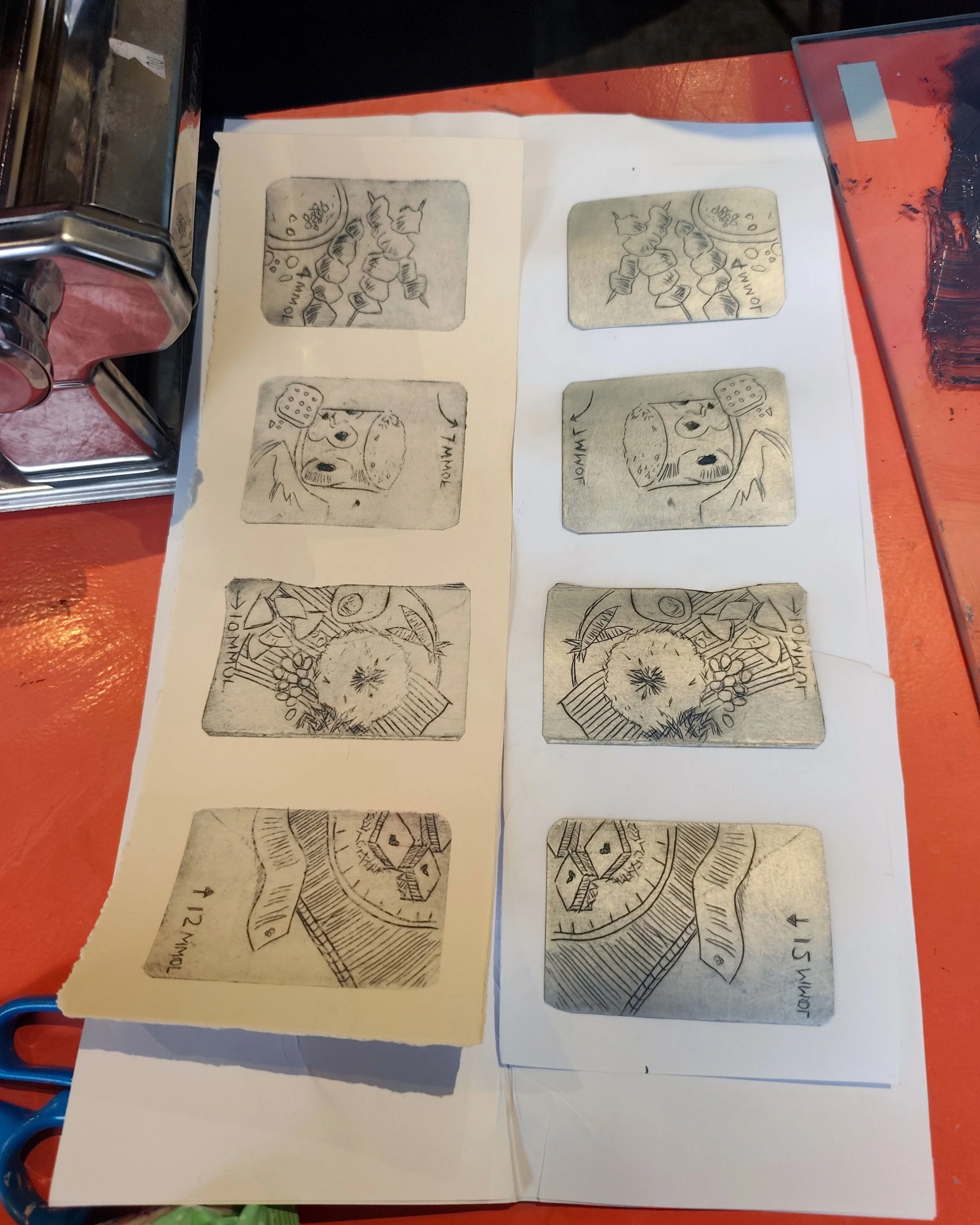
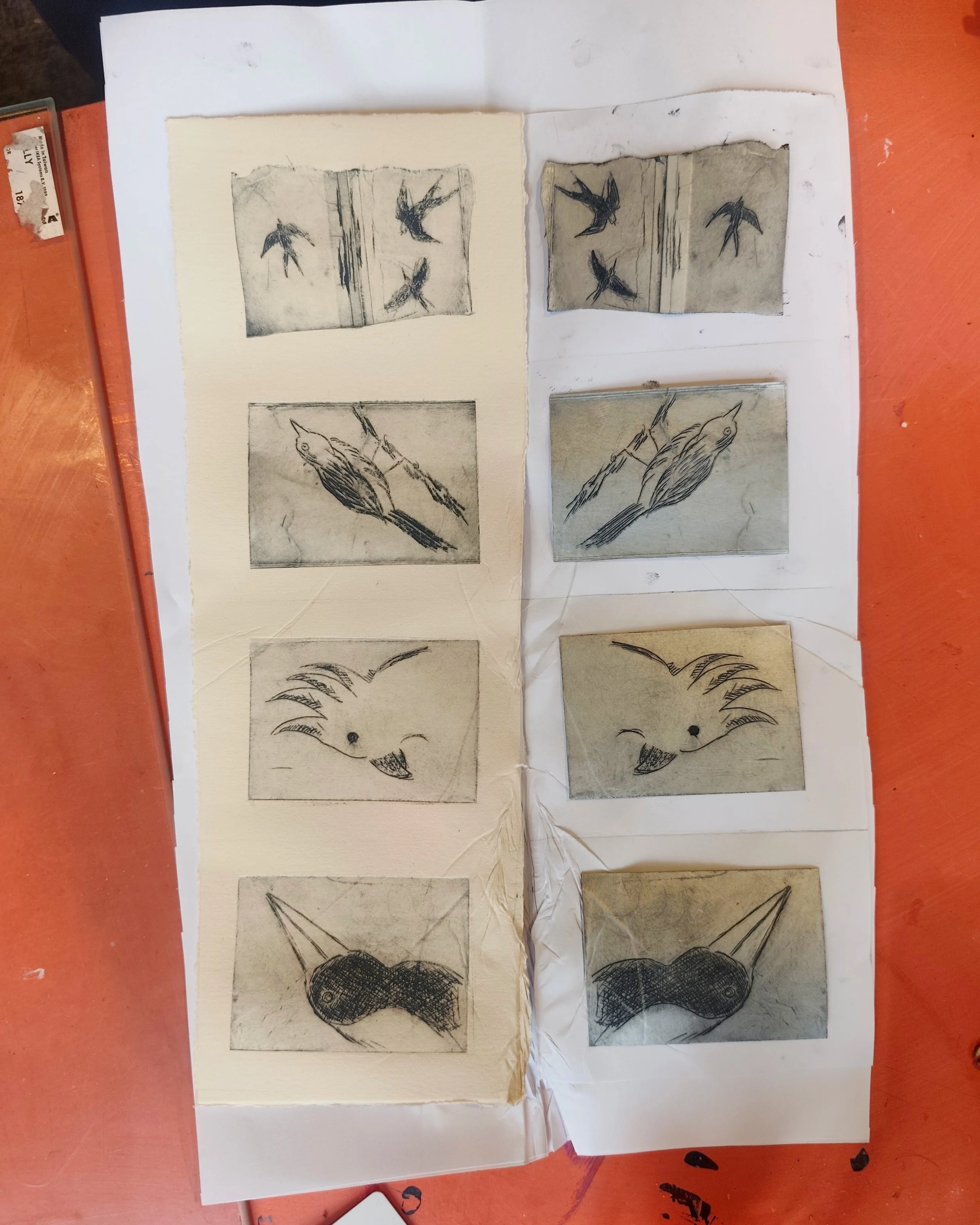
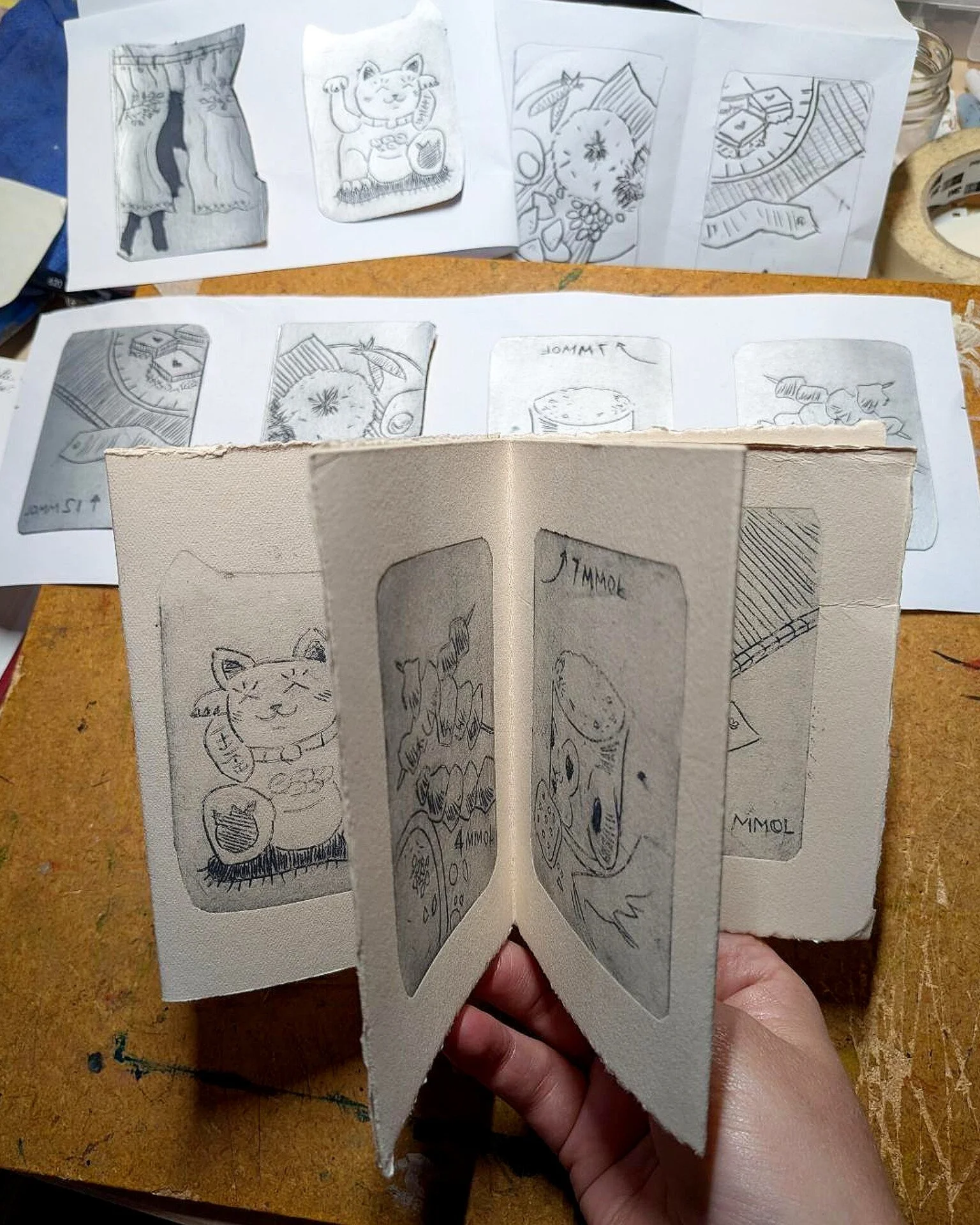
Our participants came up with a variety of ideas and design approaches : Local Australian birds collection, the always popular ‘cat zine’, a collection of delicious Indonesian food, a fan-art zine about one's favourite TV show, and even an experimental abstract comics zine !
As an art educator I get so much joy seeing the variety of ideas, style and design that come out of my workshop! I’m always impressed by everyone's creativity and learn something new every time from my students.
Etching tetra-pak
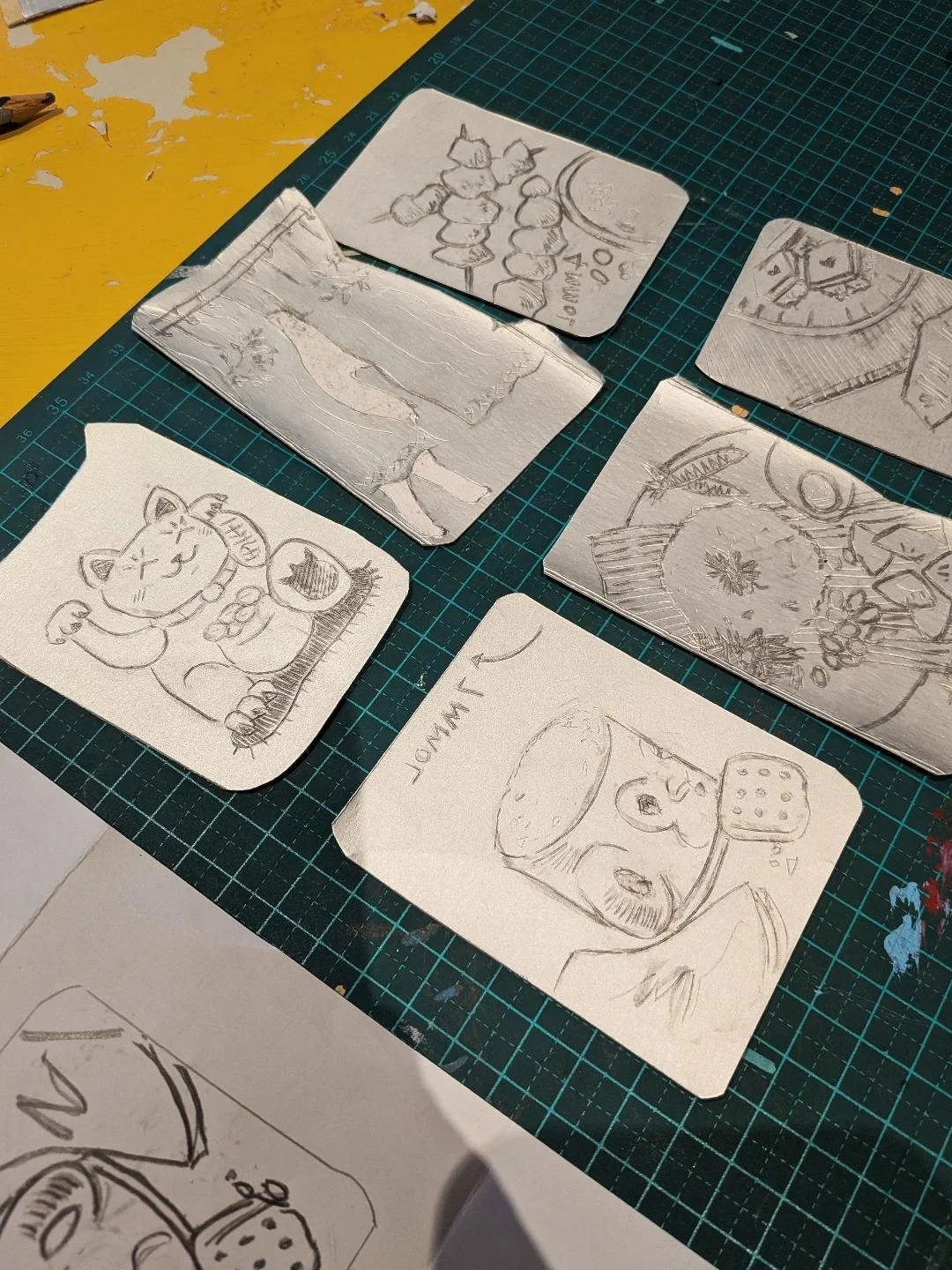
Once the design is transferred onto the milk carton plates, this gives us a guide to then etch with a dry point needle. In the spirit of keeping this workshop as DIY as possible - using affordable, easy-to-source materials to allow participants to continue printing from home - we used cheap compasses as a needle for etching, instead of the specialised dry-point tool used in printmaking : it does the exact same job! All you need is a pointy tool !
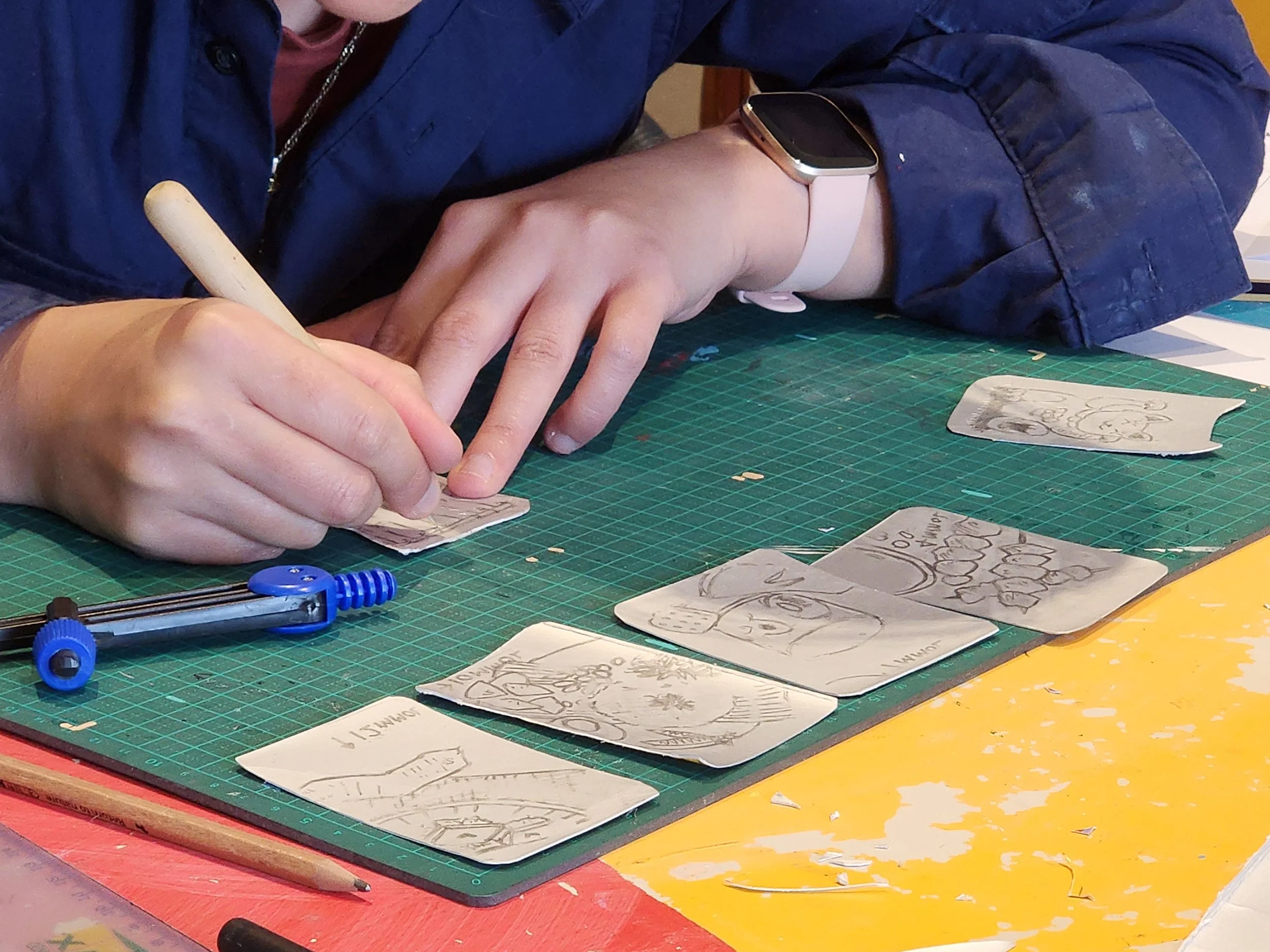
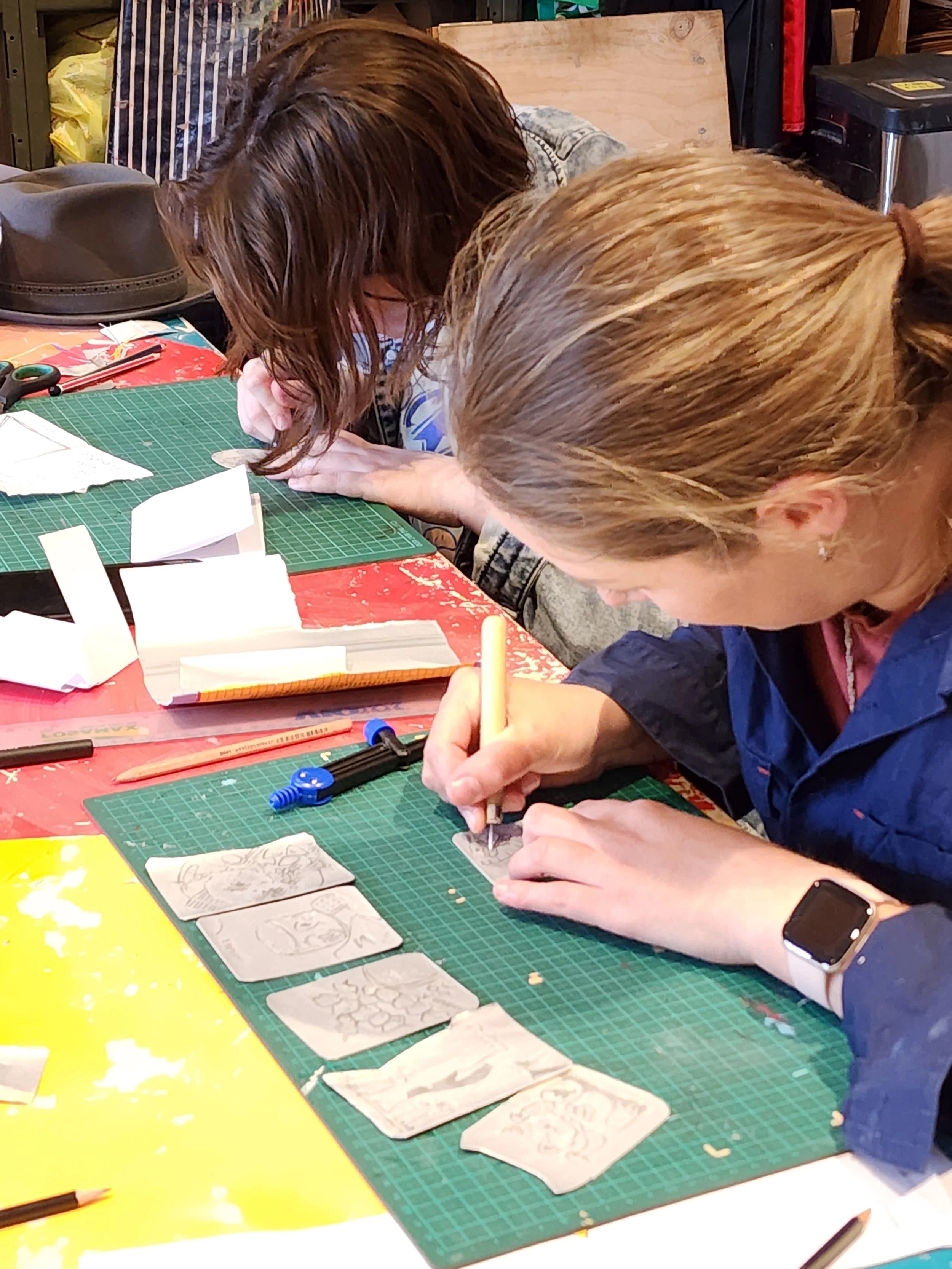
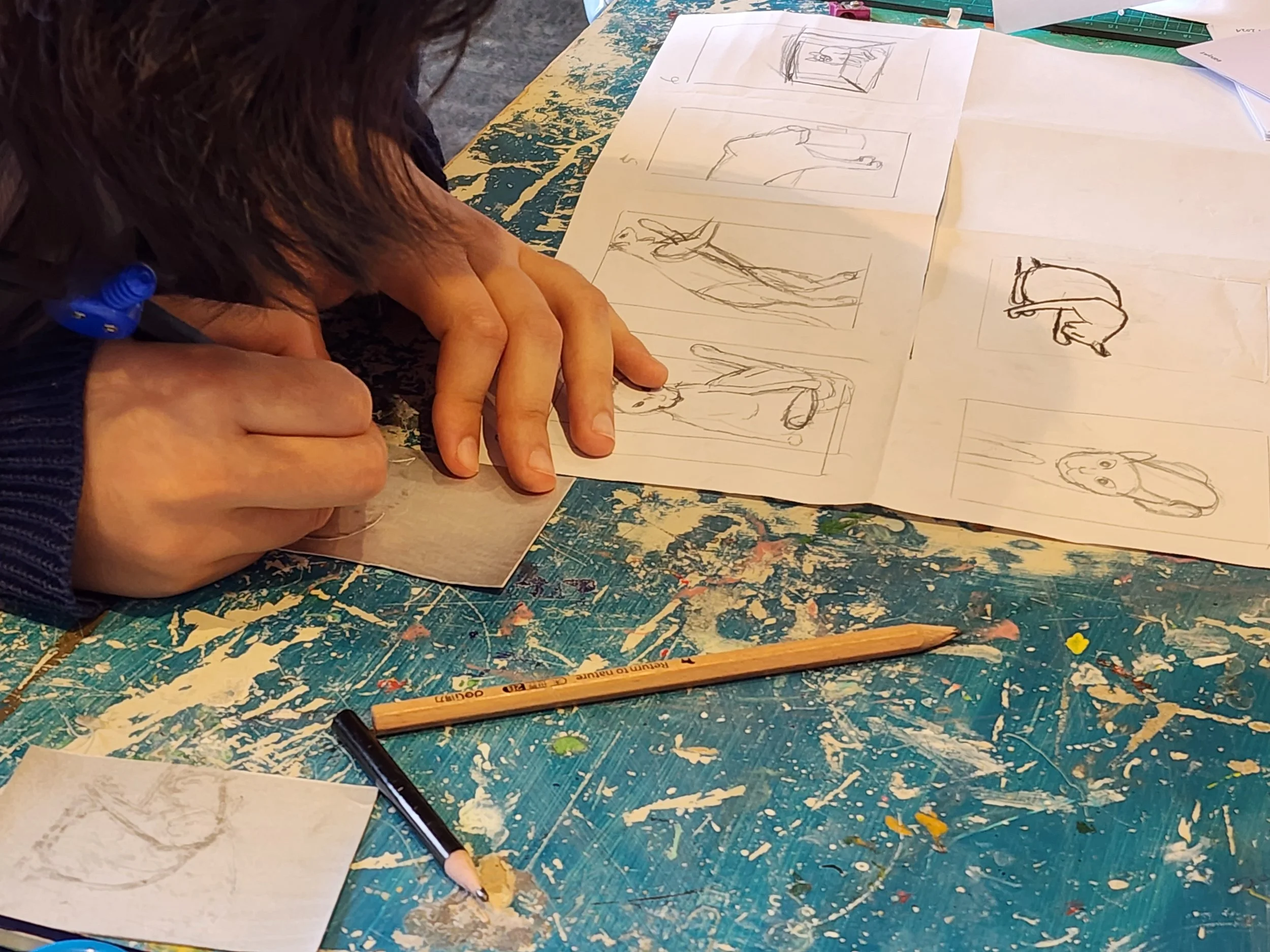
This dry-point etching technique is also used with more conventional materials in printmaking : acetate or plastic plates and even copper plates can be directly etched with a dry point ! Learning it with tetra-pak is a great way to discover and understand other techniques of the printmaking family.
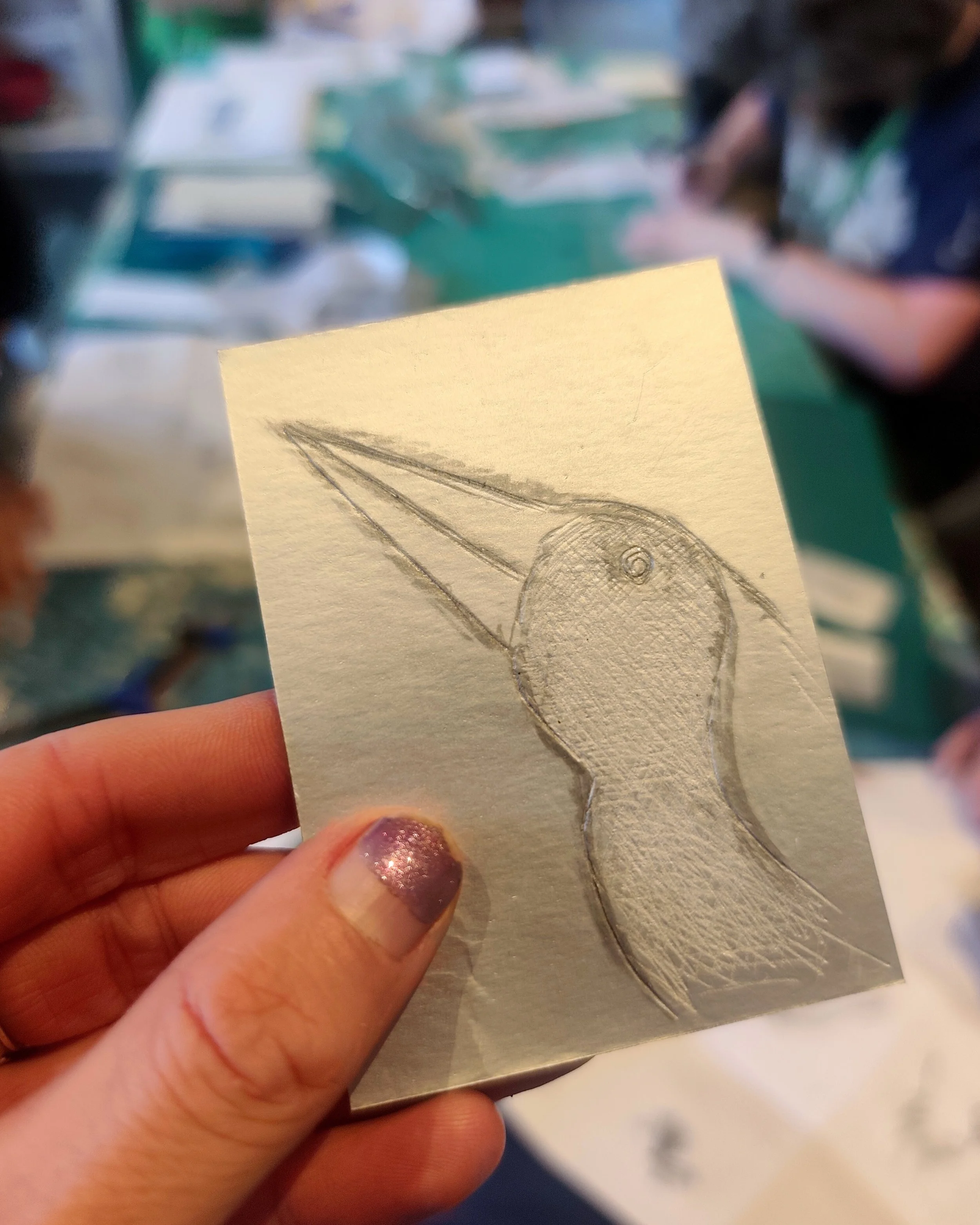
While etching the plate, it is possible to vary the depth of the etching, creating bolder darker lines and then some finer textural ones. Just like working with a fine-liner, we have to think of tonal values or shading by creating some cross hatches or any scribbly line that will catch more ink and appear darker.
Inking and printing
Once everyone had their 6 to 8 panel plates fully etched and ready to be printed, we came back to our mock-up to organise the panels according to the layout. The zine fold-out template we used shuffles up all the images that then fall into reading order once assembled and folded!
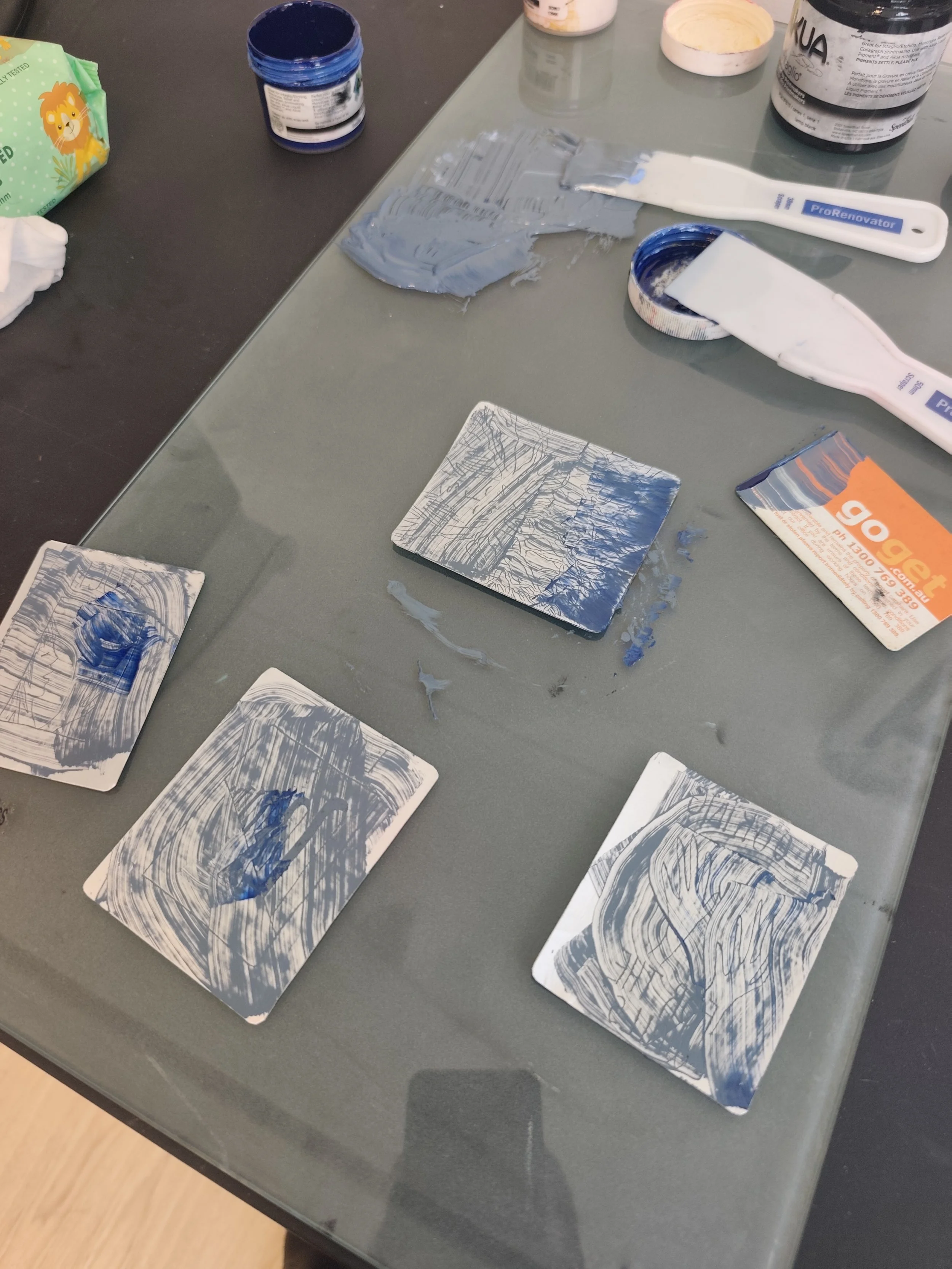
The inking technique for tetra-pak is the same as for traditional etching on copper plates. We worked with water-based ink and first applied it all over the plate with a simple plastic card, pushing the ink into the etching while also removing the excess ink on the surface.
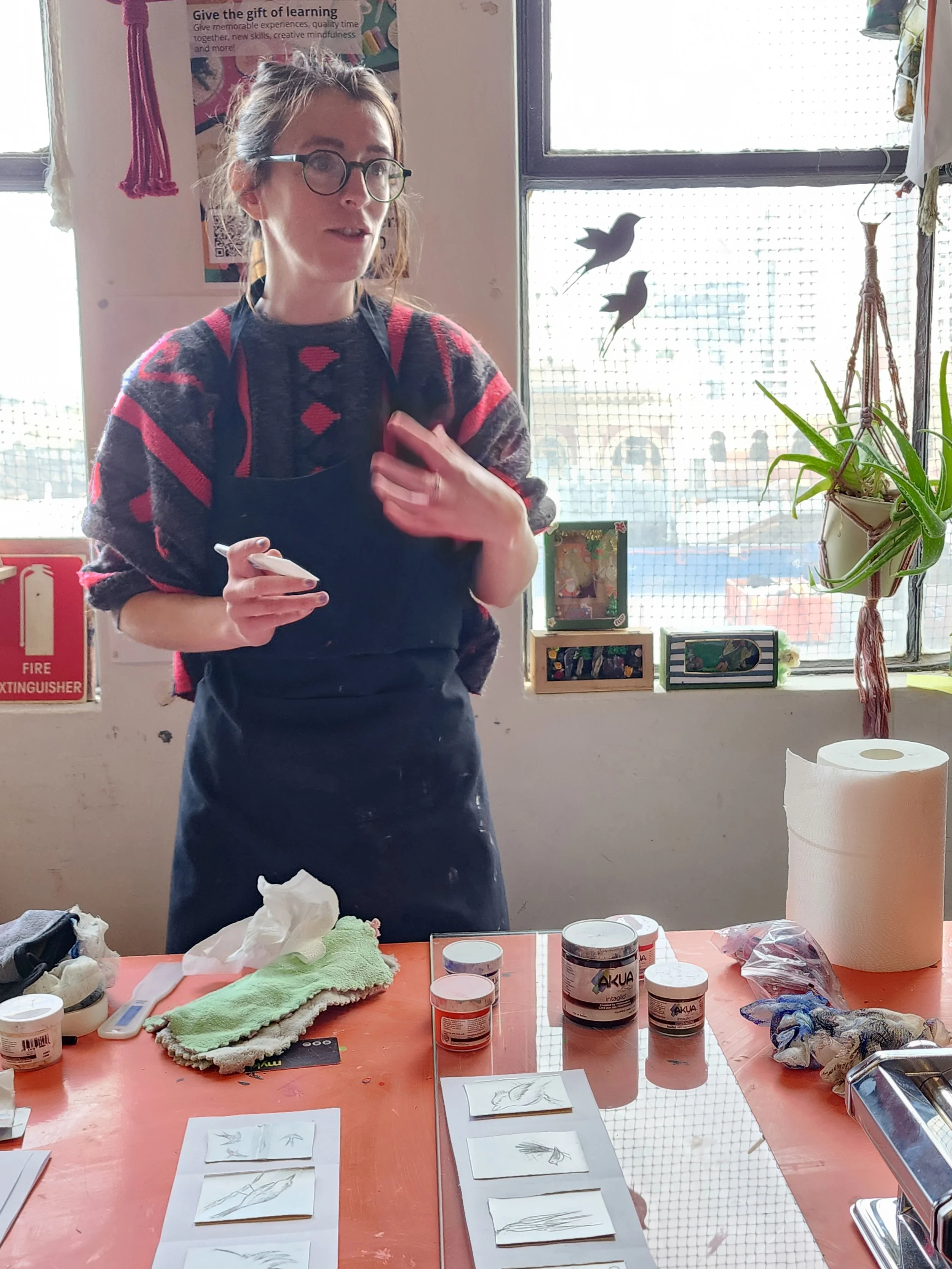
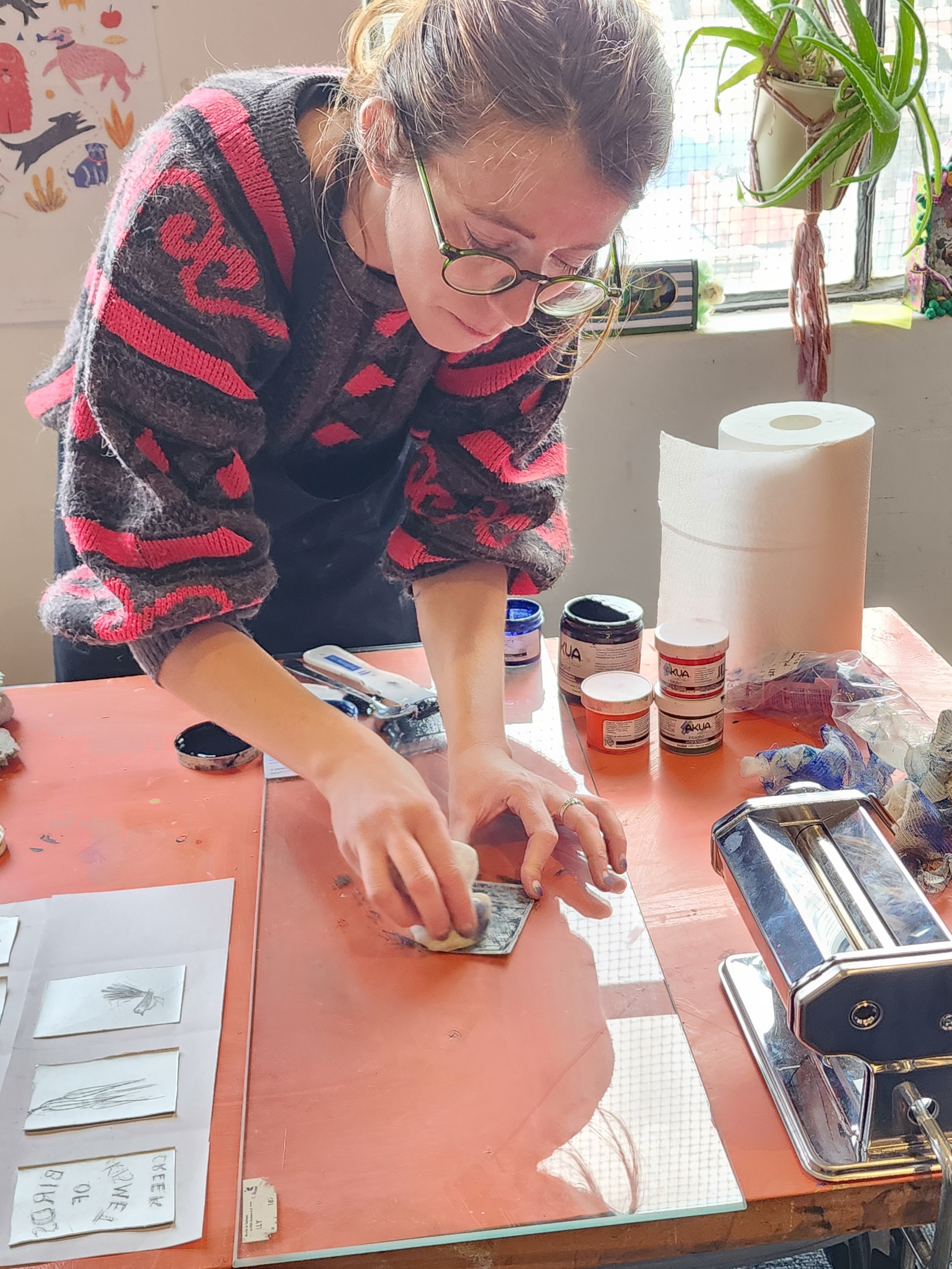
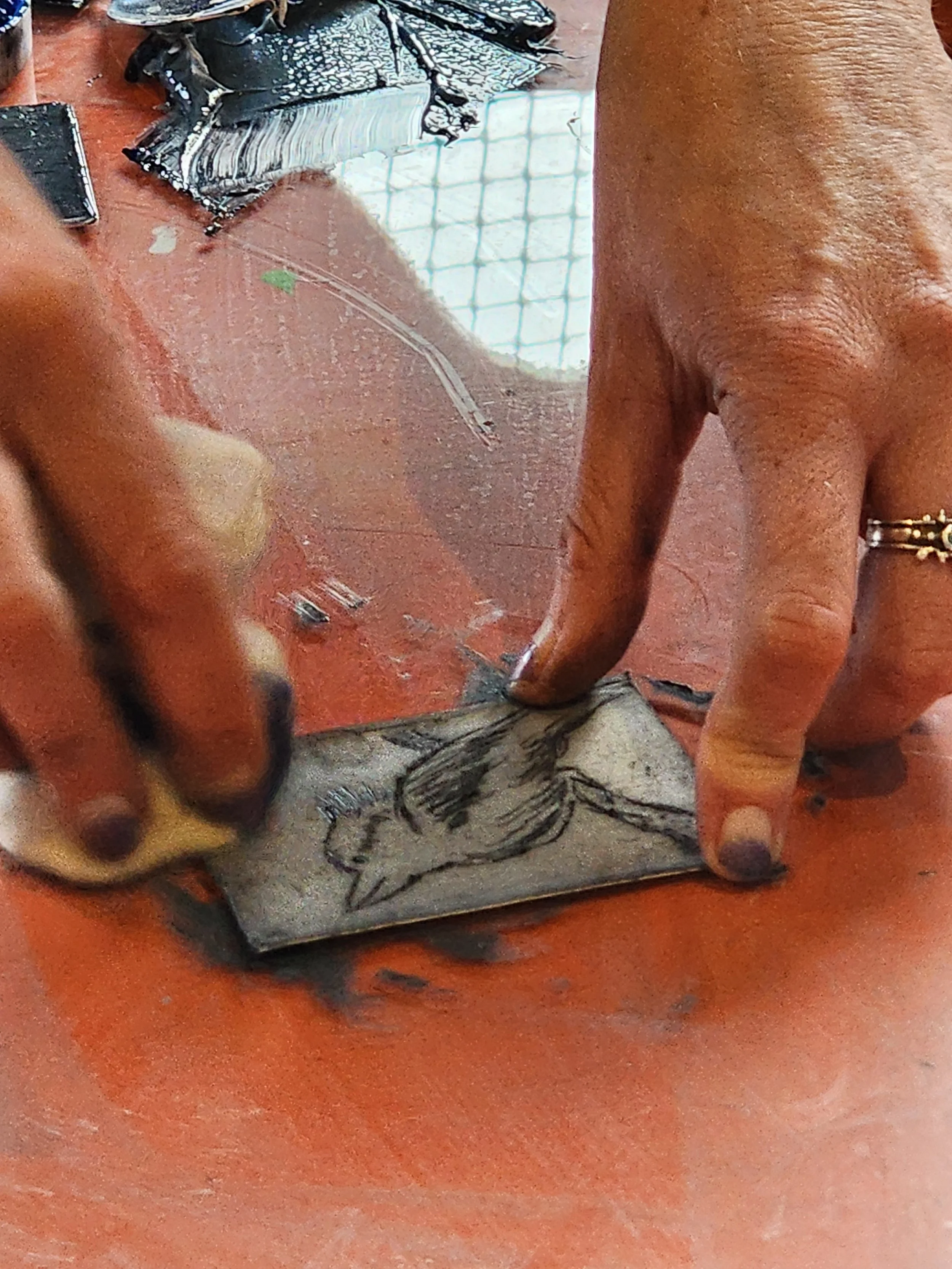
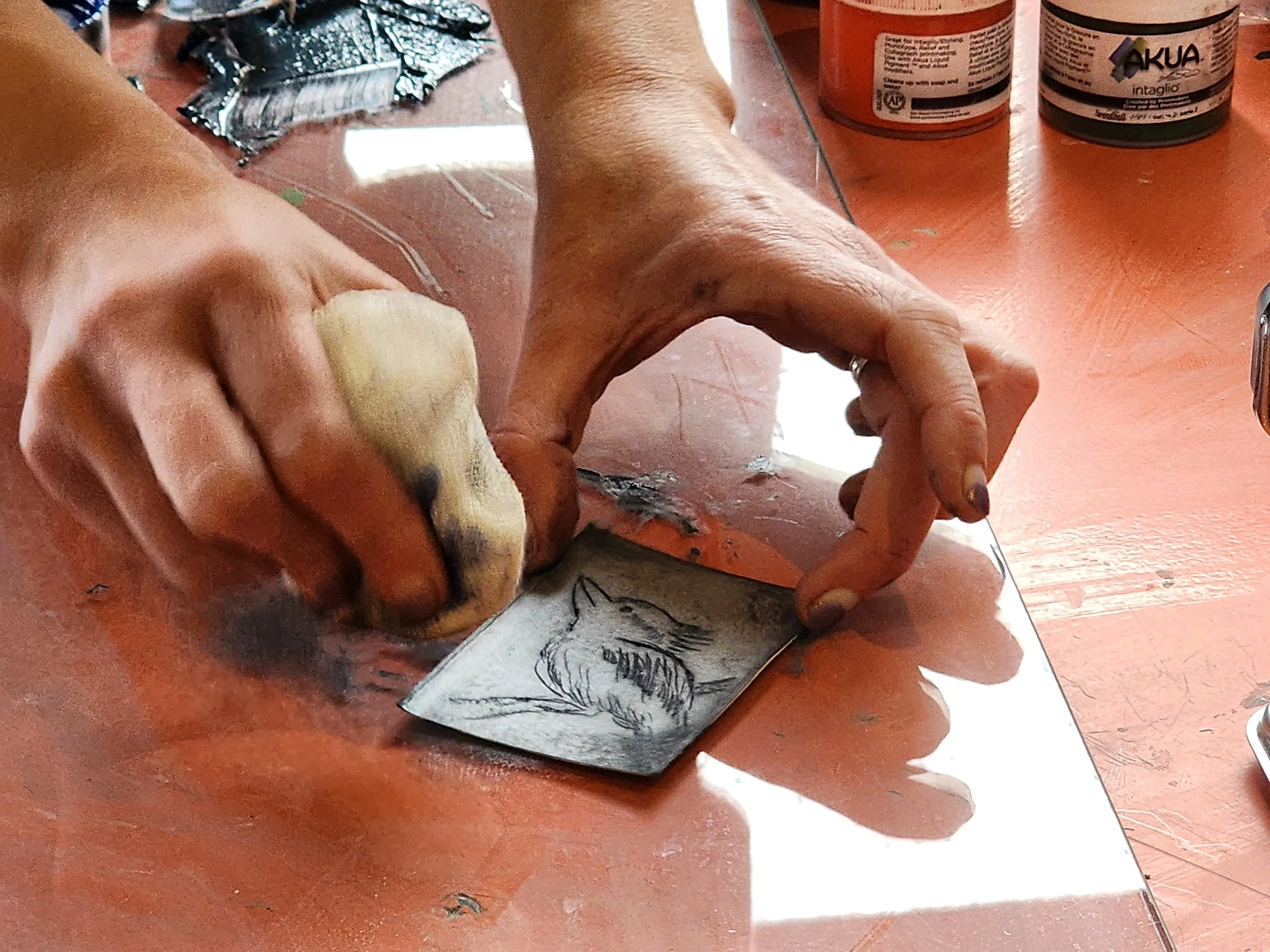
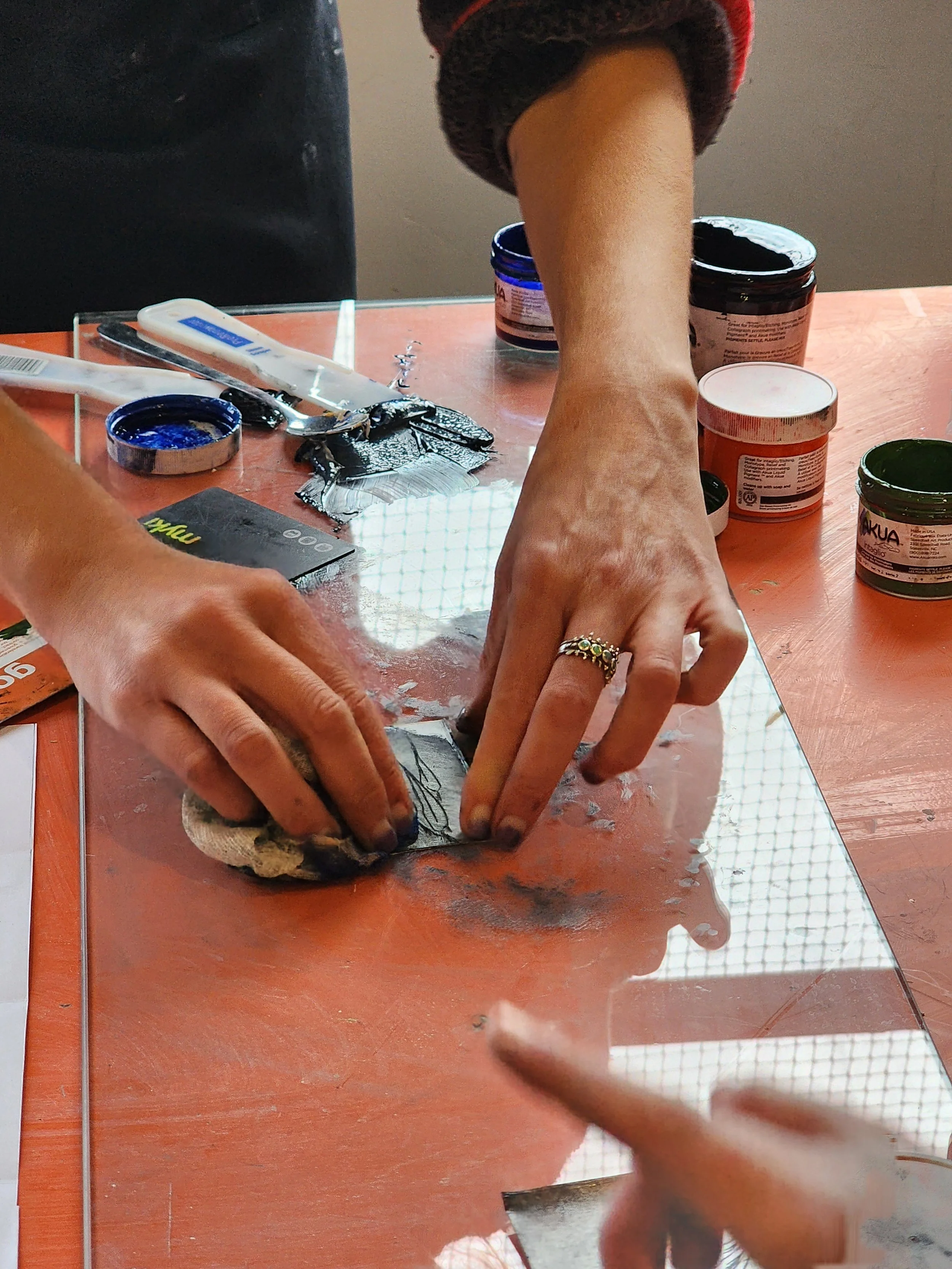
Then, we traditionally use some tarlatan : this is a rough fabric, similar to cheese cloth or a tulle-like material, with some rough texture. You don’t need this : any rough rag or crushed ball of newspaper will do the job! We gather our tarlatan into a little ball: this is called a ‘poupée’ in printmaking. Simply means ‘doll’ in French, as it looks a bit like a little rag doll head ! We use the tarlatan to rub on the surface of the inked plate, pushing the ink further into the grooves and removing the excess ink while creating some beautiful surface textures. We can also use some cotton bud to further clean the ink, creating some lighter sections in the image. I find that the inking part of the tetra-pak technique is really fun and allow for a lot of creativity, even for complete beginner : you can mix colours, try some darker or lighter prints, created strong contrast or leave a lot of texture, rub the ink in a directional way to create some movement! The creative possibilities are endless !
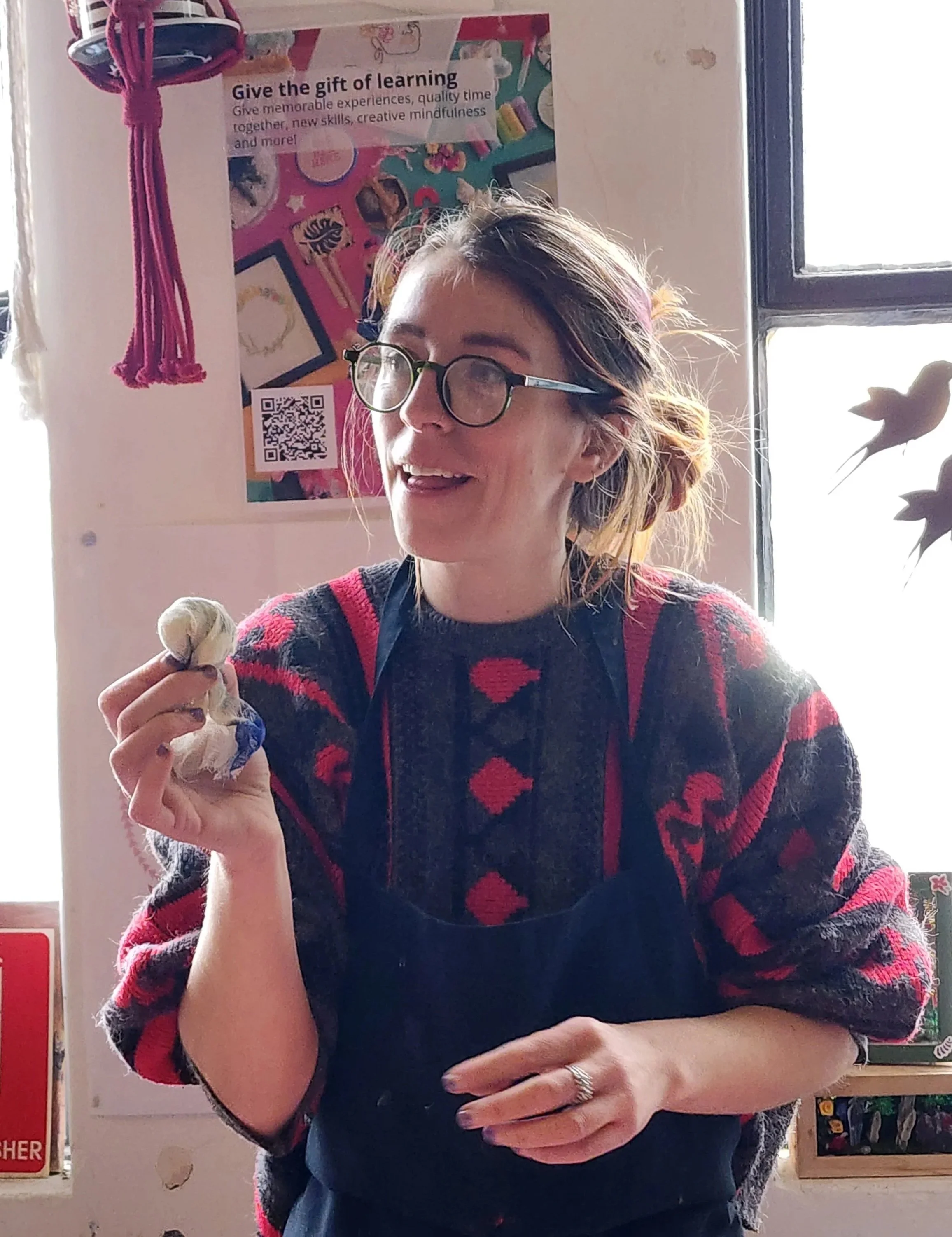
Emilie excitingly showing the ‘poupée’ : rolling the tarlatan into a little ball like a rag doll head ! credit photo James Baker
Once all the tetra-pak plates are inked, we taped them down to the mock-up version of the zine, to keep the specific layout of the zine and print them together with the correct order and spacing between the panels.
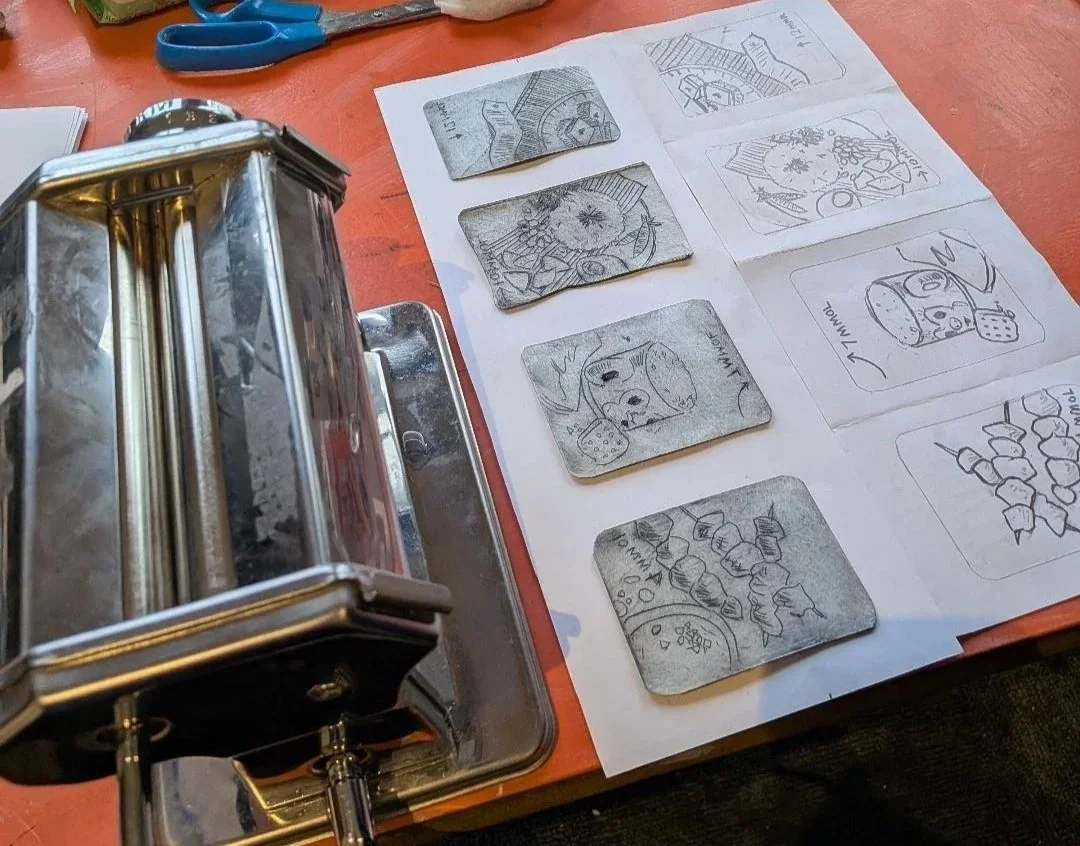
Inked tetra-pak plates tapped to the template and ready to be printed. Credit photo Emilie Walsh
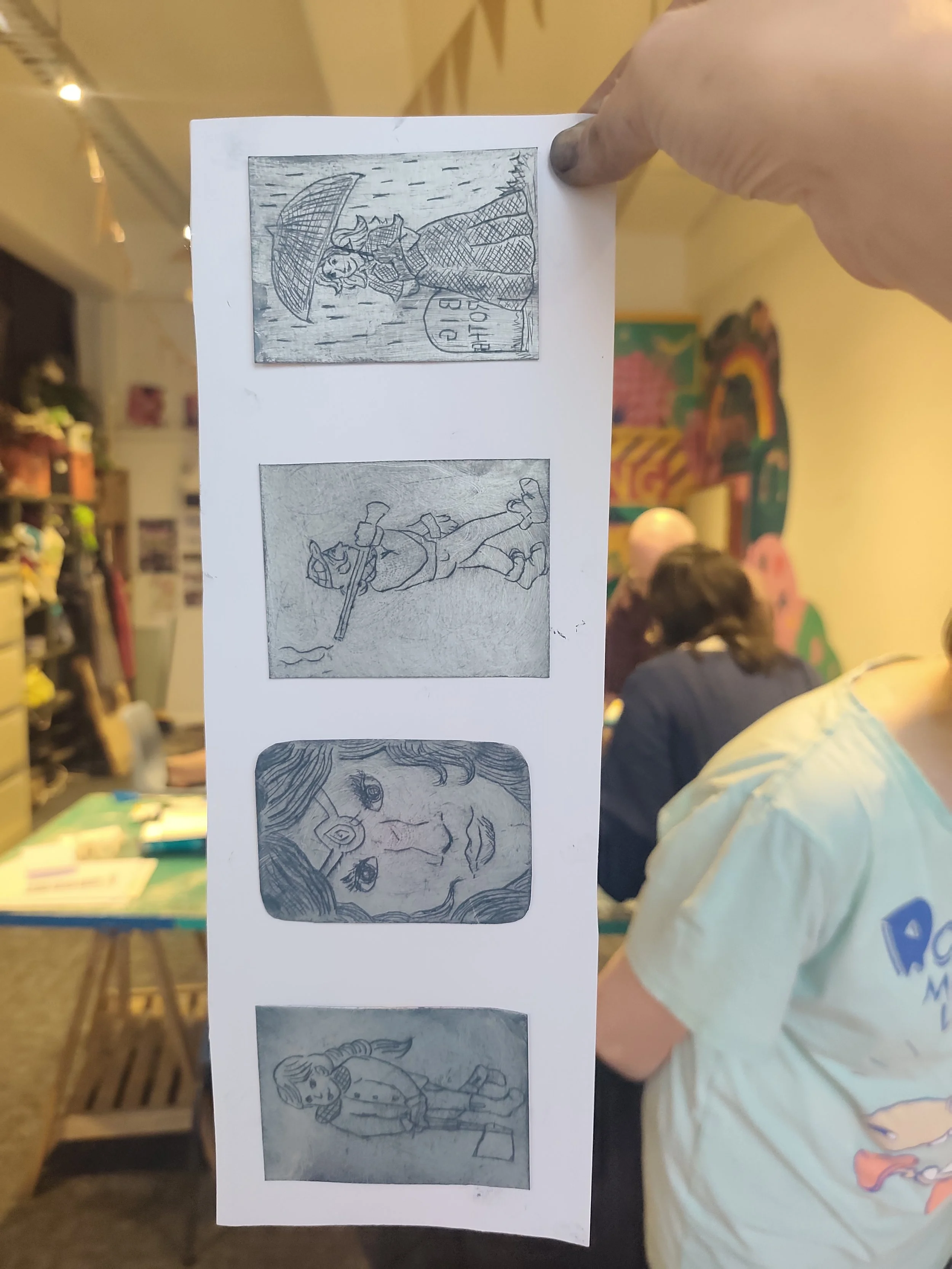
All of the plates, tapped to the template, ready to print. Credit photo Emilie Walsh
We printed on Fabriano Rosapina 300 GSM ivory paper. For most etching techniques we need to damped the paper for the ink to be correctly printed onto the paper, making the fibers softer and allowing it to pick-up the ink in the fine grooves of the etching.
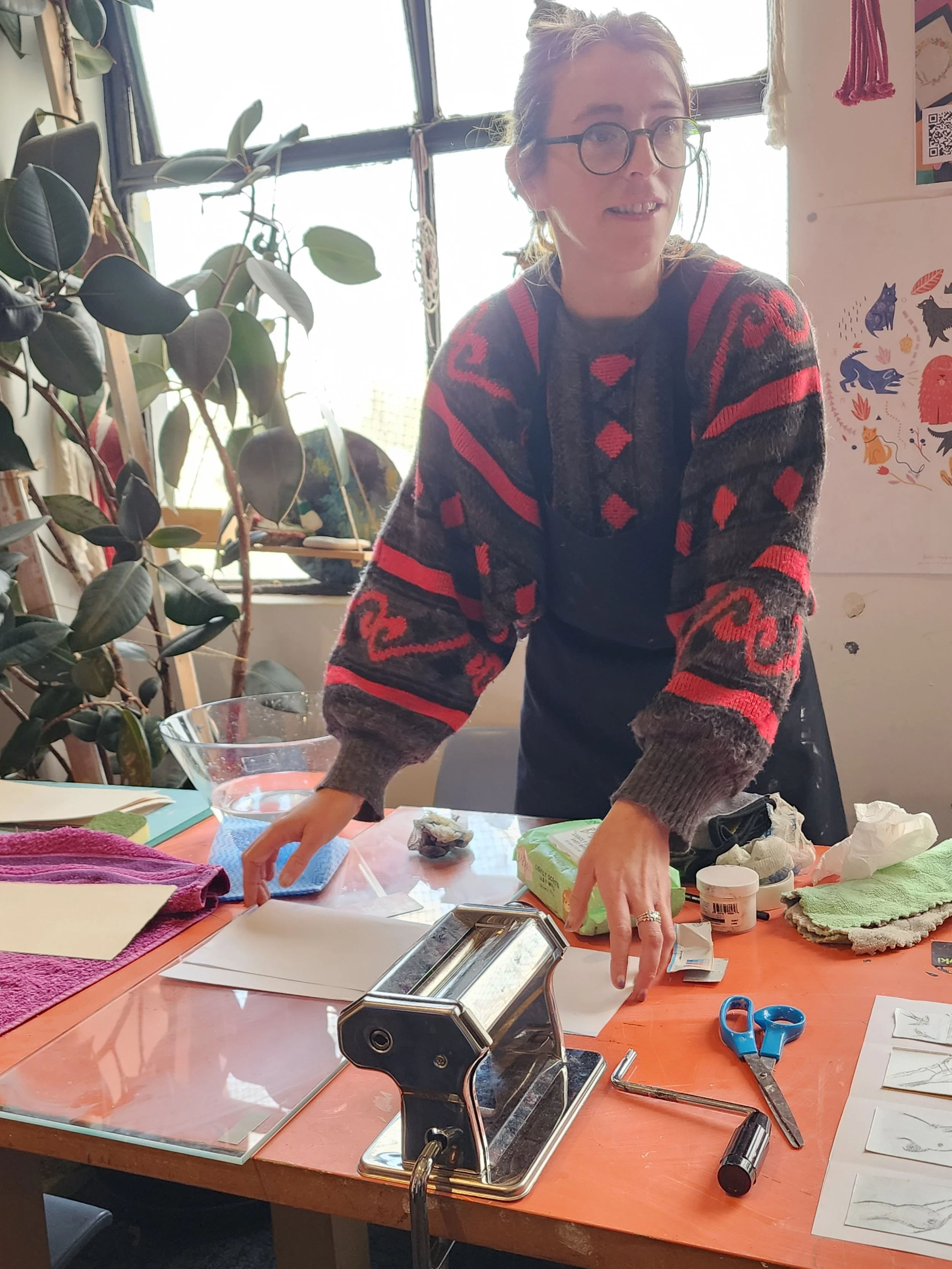
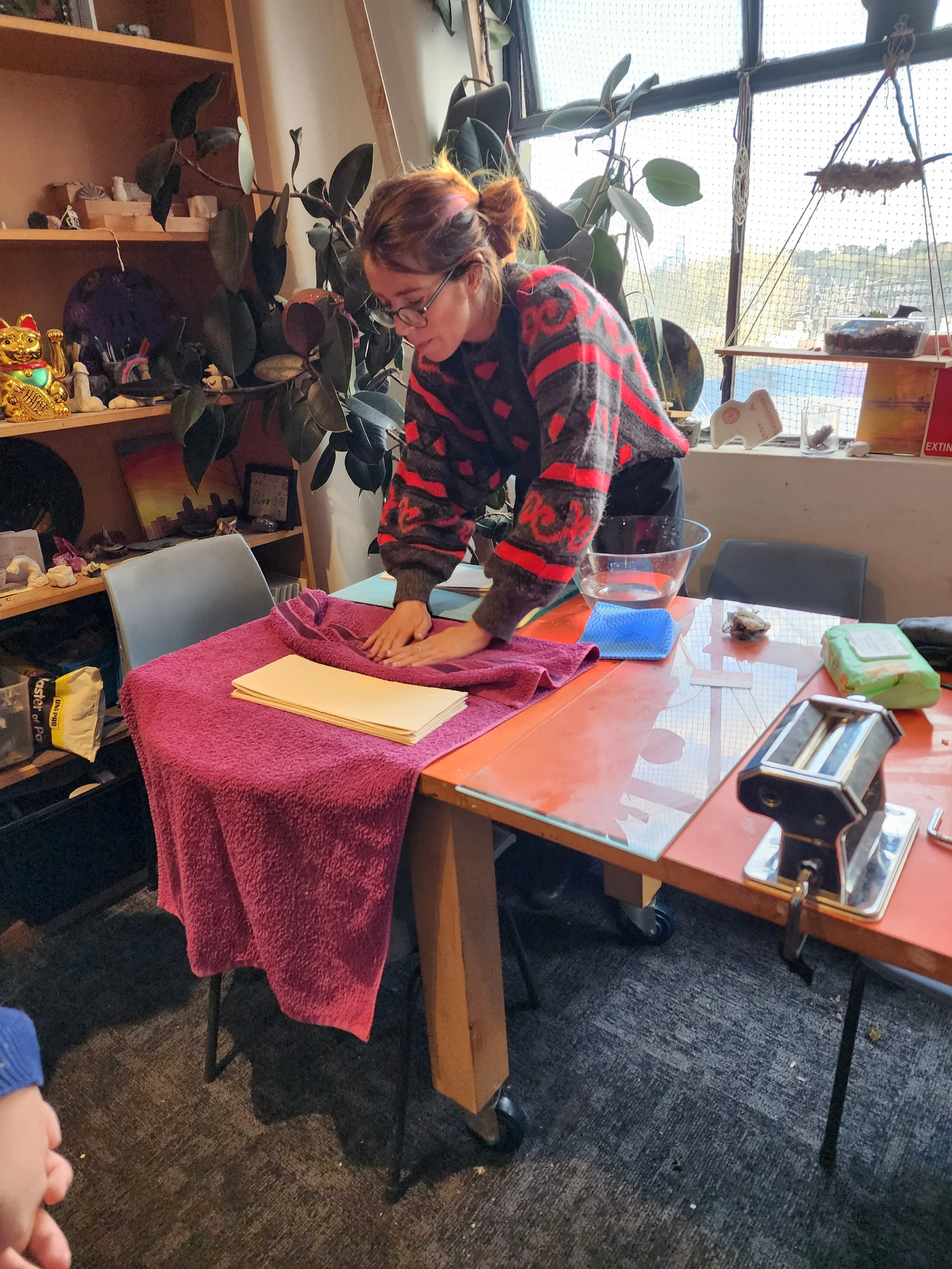
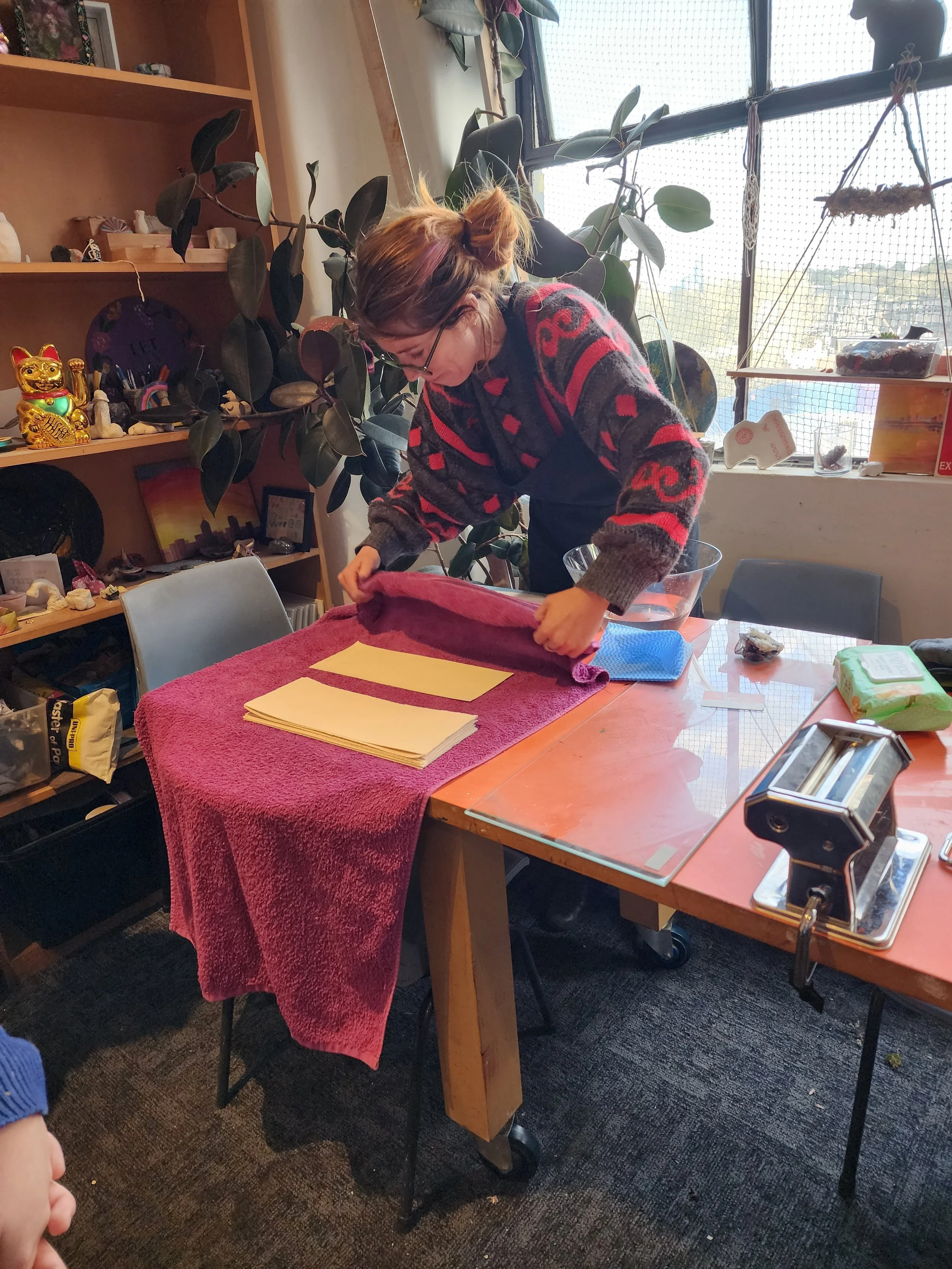
Because of the size of the paster maker, we are limited in the width of the paper we can print, with my pasta-makers allowing us to print up to 12 cm wide paper. But we are not limited in the length! We can fed a long piece of paper into the pasta-maker and create a printed work with an elongated unusual ratio ! For this project, in order to create a mini zine book, we printed on two long strips of Fabriano paper that we then assembled with paper tape before folding the zine into its book form!
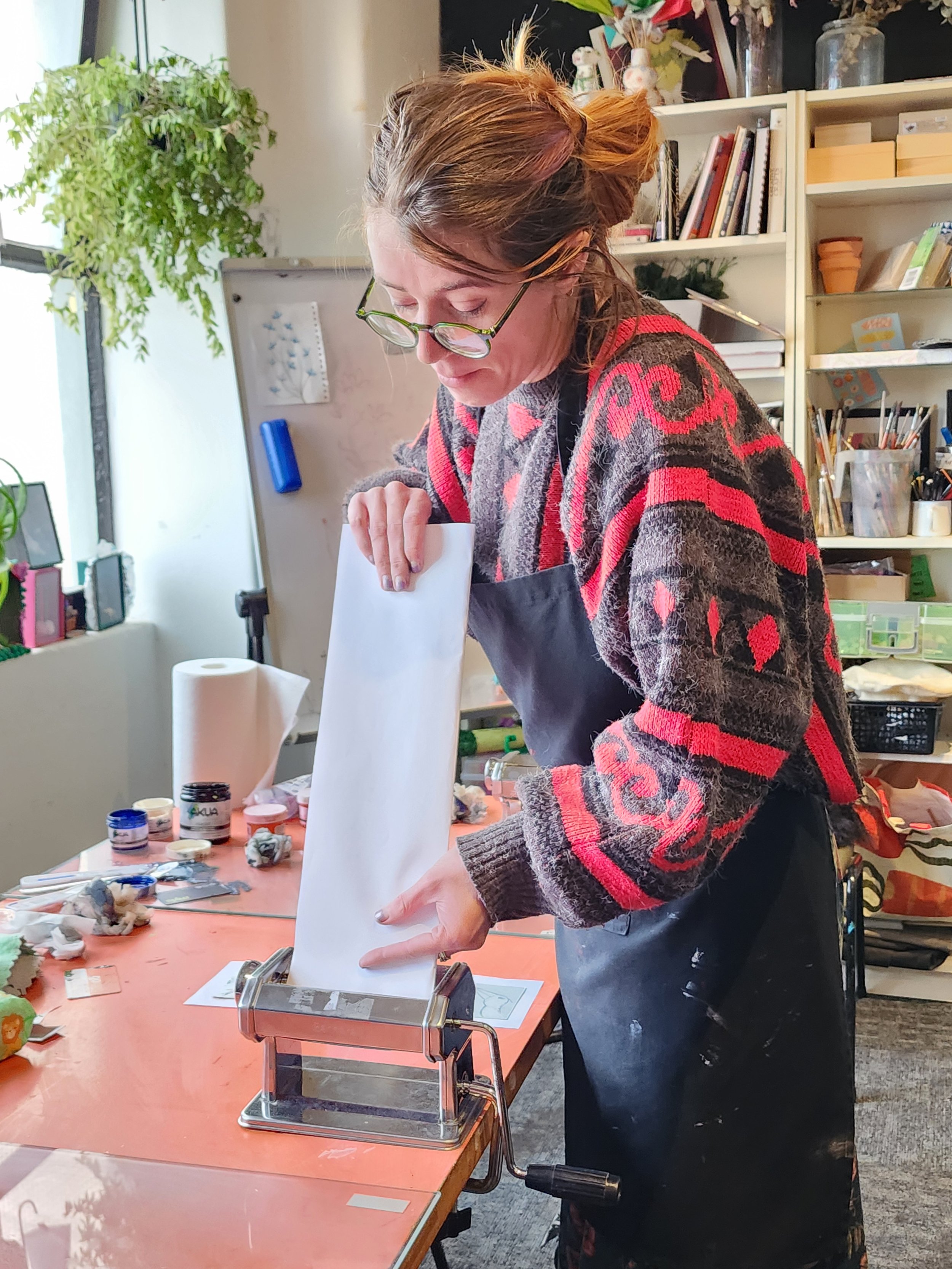
Emilie feeding the paper and plates neatly wrapped into a sleeve into the pasta-maker. Credit photo James Baker
Once the etchings are printed on a long strip of paper, we assemble them together to create the fold-out zine ! For reference on how to do so, you can check my video explaining how to fold a simple zine.
And Tadaaaa! Here we go, some beautiful etching zines by our workshop participants! Well done everyone!
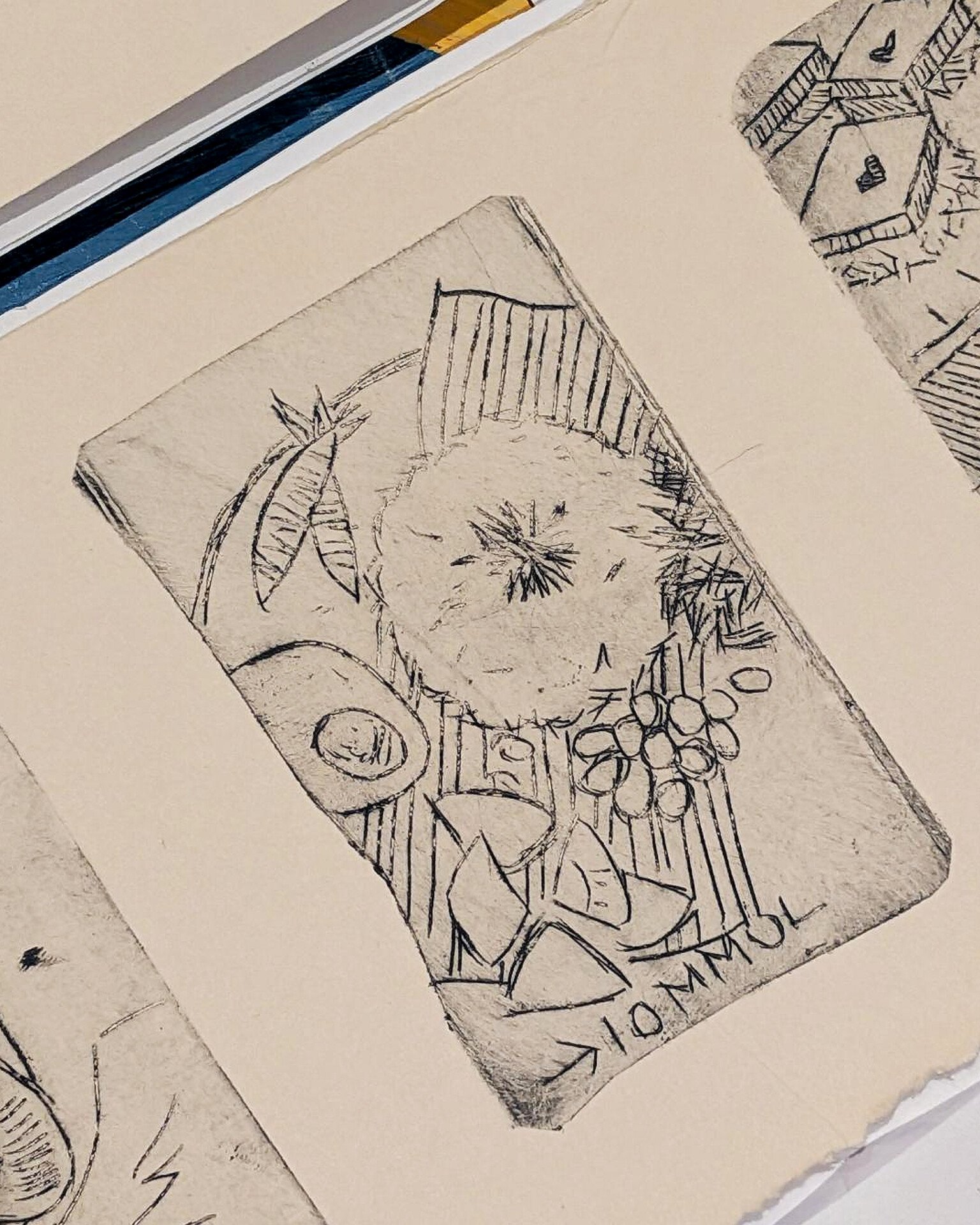
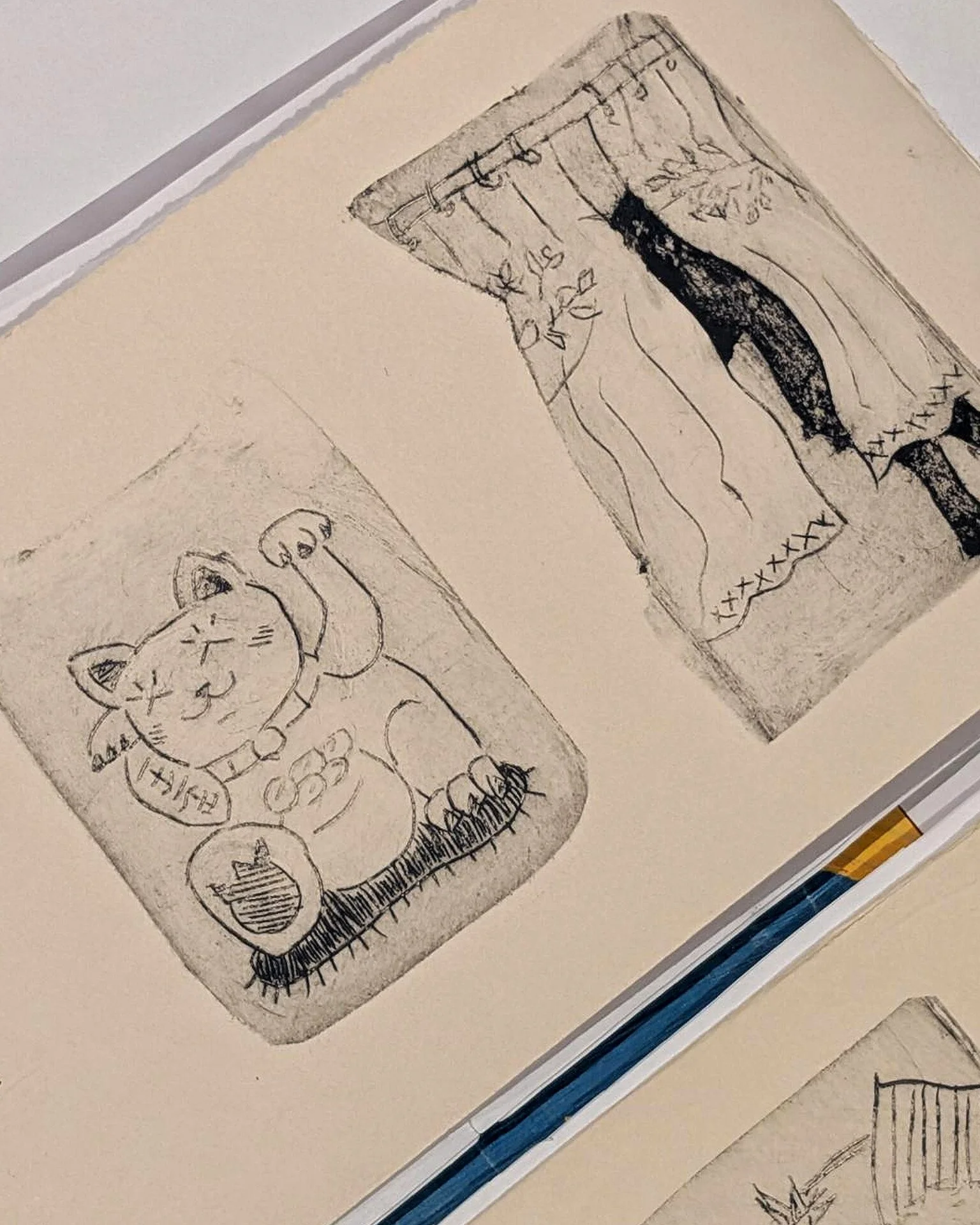
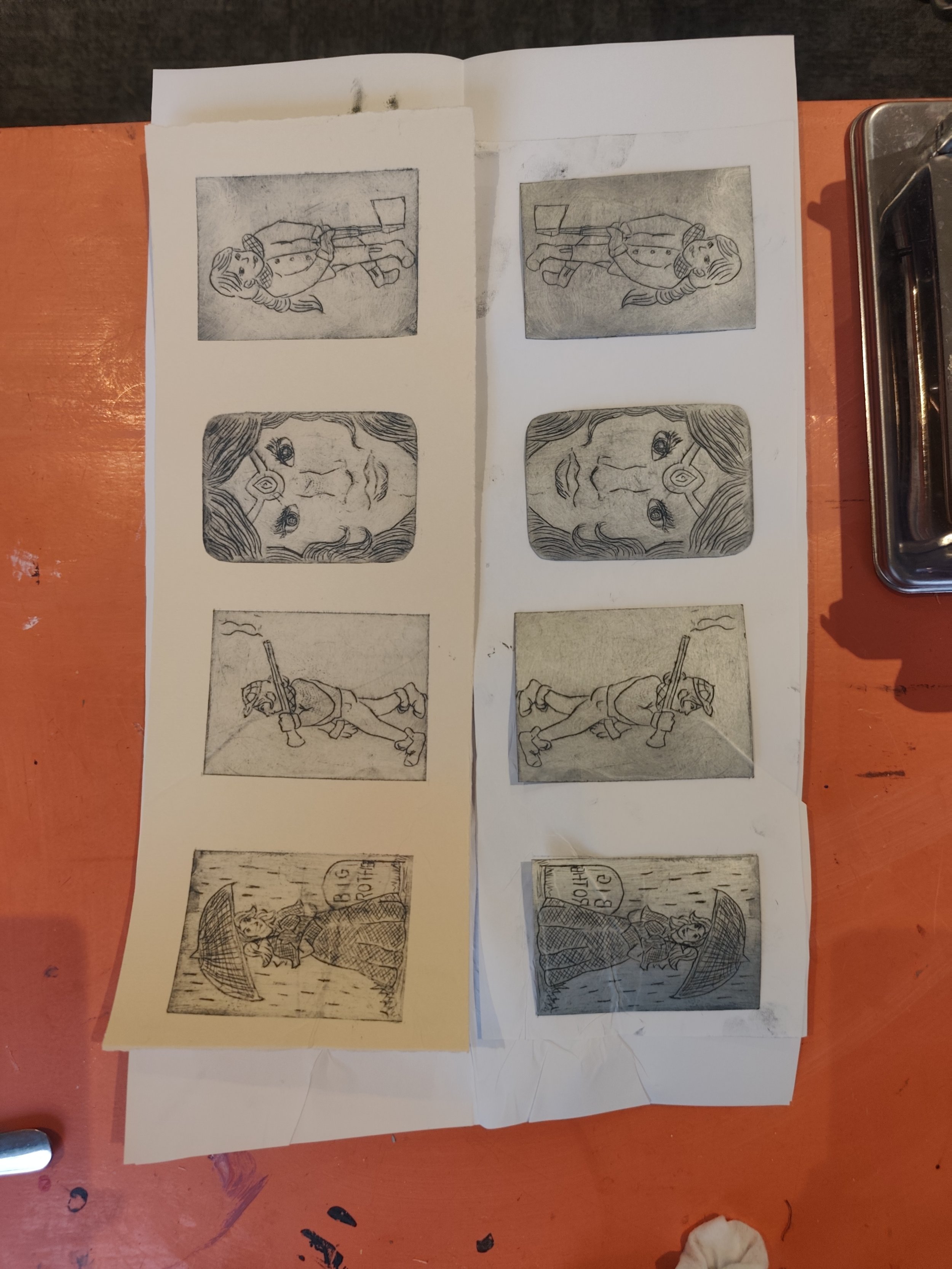
And print some more
During the workshop, we printed one zine each, but the beauty of printmaking is that you etch it once, then you print it many times! The tetra-pak technique technique is experimental and the plates have a lower life-span compared to metal plates with which you can get hundreds of prints. But in the studio I have been able to get up to 35 successful prints from a single tetra-pak plate!
The inking and printing process is time-consuming, re-inking into each print. But for a small edition of a dozen zines the technique is perfectly suited ! Can you get more zine printed in a photocopy machine? Absolutely ! And I love a good old photocopy zine myself and how easy it is to produce your own mini-book so quickly and cheaply ! But sometimes, depending on the project, we are looking at creating something more unique or experimental. Then head to your kitchen, cut some milk carton open, get a cheap pasta-maker and make your own limited edition etching zine !
From DIY to DIWO !
Tetra-pak etching is often referred to as a DIY technique and I use that term myself a lot, as a way to break-down any gatekeeping attitude that can exist in printmaking and art in general ! Yes, you can do it yourself, in your kitchen, with cheap and recycled materials! And I pride myself in running my studio with a DIY attitude, to empower all students to engage with a creative practice in autonomy.
But recently, I have been switching my interest from DIY to a DIWO ethic : Do It With Others ! No need to work-it out by yourself from an internet tutorial : come together and create with others! You will learn so much from your peers - friends or strangers - and get to experiment and support each other. I believe we create the strongest bonds when we get together and make something with our hands !
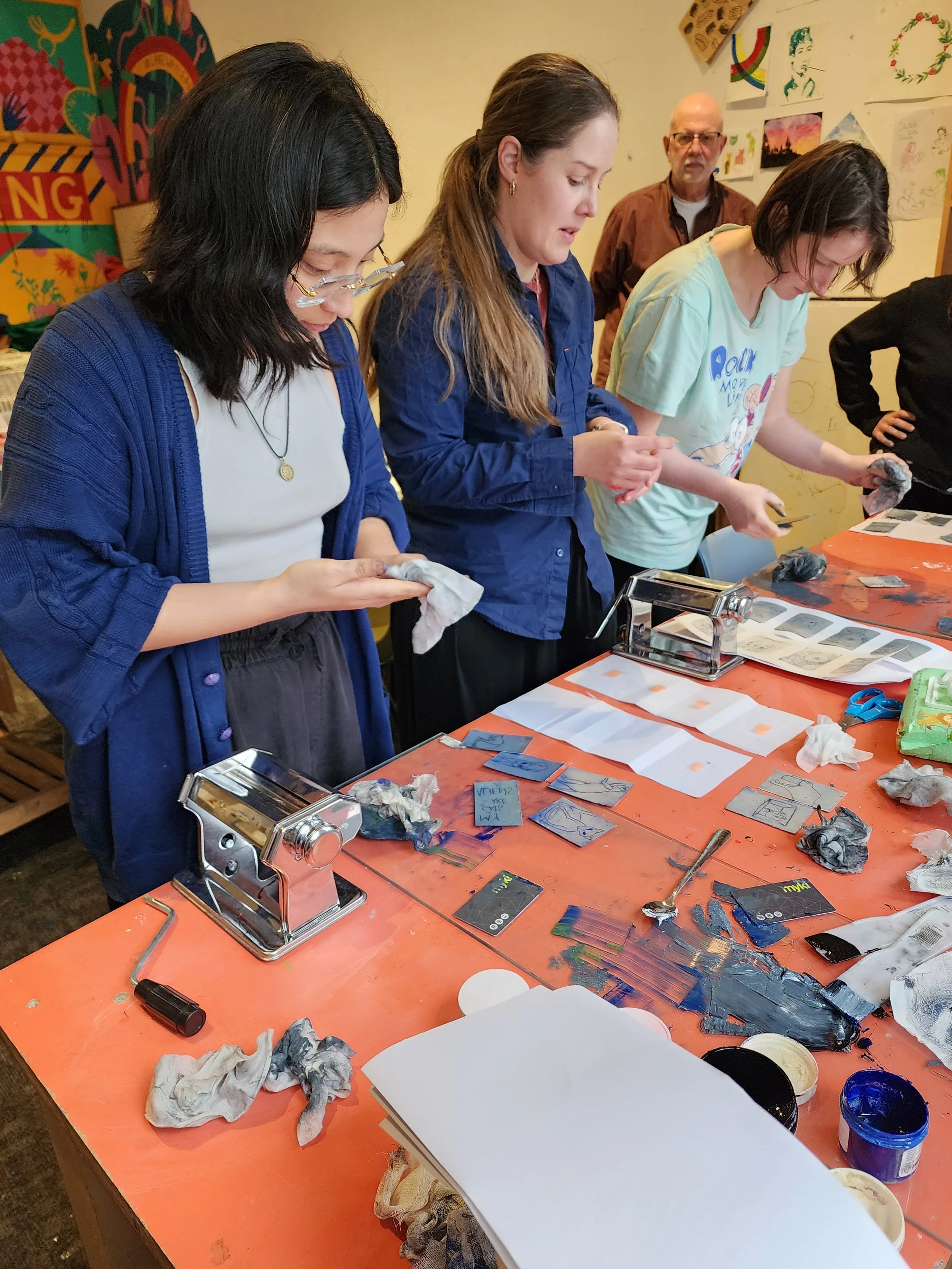
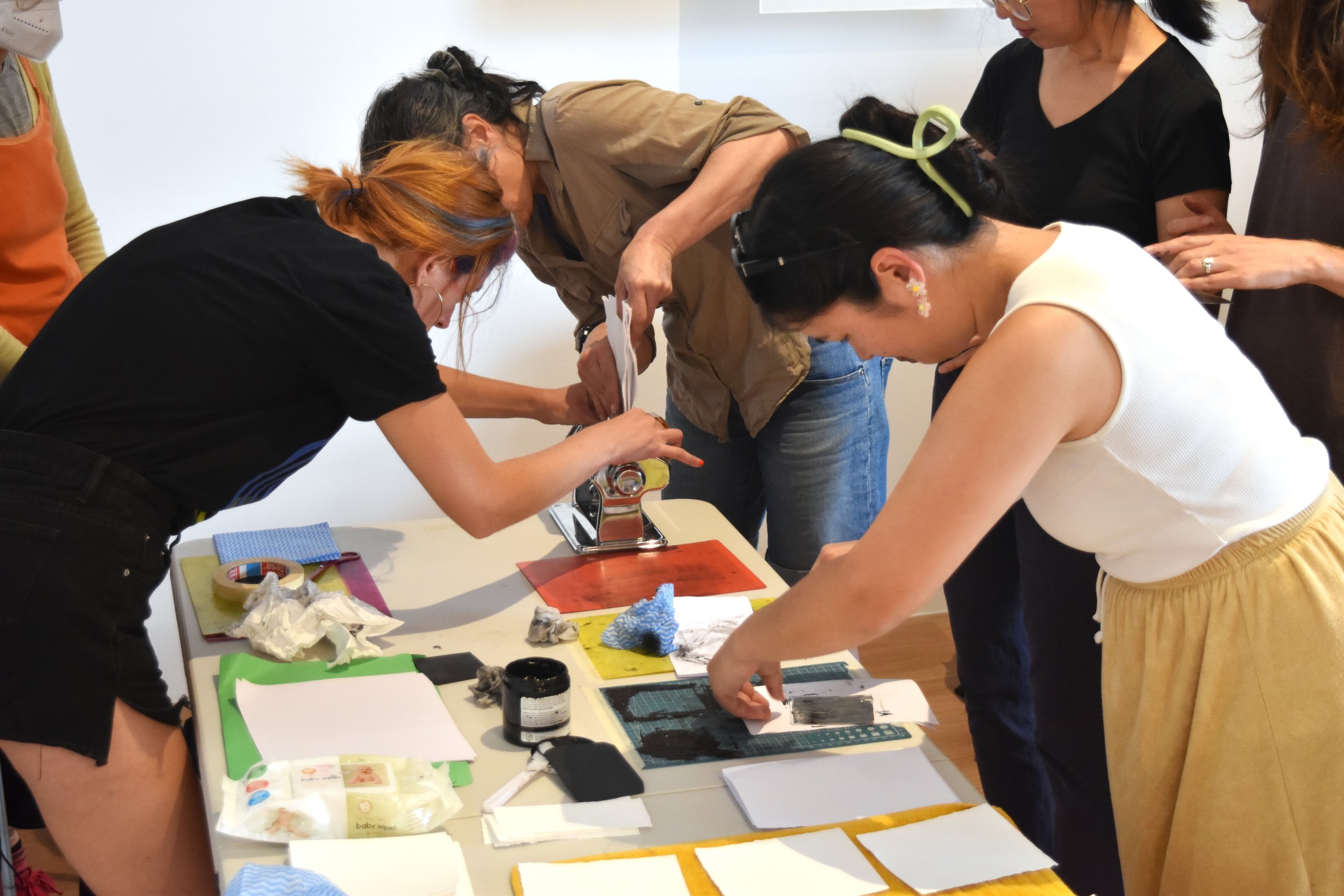
Everyone printing together ! Credit photo Emilie Walsh
Running this workshop for a small gang of curious and talented folks was a true DIWO experience ! Seeing new friends help each other with the pasta-maker printing process or simply getting design ideas from working next to each other, makes for a memorable moment. As learners, we often remember the emotions rather than the content of a lesson. Printing your zine with others, giggling over the mistakes and misprints, swapping prints with joy : beyond the obvious social benefits, it is also helping us remember and consolidate our learning experience !
Thank you everyone for a truly wonderful workshop ! Looking forward to seeing you all at MAKE to discover more comics & zine and make new friends! And some free workshops on the day by comics artists too !
More about materials to get started
Join a tetra-pak printmaking class : 12th of October 2026, 6:15pm, Idle Time Studios, Brunswick East.